What a Wine Cooling Room Does
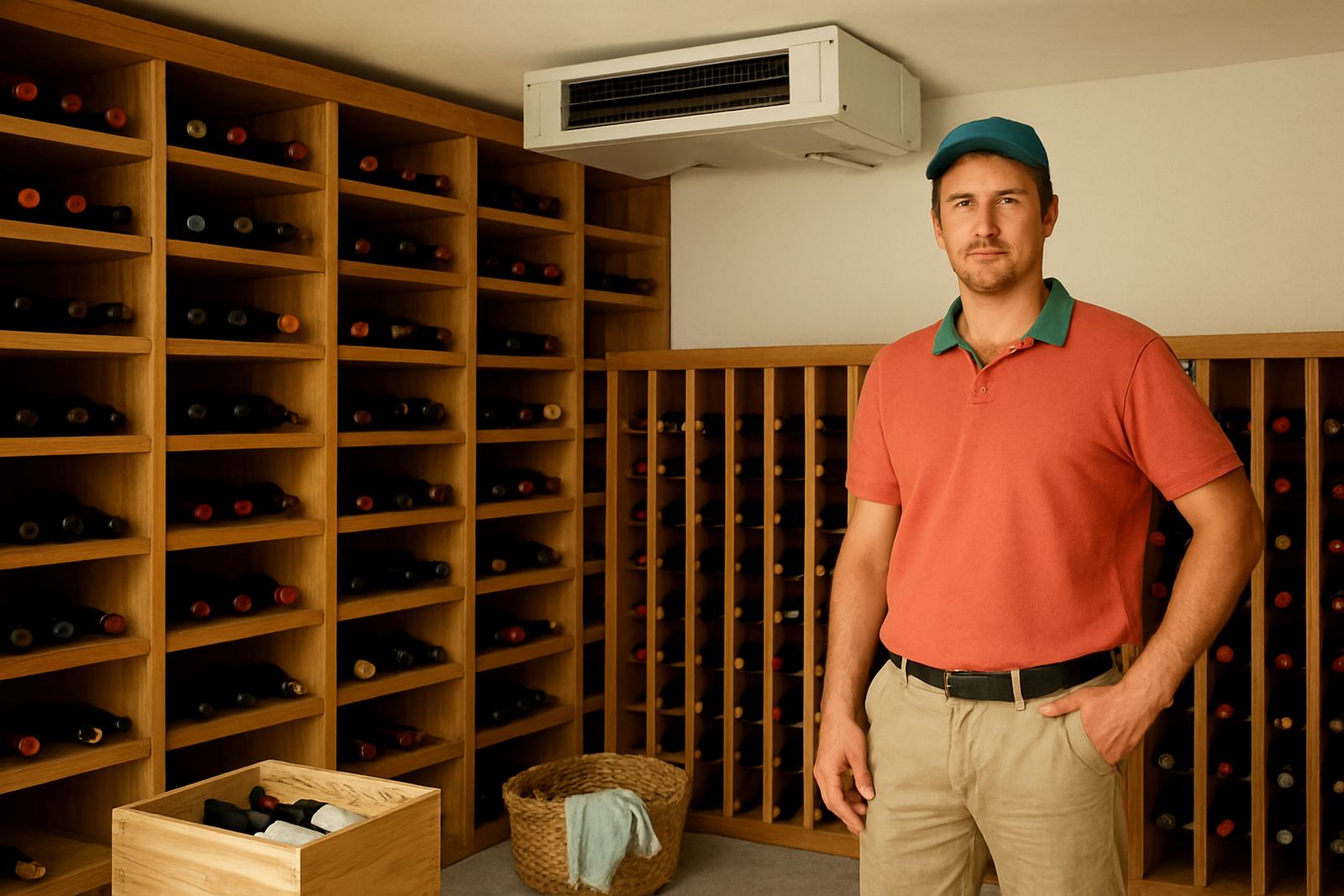
A wine cooling room is a purpose-built cold space that holds wine stock at a controlled temperature, usually between 10°C and 14°C for general cellaring or slightly cooler for short-term serving stock. It is not just a chilled room with a thermostat. The room needs proper insulation, a correctly sized cooling unit, airflow that does not dry the bottles, and doors that shut properly every time.
In Durban and coastal towns, heat and humidity can climb quickly especially in back-of-house areas near kitchens, stores and loading bays. A wine room helps keep stock stable when the venue is busy, the doors are opening often, or the power is off and on during load-shedding. For private collections, it gives you cleaner storage than a spare room or garage, with less risk of spoilage or label damage.
- Typical use: hospitality cellars, bottle stores, private homes, tasting rooms and secure back-of-house stock areas
- Common target range: 10°C to 14°C, depending on the wine and how it will be served
- Best for: still wines, reserve stock and mixed collections that need steadier conditions than a normal storeroom
Sizes, Layouts and Room Options
Wine cooling rooms can be built as small walk-in rooms for a few hundred bottles or as larger stock rooms for restaurants and hotels. The layout depends on bottle count, shelving type, available floor space and how often staff will enter the room. We also look at whether you want a viewing door, solid insulated door or a locked access point for controlled stock handling.
For compact spaces, a room of around 2 m x 2 m can work for a modest collection if the racking is planned well. Medium hospitality rooms often sit around 3 m x 4 m or 4 m x 5 m. Larger venues may need a custom room with separate zones for everyday stock and special reserve bottles. Racking can be timber, powder-coated steel or mixed shelving, depending on the look you want and the weight of the bottles.
- Small private room: about 200 to 600 bottles
- Medium hospitality room: about 600 to 2,000 bottles
- Large custom room: 2,000 bottles and up, depending on racking and access space
Where Wine Rooms Work Best
These rooms suit restaurants, wine bars, hotels, guest lodges, clubs, estates and private homes where the wine stock must be kept in better condition than a normal air-conditioned room can manage. They also work well in venues that have display and storage in the same area, as long as the doors are not left open all the time. In the KZN coast climate, that matters more than people expect.
We often position wine rooms close to service areas, but away from ovens, dishwashers and direct sun. A room next to a hot kitchen wall or under a roof section with poor insulation will work harder and use more power. If the room is on an upper floor or in a coastal venue near the sea, we also check for corrosion risk and make sure the fittings and fixings are suitable for humid air.
- Hospitality venues needing controlled stock for service and events
- Private collectors who want a stable room instead of a domestic fridge setup
- Sites with irregular power supply that still need stock protection during outages
Installation, Power and Ventilation
Installing a wine cooling room starts with insulation and vapour control. The panels, floor and ceiling must be sealed properly so the system is not trying to cool warm moist air all day. We then fit a refrigeration unit sized for the room volume, room use and local conditions. In Durban, a room near the kitchen or receiving area needs more careful sizing than one in a cooler internal position.
Most rooms run on standard single-phase or three-phase electrical supply, depending on the size of the unit. The power point, isolator and breaker size must be set by a qualified electrician, and the room should have proper earthing and safe cable routes. There is no gas connection required for the room itself, but the refrigeration circuit must be charged, tested and checked for leaks during commissioning. If the room is going into a venue that already suffers from load-shedding, we can plan for backup power or temperature hold time.
- Insulated panels, sealed joins and a vapour barrier are essential
- Door seals, thresholds and hinges must close tightly to limit moisture entry
- Ventilation for the condensing unit must allow heat to escape, not build up in a cupboard
Care, Servicing and Temperature Logging
Like any cold room, a wine room needs regular attention. Door seals wear down, fans collect dust and drains can block if the room is opened often. If the room is not holding temperature properly, the first signs are often little things such as condensation, uneven bottle temperatures or longer pull-down times after deliveries. Catching this early saves stock and keeps power use under control.
For venues, planned maintenance should include coil cleaning, fan checks, drain clearing, thermostat checks and a review of the temperature log. We also recommend checking the room after power interruptions because settings can drift, especially on older controls. Our service contracts can include breakdown call-outs, temperature logging, leak detection, electrical fault finding and compliance checks for commercial sites.
- Clean condenser and evaporator coils regularly to keep airflow clear
- Check door gaskets and hinges so cold air is not lost with every opening
- Keep a temperature record for stock control and internal audits
What to Confirm Before You Order
Before a wine cooling room is ordered, it helps to confirm the bottle count, room location, preferred temperature range and whether the room is for display, storage or both. We also need to know if the site has single-phase or three-phase power, whether the room will be inside an existing building or in a new fit-out, and how often staff will access it during service hours.
On coastal sites, we will also ask about the surrounding conditions, because humid air and salty air can affect equipment choice. If the room is going into a venue in Durban North, Umhlanga, Ballito or the South Coast, the installation detail matters just as much as the cabinet size. A room that looks fine on paper can still struggle if the insulation is thin or the door opens straight onto a hot passage way.
- Required bottle capacity and expected growth over the next 12 to 24 months
- Target temperature and whether you need tighter control for premium stock
- Available floor space, ceiling height and power supply type
Key facts
| Temperature range | Usually 10°C to 14°C for general wine storage, with tighter setpoints available |
|---|---|
| Room size options | From small private rooms to large custom hospitality stock rooms |
| Insulation | High-density insulated panels with sealed joints and vapour control |
| Power supply | Single-phase or three-phase, depending on room size and refrigeration load |
| Humidity control | Managed by correct refrigeration sizing, airflow and sealing |
| Service support | Planned maintenance, breakdown call-outs, leak checks and temperature logging |