Ceiling-Mounted Cooling For Bigger Open Spaces
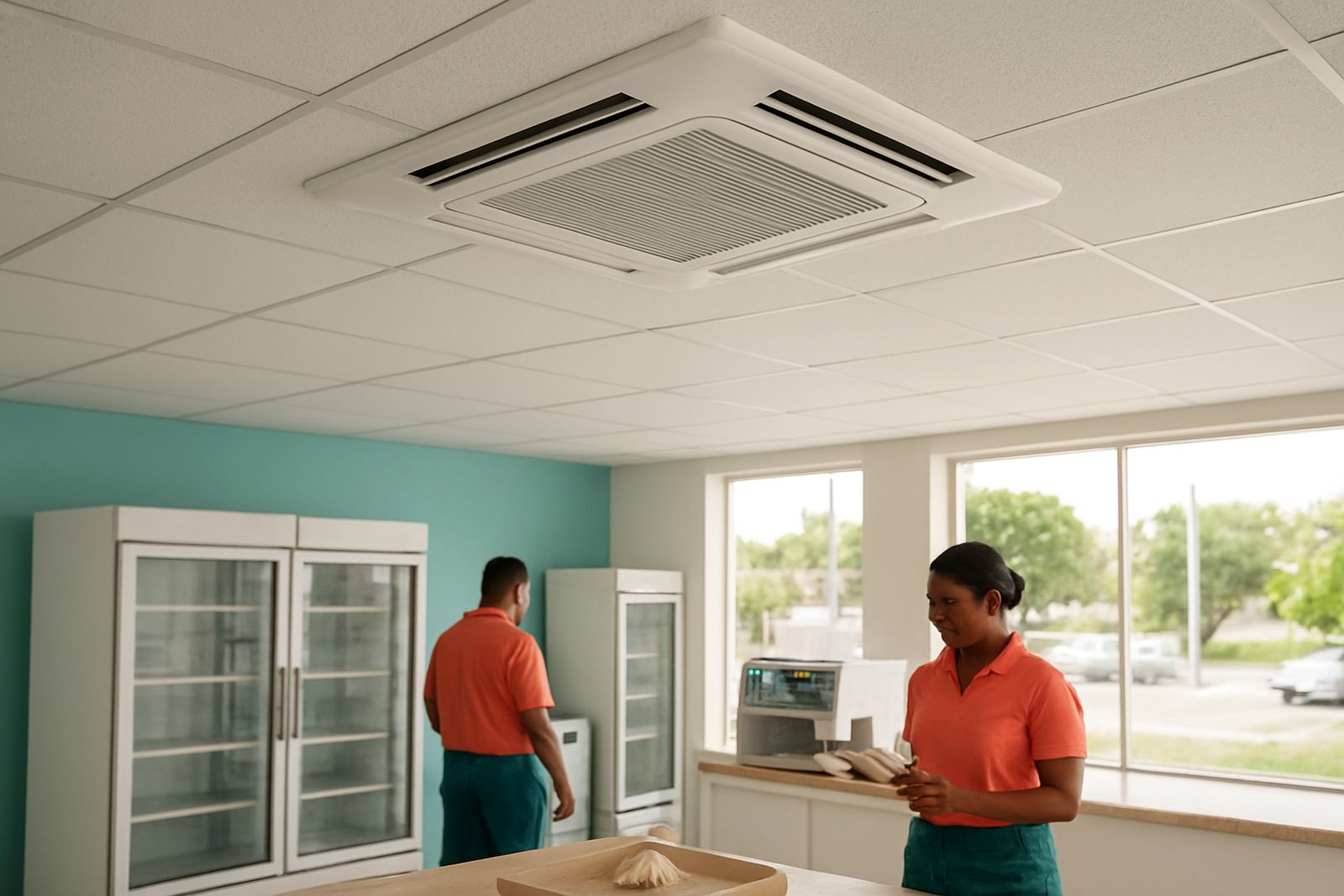
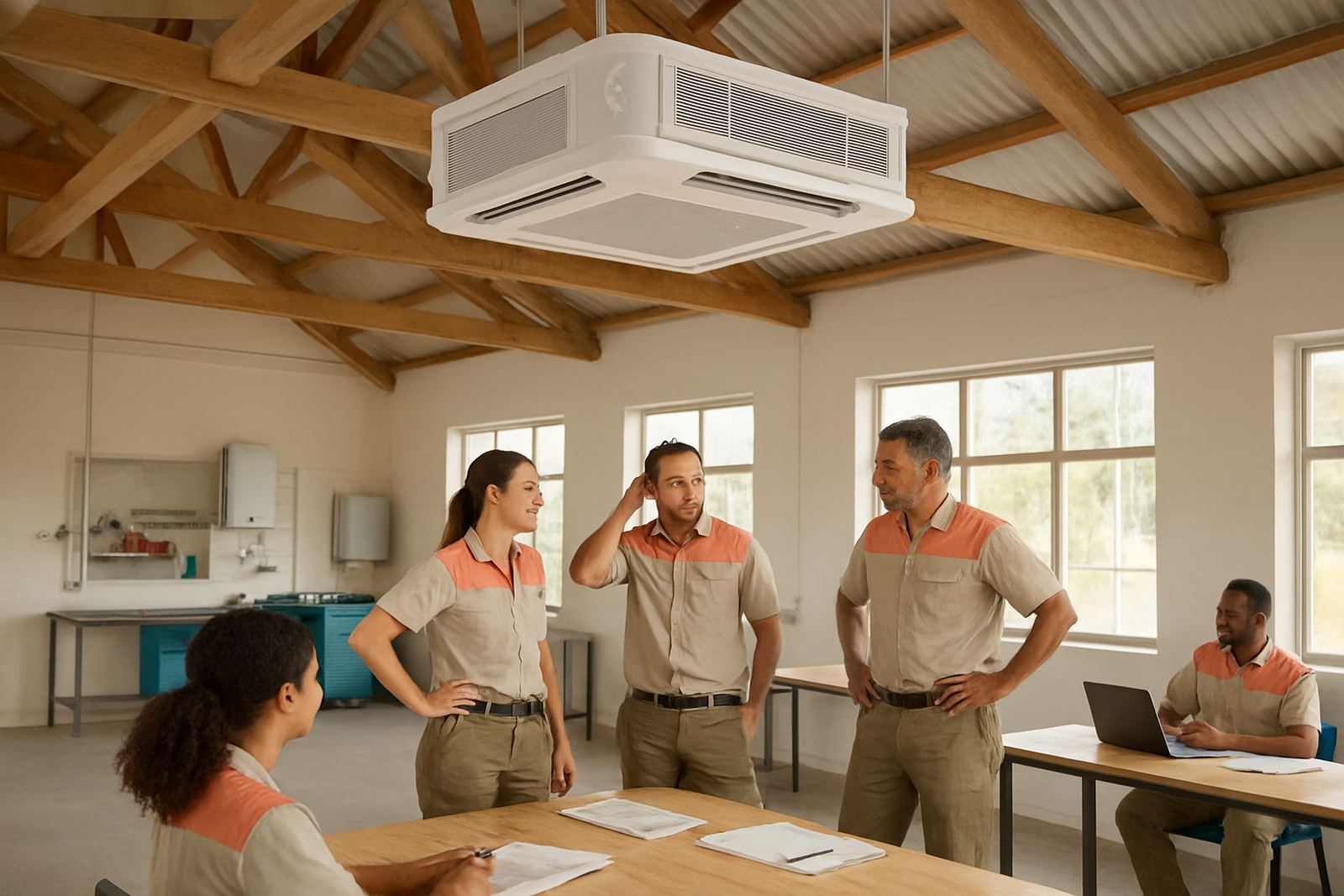
Suspended units hang below the ceiling and push conditioned air across larger rooms, so they work well where standard wall units do not reach far enough. In practical terms, they are used in church halls, school assembly areas, workshops, distribution rooms, staff canteens and commercial spaces with high foot traffic. Because the unit is mounted overhead, it keeps floor and wall space open for people, shelving, machinery or counters.
For Durban conditions, these units are often chosen because they can handle hot afternoons, busy internal loads and doors opening through the day. In areas like Glen Anil, Umhlanga, Pinetown and Ballito, that matters when the room is large, gets full sun or has equipment adding heat. A suspended unit is not only about cooling, it is about getting air to the parts of the room where people actually work.
We fit suspended units for new projects and replacements, and we also assess whether the room needs one large unit or a few smaller units spread across the ceiling. That choice depends on ceiling height, insulation, glass areas, occupancy and how the room is used during the day.
Typical Sizes, Capacities And Control Options
Suspended units are available in a range of cooling capacities, usually from smaller commercial units for modest rooms through to larger three-phase systems for workshops and halls. The right size depends on the heat load, not just floor size. A 120 square metre room with a high roof and open roller door can need a very different solution from a similar room with insulated panels and no direct sun.
- Cooling capacity options commonly start around 5 kW and can run well above 20 kW for larger spaces
- Single-phase units suit lighter commercial applications, while bigger units may need three-phase supply
- Remote wall controllers or wired controls are used depending on the installation layout
- Some units offer timer settings, fan speed selection and temperature set-point control
- For busier sites, a unit with steady airflow and stronger throw is often better than a small wall-mounted model
We help match the unit to the room, the electrical supply and the expected running hours. If you are cooling a canteen in Durban North or a workshop in Pinetown, the answer is not always to fit the biggest unit. Correct sizing lowers power waste and reduces wear on the compressor and fan motors.
Where Suspended Units Suit Best
These units suit spaces that are too open, too long or too cluttered for conventional wall-mounted systems. They are common in commercial and light industrial buildings where a ceiling position gives better air spread and keeps the unit clear of people and stock. They also make sense in areas with long operating hours where maintenance access must be straightforward.
Typical applications include:
- Halls and function spaces
- Workshops and service bays
- Retail stock rooms and prep areas
- Schools, training rooms and assembly areas
- Office blocks with wide internal sections
- Churches, community halls and clinic waiting areas
On the KZN coast, salt air and humidity must also be taken into account. In Umhlanga, Ballito and South Coast locations, equipment finishes, coil protection and regular cleaning matter because airborne moisture and salt can shorten service life. If the room has extractor fans, open doors or strong solar gain, we will factor that into the recommendation before installation.
Installation Needs, Power Supply And Pipework
Installation normally requires a sound mounting point, correct pipe routing, drainage for condensate and enough electrical capacity at the board. The unit must be hung level and positioned so the airflow covers the occupied space without blasting directly onto workstations or seating. For taller rooms, careful placement becomes even more important.
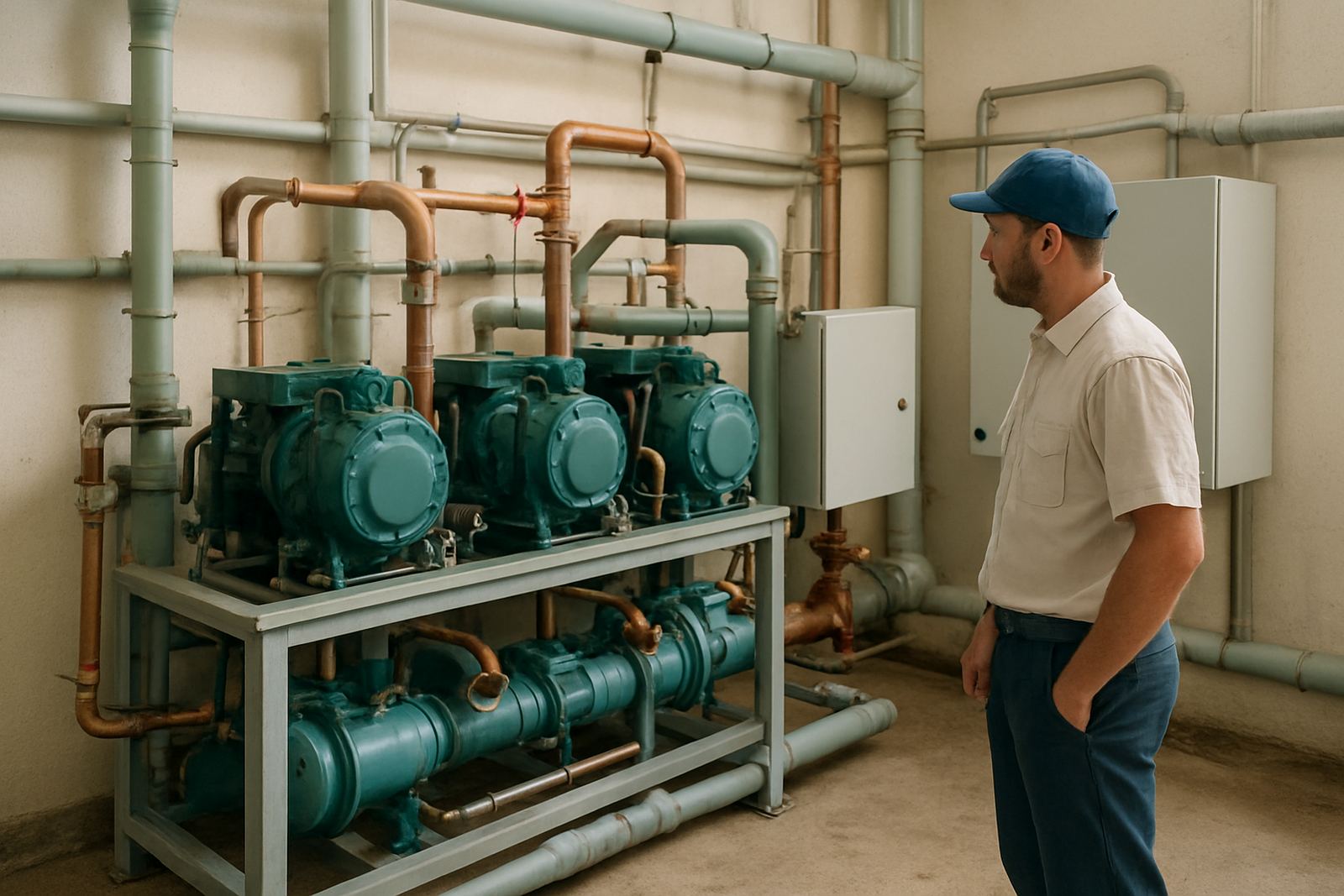
Some suspended units are connected to existing refrigeration pipework, while new installations may need full line sets, insulation, cabling and drainage runs. We also check whether the electrical supply can handle the starting load and operating current. If a site runs on a generator or has regular load-shedding, the system should be planned with that in mind so it does not trip repeatedly when power returns.
For larger commercial and industrial sites, compliance matters. That includes proper isolators, safe access for servicing and installation that suits the building layout and municipal requirements. If the unit is going into a busy space, we also consider noise and vibration so it does not become a nuisance during trading hours.
Ongoing Care In Durban Heat And Coastal Air
Suspended units need regular care to keep airflow steady and energy use under control. Dirty filters, blocked drains and coastal corrosion can all reduce performance. In Durban, a unit that is left too long without attention often starts to ice, drip or cycle poorly, especially in humid months.
Planned maintenance usually includes filter cleaning, coil cleaning, refrigerant pressure checks, condensate drainage checks, electrical inspection and a general performance test. On coastal sites we pay particular attention to corrosion on fasteners, casing panels and outdoor components, because once rust starts it spreads quickly in salt air.
- Clean filters before dust builds up
- Keep intake and discharge areas clear
- Check for unusual noise or vibration
- Watch for water dripping from the indoor unit
- Book a service before peak summer use
- Keep records of breakdowns and repairs for larger sites
Service contracts are useful for schools, factories and businesses that cannot afford stop-start comfort problems. Regular visits also help spot leak issues, worn fans and weak electrical parts before they fail during a hot spell.
What To Check Before You Order
Before choosing a suspended unit, measure the room properly and note the ceiling height, insulation, number of people using the space and how often doors are opened. A room with steel roofing and no insulation will need a different size to one with insulated ceiling panels. If the space has heat-producing equipment, tell us what runs there and for how long.
It also helps to know the electrical supply available, whether the site has three-phase power, and where the condensate can drain. If you are replacing an old system, send the previous model details and explain what worked well and what did not. That saves time and helps us quote the right solution first time.
For Durban, Glen Anil and nearby coastal sites, we often ask about the building age, roof structure and any history of moisture or corrosion. That gives a clearer picture of the materials and mounting method needed. If the unit is for a workshop or warehouse, take note of forklift routes and access ladders so maintenance can be done safely later.
Key facts
| Type | Ceiling-suspended air-conditioning unit |
|---|---|
| Typical capacity range | About 5 kW to 20 kW plus, depending on room load |
| Power supply | Single-phase or three-phase, subject to model and site capacity |
| Best suited to | Halls, workshops, wide internal areas and open-plan commercial spaces |
| Controls | Wired wall control, timer functions and temperature setting options |
| Service support | Planned maintenance, breakdown call-outs and performance checks |