What a condensing unit does in a refrigeration system
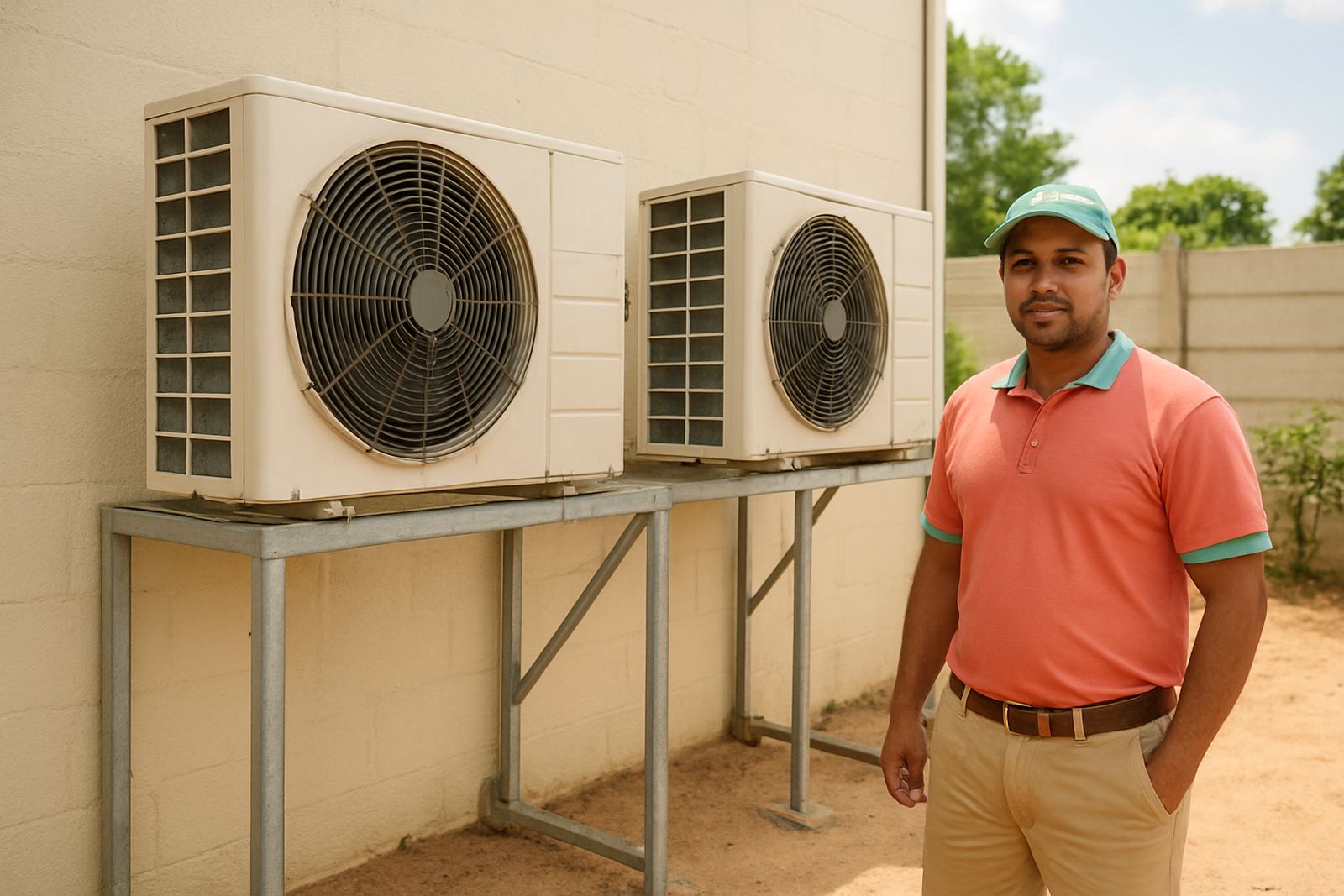
A condensing unit is the outdoor part of a refrigeration system. It removes heat from the refrigerant after the compressor has raised the pressure, then sends liquid refrigerant back to the cold room or freezer room through the pipework and expansion device. In simple terms, it is the section that does the hard work outside while the evaporator inside the room pulls heat out of the air.
For Durban businesses this matters because ambient conditions are not steady. A unit that works fine inland can struggle near the coast where summer heat, salt air and high humidity push the system harder. If the condensing unit is too small, the room runs warm, the compressor cycles too often and product life suffers. If it is too large, you can get poor control, short cycling and unnecessary power use.
We size units for the actual application, not just a rough guess. That includes the room volume, insulation quality, door opening frequency, product turnover and whether the room is holding fresh goods, frozen stock or mixed temperature product. We also factor in load-shedding recovery because a room that has to pull down after an outage needs more from the system than one that only holds overnight temperature.
Available sizes and options for Durban sites
Condensing units are available in a range of capacities, from smaller single-phase units for light-duty cold rooms to larger three-phase sets for busy stores, food plants and industrial sites. The right option depends on how much heat the room produces and how quickly it must recover after door openings, product loading or power interruptions.
- Smaller units for butcheries, cafés and convenience stores with compact cold rooms
- Medium units for restaurant stores, florists and dairy holding rooms
- Larger units for supermarkets, packhouses and distribution depots
- Air-cooled outdoor sets for most Durban and coastal installations
- Low-noise options where neighbours or municipal conditions make noise a concern
- Corrosion-resistant finishes and coated coils for salt-air areas
We can match units to chilled rooms, freezer rooms and display chiller circuits. On the coast we often recommend extra attention to fan motors, coil protection and cabinet placement, especially where the unit sits in direct sun or close to sea air. A neat installation with proper airflow is worth more than a bigger unit placed badly.
Where condensing units are most often used
These units suit commercial and industrial refrigeration where a separate outdoor system is needed. Common uses include food storage, retail back-of-house rooms, pharmacy stock rooms, abattoir support areas, beverage storage and produce handling facilities. They are also used where the refrigeration load is too high for an all-in-one cabinet or where the inside space must stay clear for staff and stock movement.
In coastal KwaZulu-Natal we fit and service units in Glen Anil, Durban North, Umhlanga, Pinetown, Ballito and the South Coast. Each area brings slightly different conditions. Inland parts of Pinetown may see more dust, while the coast sees more moisture and salt. That changes how we plan the service interval, where the unit is mounted and how the pipe run is protected.
For businesses with service contracts, the value is not only in keeping temperature steady. It is also about avoiding product losses, nuisance breakdowns and after-hours call-outs when the room has already started rising. A properly matched condensing unit gives you a better chance of holding stock through summer peaks and load shedding alike.
Installation, power supply and refrigerant considerations
Installation needs to be planned properly from the start. The condensing unit should sit where it has good airflow, enough clearance for maintenance and protection from rain splash, flood water and direct heat where possible. The pipe length, pipe size and lift between indoor and outdoor sections must be correct, otherwise the system can lose capacity and become hard to service.
- Single-phase or three-phase power, depending on the unit size
- Correct breaker and isolator sizing for the starting current
- Proper earthing and weatherproof electrical protection
- Pipework pressure-tested and evacuated before charging
- Refrigerant charge set to suit the equipment and pipe run
- Condensate management and safe drain routing where needed
We also check whether the site has a stable supply during outages and whether backup power is in place for critical product. On some sites, the unit must recover fast after power returns, so the electrical setup and compressor protection become just as important as the cooling capacity. If the installation is rushed, the room may run but not run properly, which is where the costs start to show.
Care and servicing that keeps the unit working
Outdoor condensing units need regular care, especially in Durban where dust, humidity and salt air can build up quickly. Dirty coils reduce heat rejection and force the compressor to work harder. Loose terminals, weak capacitors, damaged fan blades and refrigerant leaks can all start as small faults then turn into a breakdown after a hot day or a power cut.
Our planned maintenance visits usually include coil cleaning, electrical checks, fan inspection, pressure and temperature checks, leak detection and a review of running performance against the room conditions. We also look at whether the system is cycling correctly and whether the compressor is pulling the room down within a practical time.
- Clean the condenser coil before heavy summer use
- Check fan motors and fan blades for wear or vibration
- Inspect terminals and contactors for heat damage
- Test for refrigerant leaks and oil stains
- Confirm that the room temperature is being held within spec
A missed service often shows up first as higher power use or longer run times, not a complete failure. Catching that early saves stock, time and call-out fees. It also means the unit lasts longer, which matters on coastal sites where corrosion can creep in quietly.
What to check before ordering a condensing unit
Before you order, you need the room details, the product type and the operating conditions. A freezer room for seafood is not the same as a chilled room for fruit, and a site in Ballito does not behave the same as an inland industrial yard in summer. The better the information, the more accurate the match.
Please have the following ready if you are planning a new installation or replacement. If you do not have all the figures, we can help work through the site and pull the numbers together.
- Room dimensions, insulation thickness and door size
- Target temperature and product load, including daily turnover
- Indoor evaporator details if replacing a failed unit
- Available electrical supply, phase and breaker capacity
- Pipe run distance, height difference and outdoor mounting position
- Any noise limits, municipal restrictions or access constraints
When these details are right, the condensing unit will be sized for the real job rather than a guess. That means steadier temperatures, better product protection and fewer late-night call-outs when the room starts drifting. We keep the focus on practical equipment that can be serviced locally and supported across the Durban and KZN coast area.
Key facts
| Type | Outdoor refrigeration condensing unit |
|---|---|
| Use | Cold rooms, freezer rooms and display chiller systems |
| Capacity range | Small commercial to larger industrial applications |
| Power supply | Single-phase or three-phase, site dependent |
| Operating conditions | Suitable for Durban heat, humidity and coastal air |
| Service support | Installation, maintenance, leak checks and breakdown call-outs |