What a freezer room door does in frozen storage
A freezer room door is a purpose-built door set for spaces that run below freezing, usually from around -18 °C to -25 °C depending on the storage need. It is not just a thicker door. The full set must limit warm air ingress, stop frost build-up around the opening and help the refrigeration plant keep temperature stable when people are moving in and out of the room.
For frozen stock, the door is part of the cold chain. If the seal is weak or the frame is not heated correctly, moisture gets in and turns to ice. That leads to sticking doors, damaged gaskets and higher power use. In Durban and along the coast, the air carries plenty of moisture so this matters even more. We fit door sets for cold rooms, freezer rooms and prep areas where the opening is used many times a day.
Typical applications include meat storage, fish, frozen foods, bakeries, warehouse holding rooms and back-of-house supply areas. The right door should close cleanly, resist wear from trolleys and handles, and stay serviceable even when loadshedding or voltage swings place extra strain on the system.
Standard sizes and door set options
Freezer room doors are made in a range of clear opening sizes to suit single-dolly traffic, pallet movement or staff access. Common widths are 900 mm, 1 200 mm and 1 500 mm, with larger openings available for high-traffic rooms. Heights are often 2 100 mm to 2 400 mm, but larger formats can be planned where the room design allows it.
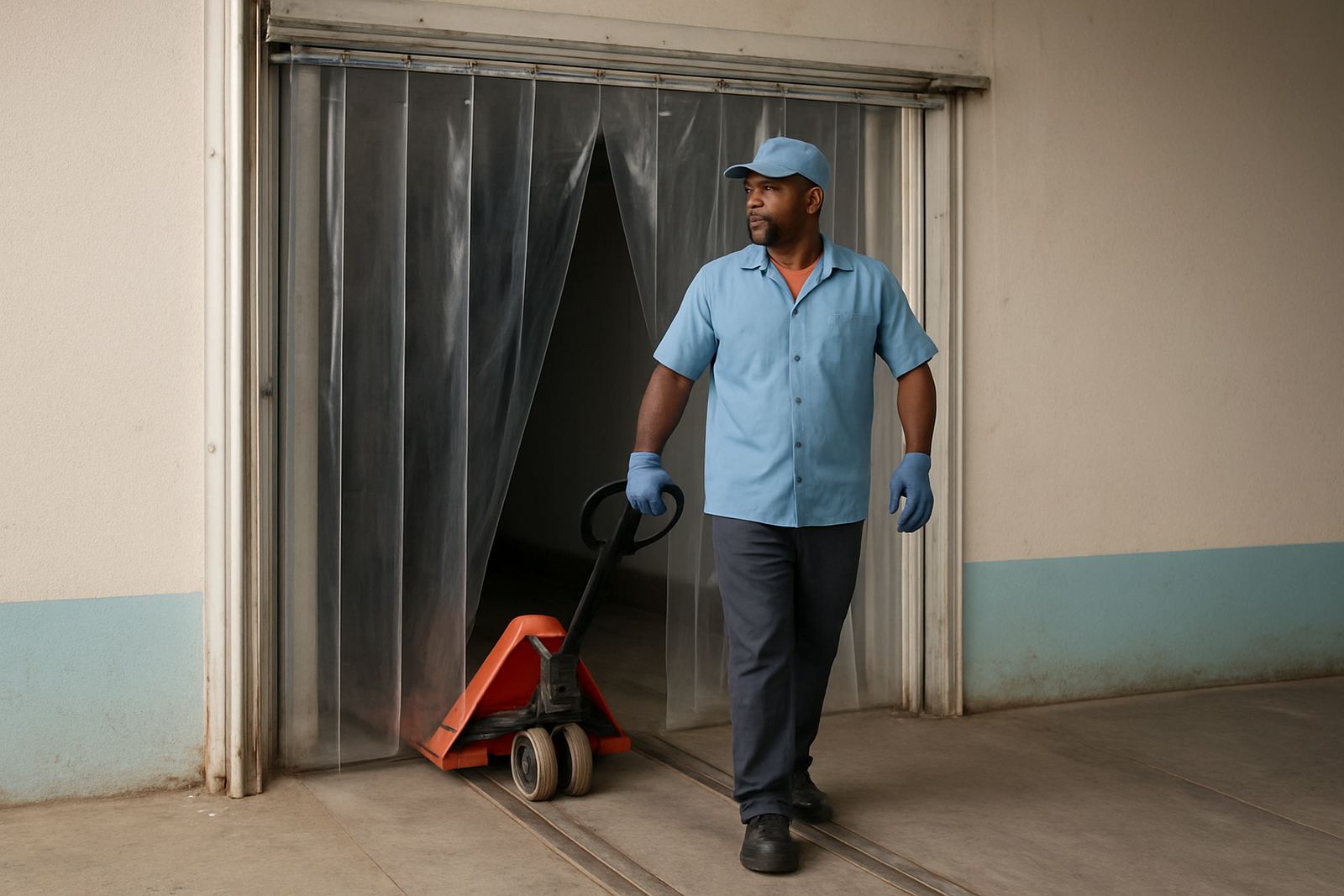
Options depend on how the room is used and how often it is opened. We supply manual swing doors, hinged insulated doors and sliding door arrangements where space is tight. For busy sites, a door with a heavy-duty latch, internal release and good corner sealing can save time and reduce wear. Some sites need a vision panel, kick plate, or a stronger threshold for trolley movement.
- Insulated door leaf with low-temperature sealing
- Heated frame or heated perimeter where frost control is needed
- Heavy-duty hinges and latch hardware
- Internal safety release for staff protection
- Optional viewing panel for controlled access areas
For higher use rooms, we also look at access frequency, door swing direction and whether the opening is exposed to direct sun, sea air or forklift traffic. Those details affect the long-term fit and the amount of maintenance the door will need.
Heated frames, seals and low-temperature build
The main difference between a freezer room door and a general insulated door is the way it handles frost. Heated frames help stop ice forming at the jambs and threshold. Strong magnetic or compression seals hold the cold in and reduce moisture entry. The door leaf is usually insulated with a dense core that supports low heat transfer, while the edges are finished to limit air leakage.
Good low-temperature doors also need a proper threshold detail. If the floor is uneven or the seal line is poor, cold loss happens at the bottom first. In some rooms, a heated sill or underfloor arrangement is needed. That is especially true where cleaning hoses are used or where humidity is high and the room opens many times during a shift. A small gap can turn into a frost line quite quickly.
We check the frame build, gasket condition and hinge alignment during installation and service visits. If the door rubs, drags or does not latch properly, the room will work harder than it should. That affects temperature control and can shorten compressor life over time.
Where freezer room doors suit best
These doors suit sites that hold frozen product for short or long periods and need dependable access throughout the day. In Durban North, Umhlanga and Glen Anil we often see freezer rooms in food handling sites that need regular restocking. In Ballito and the South Coast, coastal moisture and warm ambient temperatures add more strain, so the sealing and frame heating become even more important.
They are commonly used in:
- Butcheries and meat processing rooms
- Seafood storage and packing areas
- Supermarket back stores and display chiller support areas
- Restaurants, hotels and catering depots
- Pharmaceutical and controlled storage rooms where cold stability matters
- Warehouses and distribution sites with frozen goods
If the room is in a plant area or close to external doors, we also consider wind exposure and dust. In Pinetown and inland sections of the KZN coast, a door that is exposed to traffic or temperature swings may need extra attention at the sealing points.
Installation, power use and site requirements
A freezer room door should be fitted after the room opening, floor level and panel alignment are checked. If the frame is out by only a few millimetres, the seal can be compromised. We measure the clear opening, check the hinge side, confirm the swing or slide path and allow for service access around the door set. If a heated frame is specified, the electrical feed must be planned cleanly and protected correctly.
Power needs are normally modest, but they do matter. Heated frames and anti-frost elements need a stable supply and proper isolation. On sites affected by loadshedding or generator changeover, the control arrangement should be checked so the door heating does not trip unnecessarily or remain off for too long. If the freezer room is part of a larger cold store, the door may also need to tie in with temperature logging and compliance checks.
Municipal and site rules can also affect the job. Fire exits, hygiene standards and staff escape routes must be kept clear. We assess the opening against the room layout before recommending a door type, especially where the entrance is close to a prep area, wash bay or main passage.
Care, servicing and signs the door needs attention
A freezer room door should be inspected regularly because minor wear becomes a cold loss issue very quickly. Seals harden, hinges settle and heaters can fail without obvious warning. Coastal humidity can also speed up corrosion on fixings and frame parts if the door is not cleaned and checked properly.
Planned maintenance helps avoid breakdowns and keeps the room running at the right temperature. During service we look at alignment, gasket condition, heater function, latch operation and any frost around the perimeter. If the door is hard to shut or there is visible icing at the edge, it should be attended to before the problem spreads.
- Check that the door closes fully without force
- Look for frost lines around the frame or sill
- Inspect seals for splits, flattening or gaps
- Test heater operation where fitted
- Clean the threshold and remove debris that stops sealing
If a door is used all day, a service contract is often the simplest way to keep it in order. That is especially useful for food sites that cannot afford temperature excursions or stock loss during busy periods.
},{Key facts
| Temperature range | Suitable for freezer rooms typically running from -18 °C to -25 °C |
|---|---|
| Door types | Manual swing, hinged insulated, and sliding door arrangements |
| Typical widths | 900 mm, 1 200 mm and 1 500 mm, with larger sizes on request |
| Heated features | Heated frames, sill heating and anti-frost perimeter options |
| Door materials | Insulated core with heavy-duty seals, hinges and latch hardware |
| Service support | Installation, maintenance, fault finding and compliance checks across Durban and the KZN coast |