What an underbar fridge does in daily service
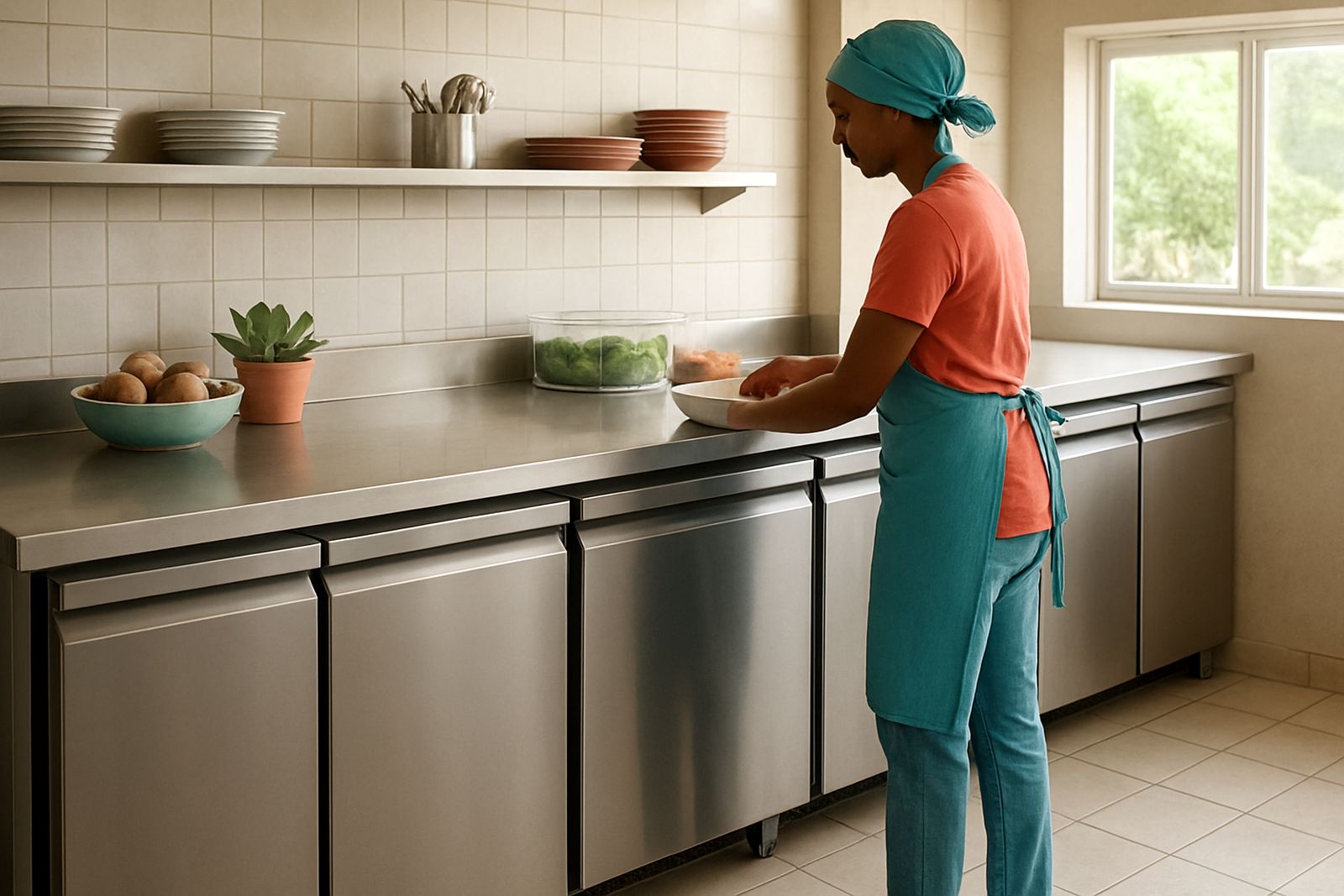
An underbar fridge is a low-height refrigerated cabinet built to sit below a counter, under a bar top, or against a prep line. It gives you quick access to bottles, mixers, dairy, garnish, takeaway drinks or plated items while keeping the working surface clear. In a busy service area that matters because staff can move faster and the floor space stays easier to manage.
These units are chosen where a standard upright cabinet would block movement or make the counter line too tall. They are used in cocktail bars, hotel lounges, coffee shops, bakeries, canteens and small kitchens that need chilled storage right at the point of use. On the KZN coast, where humidity is high and doors open often, the right cabinet helps keep product temperatures steadier and cuts down on unnecessary wear.
Typical sizes, door styles and internal layouts
Underbar fridges come in compact one-door units as well as longer two, three or four-door cabinets. Common widths range from about 900 mm to 2 400 mm, with depths around 500 mm to 700 mm and heights usually between 800 mm and 950 mm. That makes them suitable for a counter run in Glen Anil, a bar fit-out in Umhlanga or a café kitchen in Ballito where the service line has to stay open.
- Solid door or glass door options, depending on whether you want product visibility or better insulation
- Fixed shelves or adjustable shelves for bottles, tubs and prep containers
- Stainless steel external finish, with interiors that are easy to wipe down
- Forced air or fan-assisted cooling for more even temperature control
- Left-hand or right-hand door swing on certain sizes
Some units are built for bottle service with deeper shelf spacing, while others work better for food service with gastronorm pans and shallow trays. If the cabinet sits under a granite or stainless counter, check the clear opening carefully. A few millimetres can save a lot of trouble later, and a too-tight install usually means poor airflow and heat build-up.
Best uses in bars, cafés and prep stations
Underbar fridges suit any site where chilled items must be reached quickly and frequently. In a bar, that could mean beer, wine, mixers, lemons, garnishes and spirits that need to stay cold between orders. In a café, it may be milk, cakes, wraps, sandwich fillings and takeaway drinks. In a prep kitchen, they work well for ingredients that must stay close to the cook line without being exposed on open counters.
Because these cabinets are low and accessible, they also help with staff flow. You reduce walking time, door standing time and the amount of product left out on a prep table. That is useful during lunch rushes, weekend trade and load-shedding recoveries when your team needs the cold chain back up quickly. For coastal sites, a unit with proper drainage and a good door seal is worth the money from day one.
- Bars and cocktail stations
- Cafés and bakeries
- Hotel and guesthouse service areas
- Restaurant prep lines
- Small convenience outlets and staff canteens
Installation needs, power supply and site conditions
Most underbar fridges run on standard 230 V single-phase power, which suits typical hospitality sites in Durban and the surrounding areas. They should be connected to a dedicated socket where possible, with enough space behind and around the cabinet for heat rejection. If the condenser is starved for air, the fridge will work harder, use more power and shorten component life.
For installation, the floor must be level, the cabinet must sit square and the door seals must close properly. If the unit is built into a bar counter, leave ventilation space as per the maker's instructions and avoid blocking vents with skirting, boxes or mop buckets. On the coast, salt air and moisture can corrode fittings faster than inland, so we often recommend stainless external surfaces, regular cleaning and a sensible service schedule. During load-shedding, the cabinet should be kept closed and checked once supply returns to make sure it has pulled back down to temperature.
Some sites also need waste drainage for condensation, especially where the unit is opened many times a day or sits in a warm kitchen. If the cabinet is installed close to ovens, dishwashers or direct sun, allow extra breathing room. Heat from nearby equipment can push running temperatures up and make the compressor cycle too often.
Care, cleaning and service work that keeps temperatures steady
Routine care is simple but it must be done. Clean the door seals, wipe the shelves, clear the drain, vacuum the condenser and check that the fan area is free of dust and grease. In a commercial site, these jobs should be built into the cleaning routine rather than left until a breakdown happens. Small issues like a damaged seal or blocked air path often show up first as warm spots in the cabinet.
Our planned maintenance and call-out work covers underbar fridges as part of broader refrigeration support in Durban, Durban North, Umhlanga, Pinetown, Ballito and the South Coast. We also handle leak detection, electrical fault finding, temperature logging and compliance checks for food and beverage operators that need records for internal controls or municipal inspections. If a cabinet is not holding set temperature, or the compressor keeps starting and stopping, that needs attention before stock loss becomes a real cost.
- Check door seals weekly for cracks, gaps or sticky sections
- Keep vents, coils and fan grilles clean
- Watch for water pooling under the cabinet
- Review temperature readings after power interruptions
- Book servicing before summer peak, not after a failure
What to check before you order one
Before ordering, start with the opening size, the volume of stock and how the cabinet will be used through a normal service. A bar that serves high drink volumes may need more door openings and stronger recovery than a prep station that is opened a few times a shift. If you need the cabinet for bottles, ask for shelf spacing that suits standard bottle height. If it is for food, check tray compatibility and usable internal depth.
Also confirm the ambient working conditions. A cabinet that performs well in a cool back room can struggle in a hot prep line near cooking equipment. Ask about temperature range, insulation, compressor access, noise levels and whether the unit can handle the local conditions at your site. For coastal installations, a model with better corrosion resistance is usually the smarter buy, especially if the cabinet will be cleaned daily with water and detergent.
Finally, think about service access. If the cabinet is boxed in too tightly, any future repair takes longer and costs more. A unit that is easy to reach, easy to clean and easy to monitor will usually pay for itself faster, and it avoids that last-minute panic when stock starts warming up on a Friday night.
Key facts
| Product type | Compact undercounter refrigerated cabinet |
|---|---|
| Common sizes | 900 mm to 2 400 mm wide, approx. 800 mm to 950 mm high |
| Power supply | 230 V single-phase, dedicated socket recommended |
| Temperature range | Typically 0°C to 5°C for chilled storage |
| Finish options | Stainless steel or coated metal exterior |
| Typical use | Bars, cafés, prep stations, hotel service areas |