What a dehumidifier does in a working building
A dehumidifier pulls excess moisture out of the air and discharges that water safely, either into a drain or a collection point depending on the model. In Durban’s humid climate this is useful in backrooms, packaging areas, stores, records rooms and cold-linked spaces where damp air causes condensation, mould, corrosion and product damage. In many sites, the issue is not temperature alone, it is the moisture content in the air that keeps climbing after doors open and close all day.
For commercial use, a dehumidifier is normally chosen for a clear purpose: protect stock, keep floors drier, reduce fogging on chilled surfaces, and help staff work in a cleaner space. On the coast, the equipment has to cope with warm wet air, salt in the air near the beach, and regular power interruptions. That means the right unit, installed properly, matters far more than a small domestic machine dropped into a big room.
Size options and capacity ranges we commonly supply
Dehumidifiers are selected by litres of water removed per day, not by guesswork. A small enclosed room may only need a compact unit rated from about 10 to 20 litres per day, while a larger store room, archive or process area may need 30 to 70 litres per day or more. For bigger moisture problems, ducted or higher-capacity units are often more suitable than trying to run several small machines together.
We look at floor area, ceiling height, door openings, how often people come and go, and whether there are wet processes nearby. A room with wash-down activity, incoming stock from outside, or chilled product on open display will usually need a stronger duty cycle. If the area is near the coast or in an industrial park with poor ventilation, the size selection needs extra margin.
- Compact units for small offices, store rooms and copy rooms
- Medium units for packaging rooms, cold-linked stores and back-of-house spaces
- Higher-capacity units for plant rooms, archives and moisture-heavy production areas
- Ducted or fixed installations for continuous humidity control
Where dehumidifiers suit best in Durban and on the KZN coast
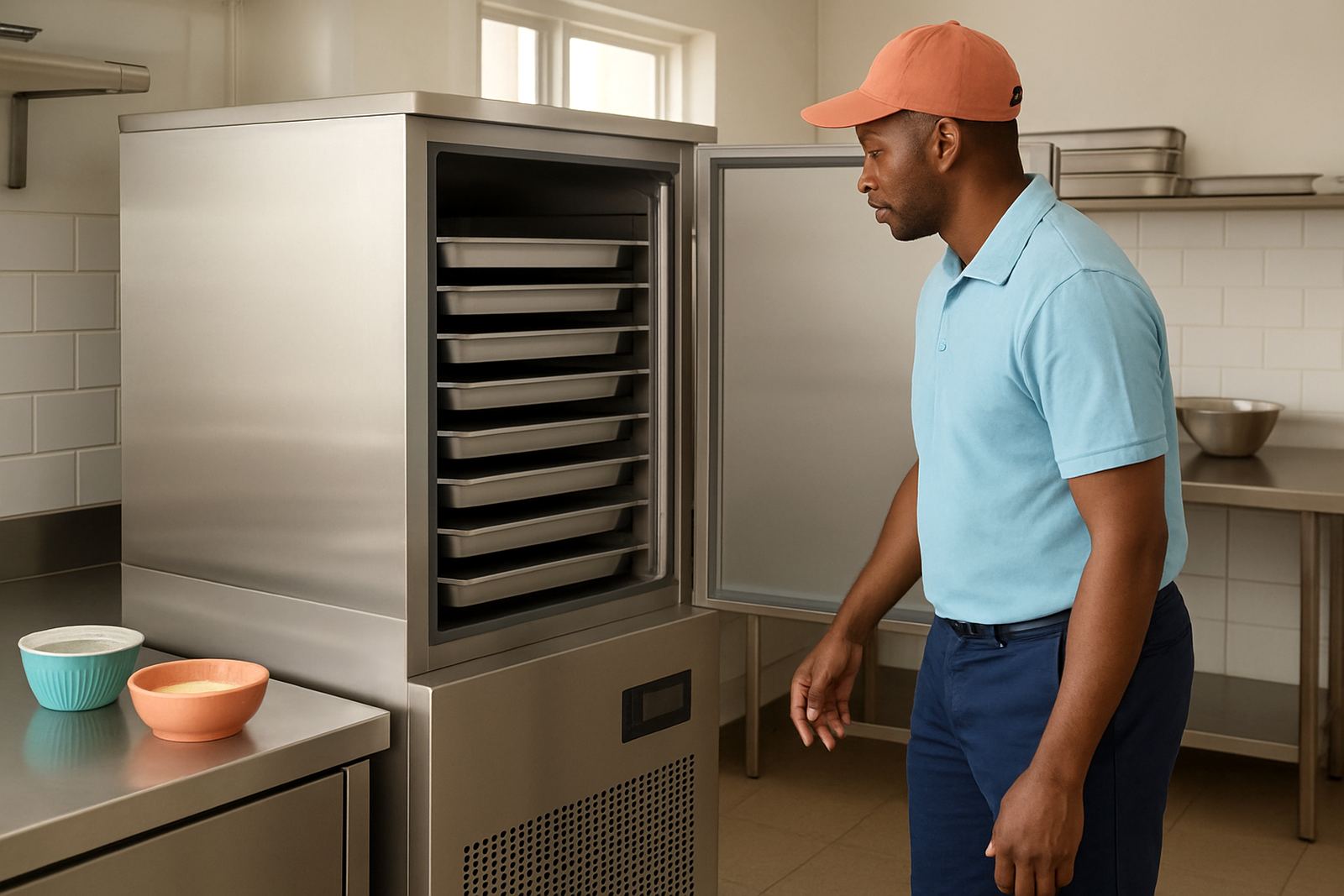
These units are used in many places where damp air causes trouble. We commonly see demand in Glen Anil, Durban North, Umhlanga, Pinetown, Ballito and the South Coast, especially where the building is close to the sea or the space is kept cool for stock. In commercial refrigeration areas, dehumidification can help reduce condensation on walls, ceilings, pipes and stored goods.
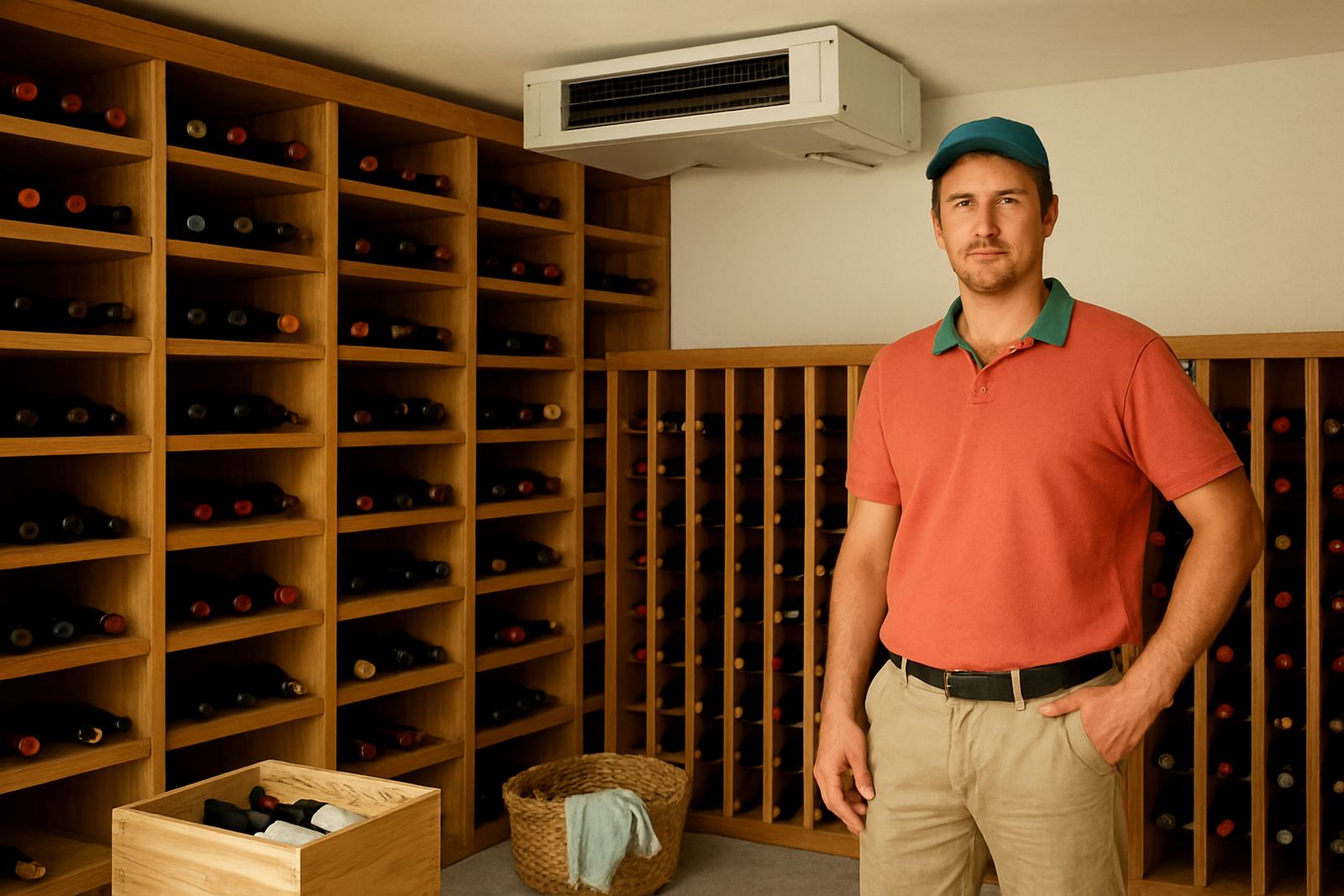
Typical applications include dry goods stores, linen areas, print rooms, archival storage, mezzanines, kitchens, wash-up areas and plant rooms. They also suit moisture-prone interiors in buildings with limited natural air movement. If you have mould on packaging, rust on shelving, water marks near cold surfaces or a heavy smell after rain, a dehumidifier may be part of the answer. It should sit alongside proper ventilation, door control and maintenance of the existing refrigeration or air-conditioning system.
- Storage spaces with cardboard, paper or wrapped goods
- Process rooms with moisture release or frequent wash-downs
- Areas where condensation affects safety or stock quality
- Coastal premises with high ambient humidity most of the year
Installation, drainage and power requirements
Most dehumidifiers need a sound power supply, correct positioning and a sensible drain route. Some units plug into standard single-phase power, while larger commercial units may need dedicated electrical feed and isolator protection. If the site has load-shedding, we assess whether the unit should restart automatically after power is restored and how it behaves on an unstable supply. That matters in KwaZulu-Natal where outages can interrupt humidity control for hours at a time.
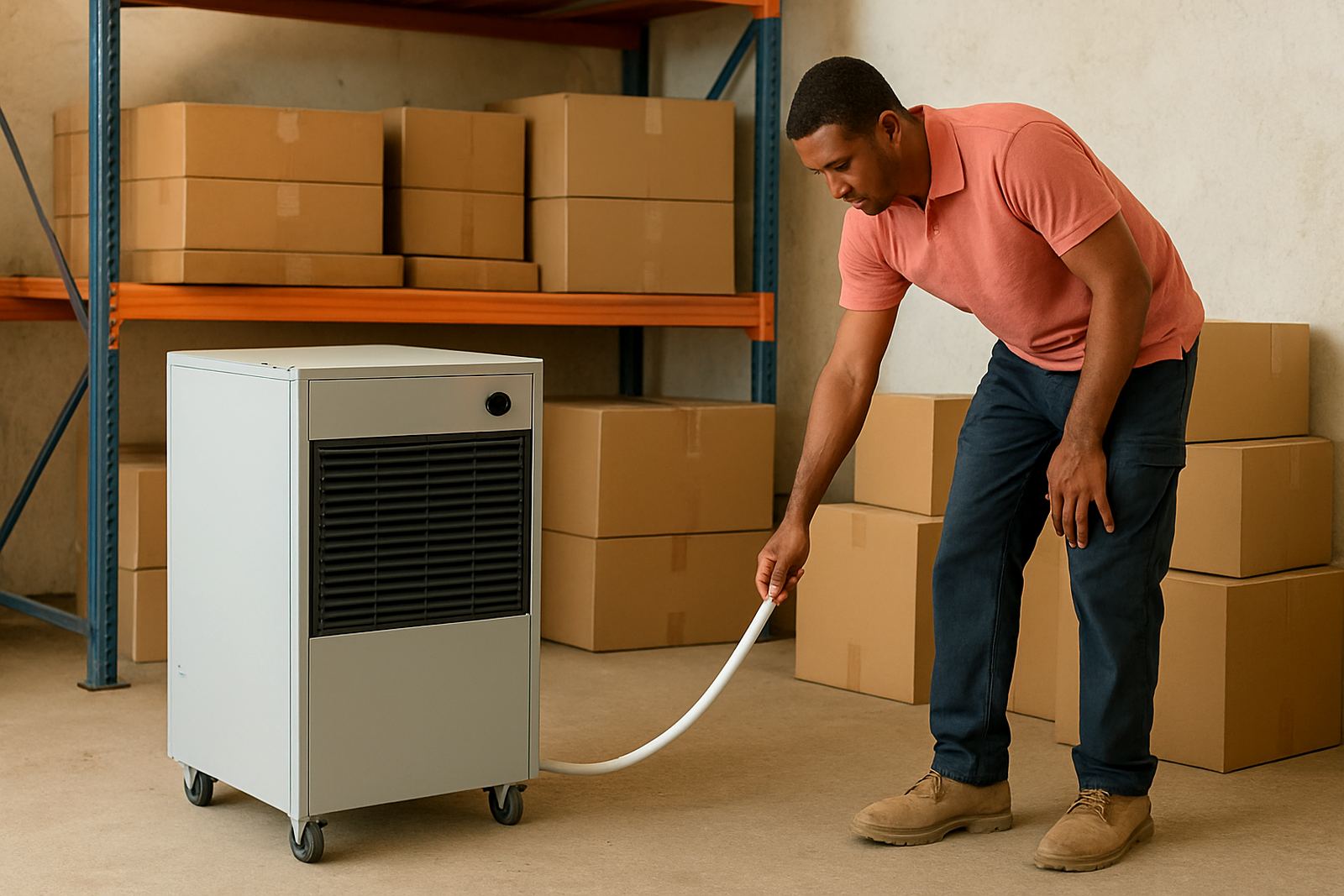
Drainage is also important. Continuous drain options are usually better than a tray that must be emptied by hand, especially where staff are busy or access is limited. The unit should have enough clearance around air inlets and outlets, and it must not be placed where stored items block airflow. In some rooms, a fixed drain line, condensate pump or elevated stand is the cleanest option. Our team checks the site layout before recommending the final set-up, because a poor position can reduce the unit’s effect by a lot.
Care, cleaning and servicing for long life
Like any mechanical cooling device, a dehumidifier works best when it is kept clean and monitored. Filters should be checked regularly for dust and lint, drain lines must stay open, and the coil area should be cleaned so airflow is not restricted. If the machine is running in a dusty store or a food-related back area, servicing intervals may need to be shorter than in a neat office space.
We offer planned maintenance, breakdown call-outs and compliance checks for commercial systems. During a service visit we can inspect the fan motor, controls, condensate path, electrical connections and overall operating condition. If the unit is running constantly but the room still feels damp, that often points to undersizing, a drainage issue or an air leak elsewhere in the building. Catching that early saves power and reduces wear.
- Clean filters and coils to maintain airflow
- Check drainage for blockages or backflow
- Inspect electrics and controls for signs of heat or damage
- Review operating hours if the room load has changed
What to check before you order a unit
Before we quote, it helps to have a few site details ready. Measure the room size, note the ceiling height, and tell us what the space is used for. We also need to know whether the room is sealed, how often doors open, whether the area is cooled, and if there are wash-downs, wet stock or process heat. If there is visible condensation or mould, photos are useful.
It also helps to know whether you need a portable unit or a fixed installation, and whether a drain point is already available. If the site is in a basement or a low-lying coastal building, mention that too because moisture often moves differently there. For buildings with existing refrigeration or air-conditioning plant, we can assess whether the dehumidifier should work on its own or as part of a broader humidity-control plan. A short site visit often avoids the wrong size being fitted first time round, which can become expensive.
Key facts
| Capacity range | About 10 to 70 litres per day, with larger units available on request |
|---|---|
| Power supply | Single-phase or dedicated electrical feed depending on size |
| Drainage | Internal tray, continuous drain or condensate pump option |
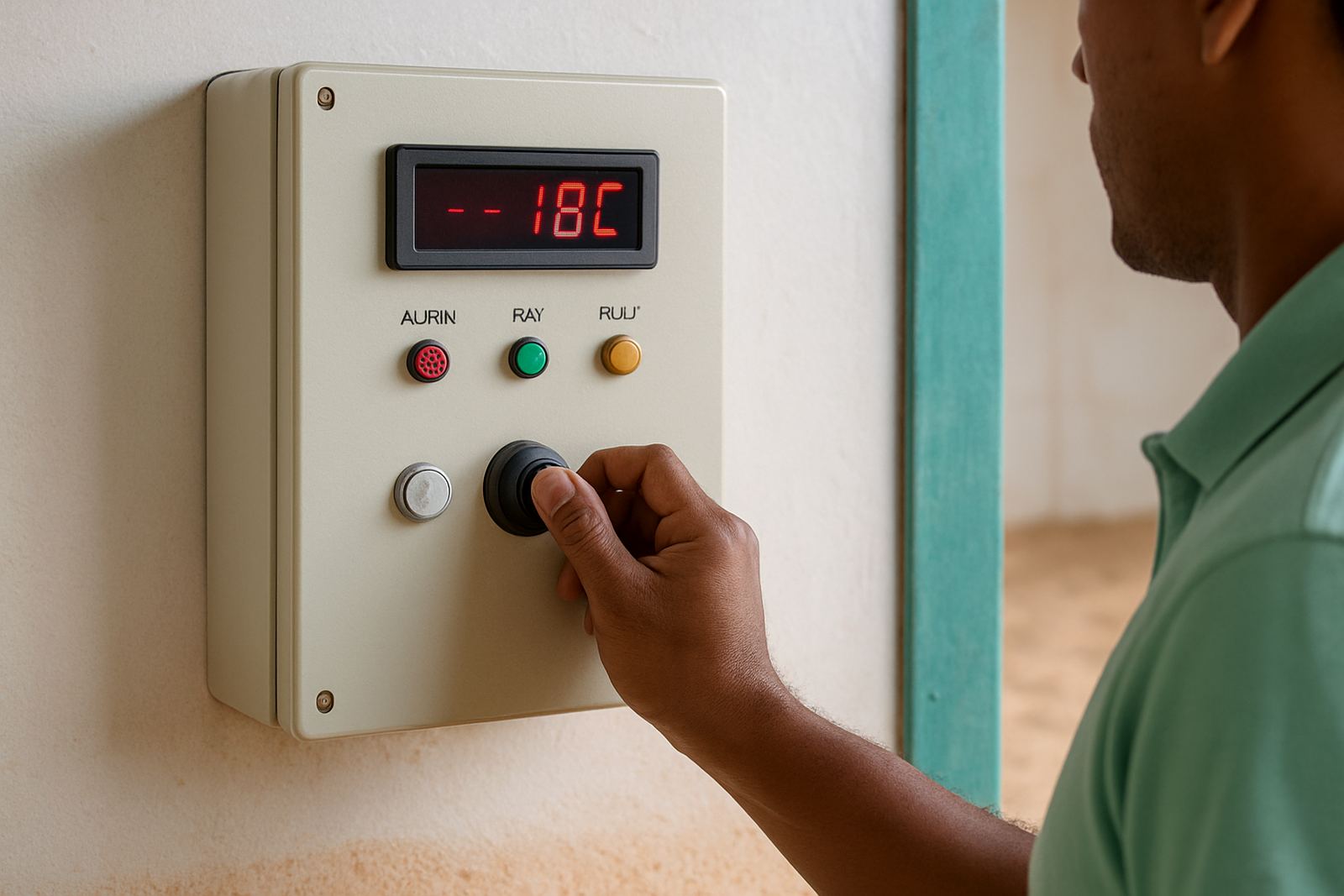
| Control type | Manual controls or automatic humidistat operation |
| Typical applications | Store rooms, process rooms, archives, plant rooms and moisture-prone interiors |
| Service area | Durban, Glen Anil, Durban North, Umhlanga, Pinetown, Ballito and the South Coast |