What a cold room door does in daily use
A cold room door is more than a panel on hinges or a sliding track. It is the point where temperature loss, moisture ingress and operator wear-and-tear usually start, so the door needs to close tight, hold its shape and open easily even when the room is used all day. In Durban’s humidity this matters even more, because warm air rushing in can bring condensation, frost build-up and higher running costs.
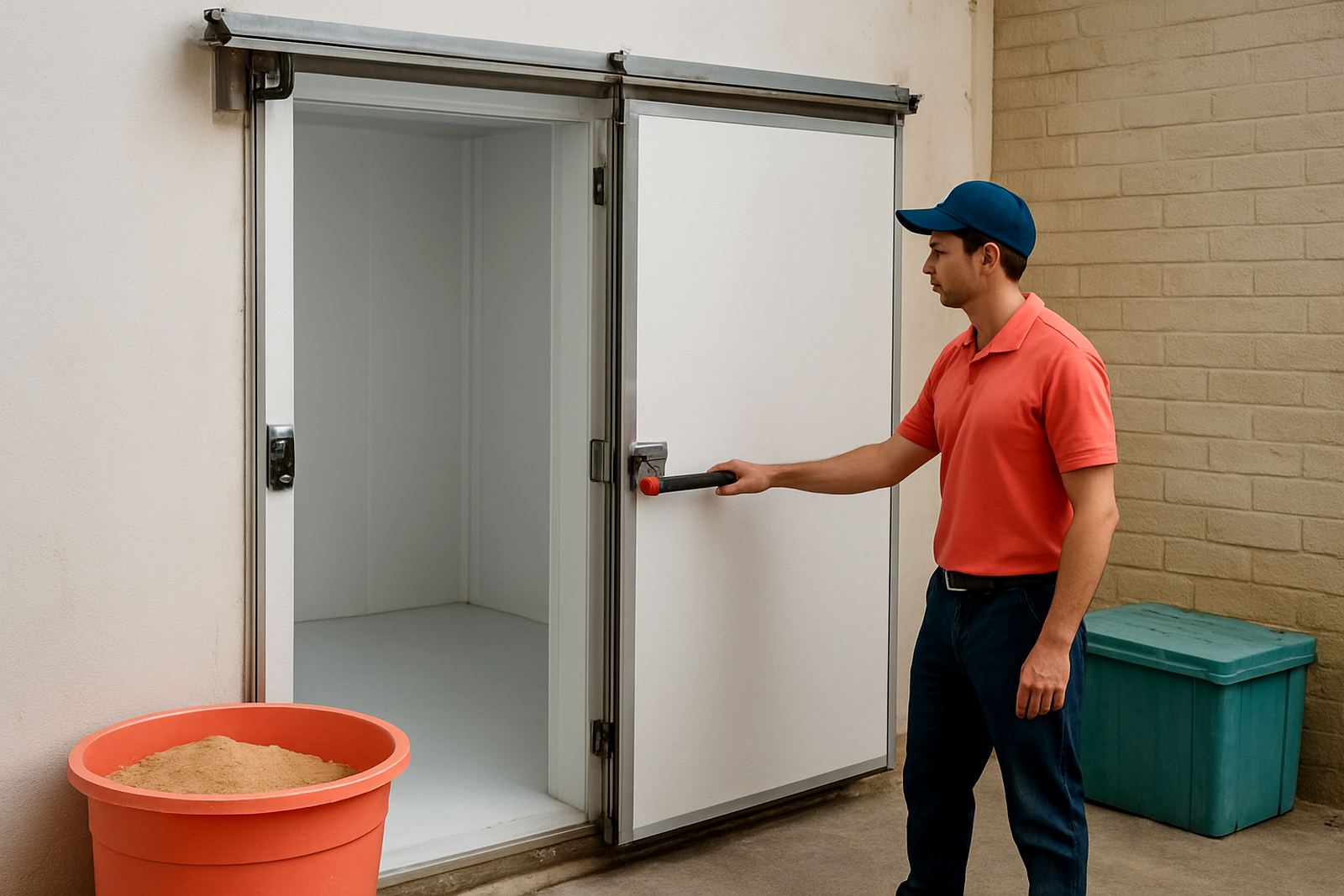
We supply insulated doors for chilled rooms and freezer rooms, with options for positive temperature rooms, sub-zero storage and high traffic back-of-house areas. The door type you choose depends on product flow, opening frequency, room size and how much floor space you have for the leaf or sliding panel. For a small butcher room in Glen Anil or a larger distribution setup in Pinetown, the right door saves time and keeps the room stable.
- Hinged doors for simple access and smaller openings
- Sliding doors for wider openings and busier loading points
- Insulated construction to reduce heat gain and frost
- Seal systems suited to chilled or freezer applications
Hinged or sliding: choosing the right door type
Hinged doors suit rooms where staff move in and out often but the opening is not too wide. They are practical for prep rooms, florists, bakery stores and small retail back areas. A good hinged door should have a firm latch, pressure release for freezer use, and a gasket that seals evenly all round. If the room is opened many times a shift, check that the hinges are heavy-duty and set square, otherwise the door starts to sag and the seal goes off.
Sliding doors work well where you need a larger clear opening or where there is not enough space for a door to swing out. They are common on loading sides, cold stores and rooms where trolleys, pallets or crates move in and out. A properly installed sliding door should run straight, close without rubbing and lock securely. If the track is out by even a few millimetres the door becomes hard to move and people start forcing it, which shortens the life of the whole set-up.
- Hinged doors: best for smaller openings and frequent manual access
- Sliding doors: best where floor space is tight or traffic is higher
- Freezer doors: need stronger seals and anti-condensation details
- Chilled-room doors: focus on easy access and clean closing action
Sizes, finishes and practical options
Cold room doors are usually made to suit the room opening rather than forcing the room to fit a standard size. Common clear openings range from about 800 mm wide for small chilled stores right up to 2 400 mm or more for larger loading access, with heights often from 1 900 mm to 2 400 mm depending on the room and traffic. We can advise on the opening size, door thickness and hand of opening so the door works with the rest of the room layout.
Options include different insulation thicknesses for chilled and freezer service, viewing panels where staff need visibility, threshold details for hygiene, and finishes that clean down well in food areas. In coastal conditions you also want hardware that handles humidity and salt air better than light-duty fittings. A door that looks fine in year one can start giving trouble once the seals harden or the track corrodes, so material choice matters from the start.
- Typical door thickness: around 75 mm to 150 mm depending on duty
- Finishes suited to food handling and frequent wash-down
- Locking and handle options for staff access and safety
- Pressure equalisation details for freezer rooms
Where cold room doors suit best in KZN
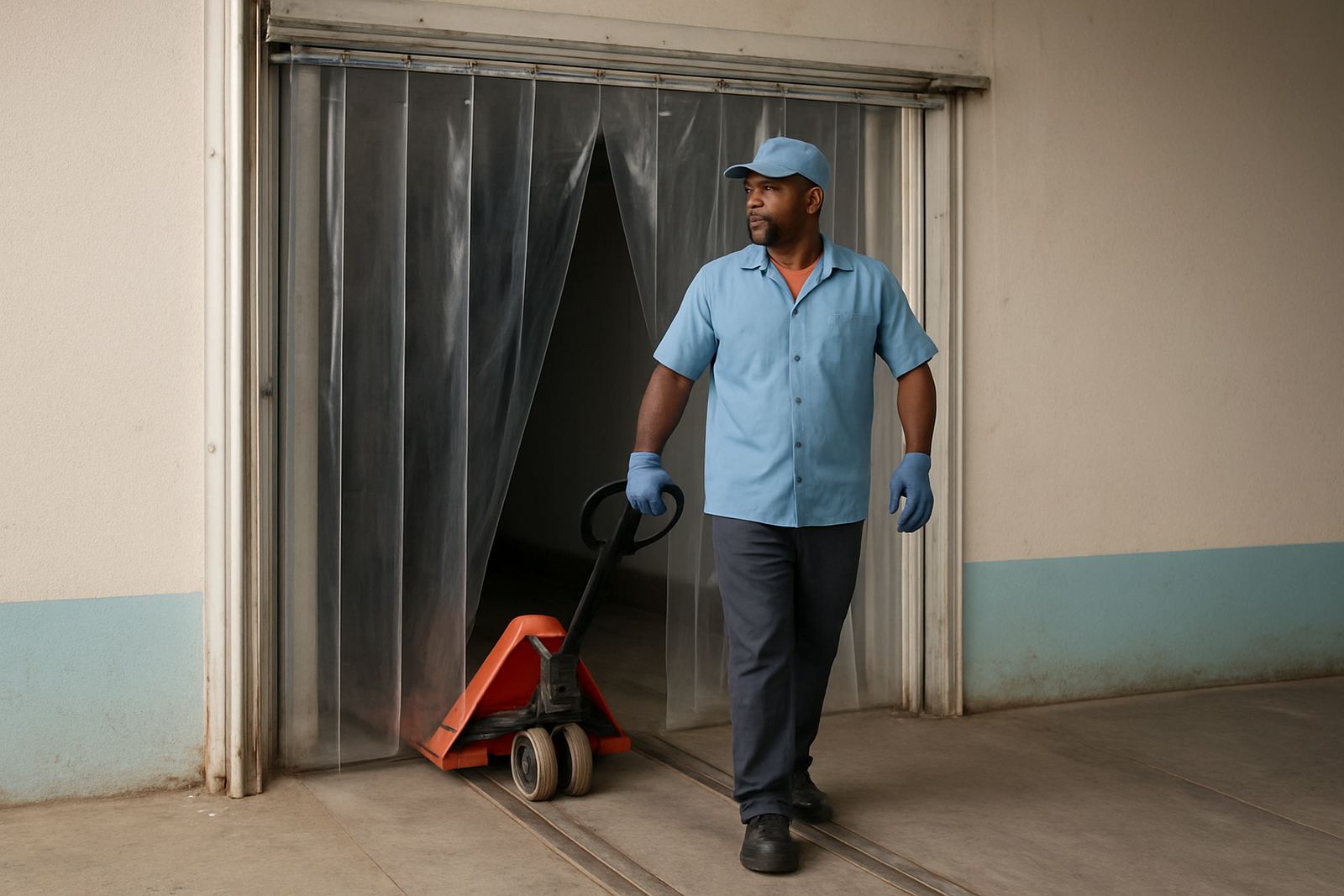
We fit and service cold room doors for supermarkets, restaurants, butcheries, fruit and vegetable stores, bakeries, bottle stores, abattoir support rooms, pharmaceuticals and industrial storage. On the KZN coast, we often see doors working hardest in kitchens and stores that get opened before sunrise, then again through the day as deliveries come in. That constant movement makes a clean seal and smooth action essential.
For Durban North, Umhlanga, Ballito and the South Coast, the main issues are often humidity, corrosion and power interruptions. During load-shedding, doors are expected to hold temperature for longer, so a good seal becomes part of the protection of stock. For Pinetown and inland sites, dust and heavier traffic can be the bigger problem. The room and the door need to match the site conditions, not just the product being stored.
- Food retail back rooms and prep areas
- Distribution and storage rooms with pallet movement
- Small chilled stores in hospitality kitchens
- Freezer rooms for frozen goods, meat and ice storage
Installation, door performance and power needs
Cold room doors do not need power to operate in normal use, but the room they serve must be installed correctly for the refrigeration system to hold temperature. The door frame, floor threshold, seal line and panel alignment all affect how much work the unit has to do. If the door leaks, the compressor runs longer and the evaporator can ice up faster. That leads to higher electricity use and more call-outs, sometimes for what turns out to be a door problem rather than a refrigeration fault.
Freezer doors may need heated edges, anti-sweat measures or pressure relief components depending on the room design. These details must be planned with the refrigeration layout so you do not end up with a door that freezes shut or sweats heavily around the frame. Our team checks door position, opening direction, traffic flow and clearances before fitting. It saves a lot of trouble later, and usually a lot of Rand too.
- Check floor level and opening square before ordering
- Allow space for handles, tracks and full door swing
- Match the door to the room temperature and traffic rate
- Plan for freezer pressure relief and condensation control where needed
Care, servicing and signs the door needs attention
Door care is basic but important. Keep the gasket clean, wipe down the frame, check hinges or rollers, and make sure staff are not slamming the door or leaving it propped open. In many cases the first sign of trouble is not a failed compressor, it is a door that no longer closes flush or has ice starting at the bottom edge. Once that happens the room starts working harder and stock temperature becomes less stable.
Our service team handles planned maintenance, breakdown call-outs and compliance checks on cold room doors as part of the wider refrigeration system. We also check temperature logging, electrical fault finding and leak detection where a door issue has led to repeated icing or uneven cooling. If a seal is torn, a latch is loose or the track is out of line, it should be fixed before it causes product loss.
- Clean seals and tracks regularly
- Replace damaged gaskets before they split further
- Check for door sag, rubbing or poor closure
- Watch for frost, sweating or air leaks around the frame
What to confirm before you place an order
Before ordering a cold room door, measure the clear opening carefully and note the room use, temperature range and traffic type. You should also confirm whether the door needs to open left or right, slide to one side or the other, and whether it must allow trolley access or pallet movement. If the room is in a coastal area, mention that too, because the finish and hardware choice can be adjusted to suit the conditions better.
It helps to check the existing floor finish, wall panel thickness and whether there is enough room for the door to swing or slide fully open. If the room already has a refrigeration system in place, we can assess the opening and advise on the best fit. For new builds and upgrades in Durban and surrounding areas, a short site visit often prevents mistakes that are expensive to fix later. Getting the measurements wrong by a few millimetres can hold up the whole installation.
- Clear opening width and height
- Chilled or freezer duty
- Hinged or sliding operation
- Opening direction and traffic space
- Coastal or inland site conditions
Key facts
| Door types | Hinged and sliding insulated doors |
|---|---|
| Typical opening sizes | About 800 mm to 2 400 mm wide, with custom sizing available |
| Temperature use | Chilled rooms and freezer rooms |
| Insulation thickness | Around 75 mm to 150 mm depending on duty |
| Common finishes | Cleanable panel finishes with corrosion-aware hardware options |
| Service areas | Glen Anil, Durban North, Umhlanga, Pinetown, Ballito and the South Coast |