What a Commercial Split Aircon Does
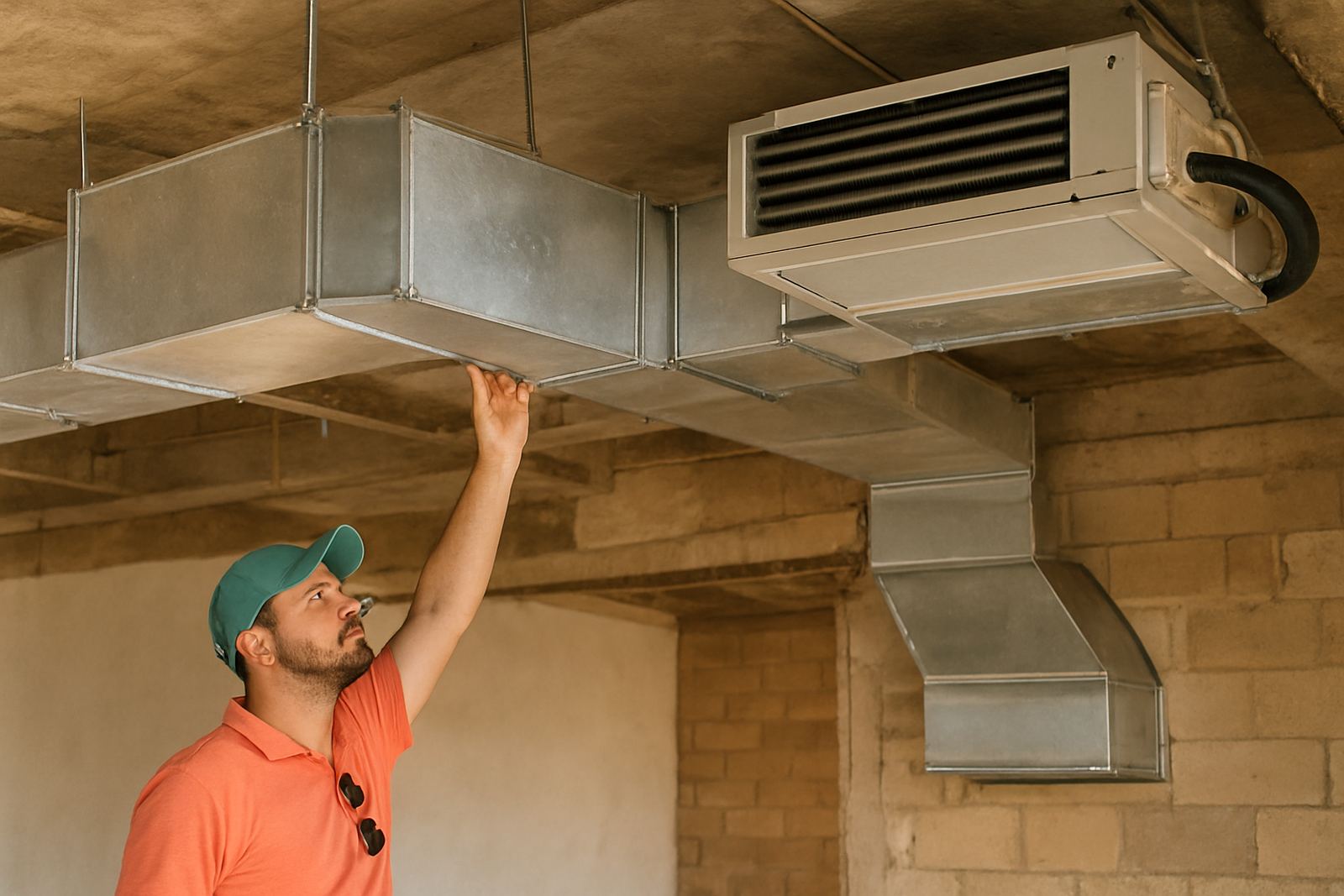
A split aircon uses one indoor unit and one outdoor unit linked by insulated copper pipework and control cabling. The indoor unit handles the room air, while the outdoor unit rejects heat outside, which keeps noise low inside and makes the system well suited to customer areas and working spaces. For Durban conditions, that matters when the sun hits a west facing office or a shop front carries heat from glass and foot traffic.
These systems are commonly used where you want local control in one area rather than cooling an entire building. They are a practical choice for reception areas, back offices, consulting rooms, small retail spaces, boardrooms, and staff areas that need steady cooling through the day. In coastal air, proper installation and regular cleaning are important because salty moisture can shorten the life of coils and electrical parts.
Sizes, Capacities and Control Options
Split systems are available in a range of cooling capacities, usually from about 9 000 BTU/h for a small office or treatment room up to 36 000 BTU/h and higher for larger open spaces. The right size depends on room area, ceiling height, glass, occupancy, equipment heat and how long the unit runs each day. An undersized unit will struggle in summer, while an oversized unit can short cycle and leave the room clammy.
- Small rooms: 9 000 to 12 000 BTU/h
- Medium offices and consulting rooms: 18 000 to 24 000 BTU/h
- Large rooms or open plan areas: 30 000 to 36 000 BTU/h and above
- Single split or multi split options, depending on how many rooms need cooling
- Fixed speed or inverter driven models, selected to match usage and power supply
Most commercial systems include remote temperature control, fan speed settings and timer functions. In some premises, simple controls are preferred so staff can keep the room within a set range and avoid unnecessary call-outs. For treatment rooms and reception spaces, quieter indoor operation is often part of the selection process.
Where Split Aircons Work Best
Split aircons suit spaces that need clean, direct cooling with limited structural work. They are a strong fit for offices in Durban North or Umhlanga, shops in Ballito, and service rooms in Pinetown where the layout changes from one tenant to the next. They also work well in treatment rooms where low noise and stable temperature help keep clients comfortable.
Common use areas include:
- Reception and waiting areas
- Private offices and meeting rooms
- Retail shops and small showrooms
- Medical and beauty treatment rooms
- Staff rooms and small admin areas
If the space opens often, faces strong afternoon sun or has many people in it, the cooling load goes up quickly. In those cases we look at door opening frequency, glass area, insulation and whether another unit is needed to balance the room. Coastal humidity also means drainage must be planned properly so condensate does not drip onto walls, tiles or stock.
Installation, Power Supply and Outdoor Unit Positioning
A proper installation is just as important as the unit size. The indoor unit needs correct position for air throw and return, while the outdoor unit needs enough space for airflow and service access. On the KZN coast we also look for protection from direct sea spray, strong sun and areas where leaves or sand can block the condenser. If the outdoor unit sits too close to a wall or in a hot enclosed corner, performance drops and electricity use climbs.
Power supply should be checked before ordering. Many commercial split systems run on standard 230 V single phase supply, while larger units may need a dedicated circuit and suitable isolator. Cable sizing, breaker size and earthing must be checked on site by a qualified installer. If a building already struggles during load-shedding or has unstable supply, the starting current and running current need to be considered before the final selection is made.
- Dedicated electrical circuit for most installs
- Correct isolator and protection devices at the outdoor unit
- Safe pipe route with insulated suction line and neat wall penetrations
- Condensate drain with proper fall to prevent water pooling
- Outdoor unit mounted clear of dust, vegetation and direct spray
Care, Cleaning and Service Contracts
Split aircons need regular care to keep airflow, cooling and power use under control. Dirty filters reduce room comfort and make the fan work harder, while blocked coils can lead to poor cooling and freezing on the indoor unit. In coastal towns this happens faster because salt and moisture cling to fins and filters, especially where windows are left open or the unit runs all day.
Our service team handles planned maintenance and breakdown call-outs for commercial sites from Glen Anil to the South Coast. A normal service may include filter cleaning, coil cleaning, drain checks, electrical inspection, temperature reading and general performance testing. For sites with several units, service contracts help keep records in one place and reduce unexpected downtime.
- Wash or replace filters as required
- Check refrigerant pressures and look for leaks
- Inspect drain pans and condensate lines
- Tighten electrical terminations and check current draw
- Test temperature drop and thermostat response
What to Check Before You Order
Before choosing a split aircon, it helps to gather the room details so the system can be matched properly. The exact size, number of windows, direction of sun, occupancy and hours of use all affect the final selection. A small consulting room in Durban North may need a very different unit from a shopfront in Umhlanga or a back office in Pinetown.
Have these details ready:
- Room length, width and ceiling height in metres
- Type of space and how many people use it
- Glass area, direct sun and insulation level
- Power supply available at the site
- Preferred indoor unit position and outdoor unit location
- Whether one room or several rooms need cooling
If you are replacing an old unit, bring the current model details if you have them, plus any history of leaks, tripping or poor cooling. That helps us decide whether the issue is capacity, installation, airflow or an electrical fault. For new sites, a site visit is often the best way to avoid undersizing and to keep pipe runs practical.
Key facts
| Product type | Commercial split air-conditioning system |
|---|---|
| Cooling capacity range | Approx. 9 000 BTU/h to 36 000 BTU/h and above |
| Supply | Usually 230 V single phase, larger units may need dedicated circuits |
| Control | Remote control, thermostat, timer and selectable fan speeds |
| Installation parts | Indoor unit, outdoor unit, copper pipework, drain line, isolator and cabling |
| Best suited to | Offices, reception areas, shops, treatment rooms and meeting rooms |