What a ducted aircon system does
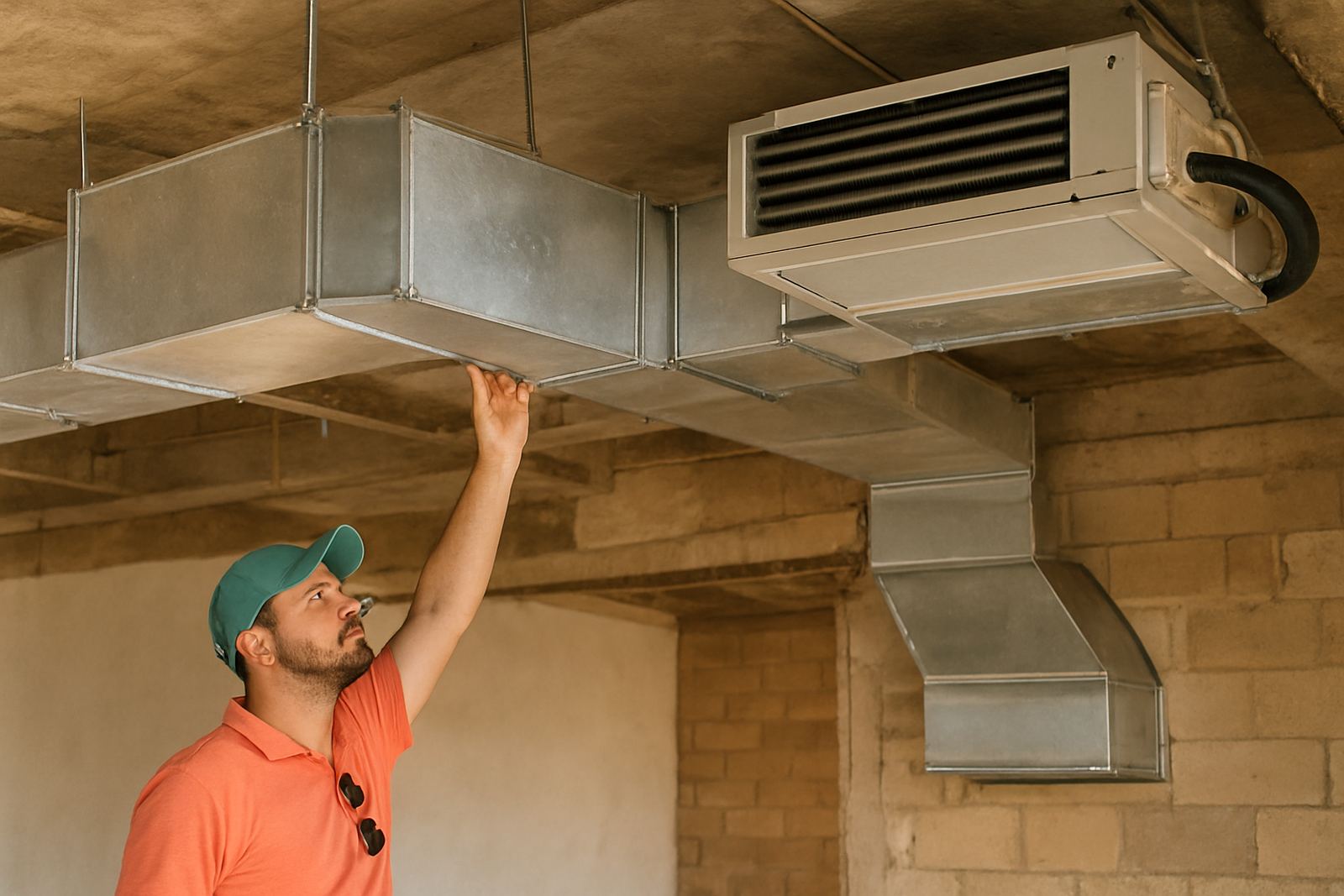
A ducted aircon system keeps the indoor unit hidden above a ceiling, in a roof void, or in a service area, then pushes cooled air through insulated ducts to discreet ceiling grilles. The result is distributed comfort cooling across a larger floor area, with less hot and cold spots than a single wall unit.
These systems are usually chosen for commercial interiors that need a cleaner look and more even air movement. They can also help when the room layout changes often, because supply points can be placed where people actually sit, stand or work, not only where a wall is open.
- Indoor units are concealed out of sight
- Air is delivered through ducts and grilles
- Better for open-plan or multi-room layouts
- Can be zoned for different areas where needed
Typical sizes and system options
Ducted systems are matched to the size of the area, the ceiling space available, and the heat load from people, lighting, glass and equipment. For smaller commercial sections you may see 7 kW to 12 kW units, while larger offices, showrooms and venues often need 14 kW to 28 kW or more. Bigger installations can use multiple indoor units split by zone.
We size systems by the real conditions on site, not just by floor area. A shop in Umhlanga with full-height glass and afternoon sun will need a different spec to a storage office in Pinetown with fewer occupants and better shade. If the capacity is too small the unit runs constantly and still misses the mark, too large and it short-cycles and wastes power.
- Single-zone or multi-zone ducted layouts
- Low-static and medium-static units available
- Options for return air through ceiling or ducted return
- Fresh air integration where the building setup allows it
Where ducted aircons work best
We fit ducted aircons where the client wants comfort cooling without visual clutter. They are a sound choice for boardrooms, reception areas, clinics, restaurants, training rooms, churches, boutiques and larger residential or mixed-use spaces. In Durban North and Glen Anil, they are also popular where the ceiling height is workable and the owner wants a neat finish.
On the coast, humidity matters. Air movement and sensible sizing help keep rooms comfortable when the weather is sticky, especially in summer. In properties near the sea, good filtration and regular servicing are important because salt air and moisture can shorten the life of poor installations.
- Commercial offices and admin blocks
- Retail floors and display areas
- Hospitality spaces and function rooms
- Medical and professional rooms with a tidy ceiling finish
Installation and power requirements
A ducted system needs enough ceiling or roof space for the indoor unit, insulation, ducting and return air path. We check access for maintenance too, because a unit that cannot be reached properly becomes a problem later on. Drainage must also be planned carefully so condensate runs away cleanly and does not drip into ceilings or walls.
Electrical supply must suit the load. Most commercial ducted systems require a dedicated isolator, correct cable sizing and protection at the DB board. Some larger units may need three-phase power. On premises where load-shedding backup is used, we check whether the generator or inverter setup can actually carry the starting current and running load. A unit may switch on and still be underpowered, which causes nuisance trips and poor cooling.
- Dedicated electrical circuit required
- Clear access for filters and service panels
- Proper drainage and insulation needed
- Site checks for ceiling height, roof heat and airflow paths
Care, servicing and common faults
Ducted systems need planned maintenance to keep airflow strong and running costs under control. Filters should be cleaned or changed regularly, ducts checked for leaks, and drain pans inspected for blockages. In coastal areas, coils can collect dust and salt film faster than expected, so waiting until the unit starts struggling usually means a more expensive call-out later.
Common faults include weak airflow, thermostat issues, blocked drains, refrigerant leaks and noisy fans. If one zone is colder than another, or the room never reaches set temperature, the problem may be in the controls, the duct balance, or the refrigerant circuit. We handle fault finding, repairs and ongoing service contracts for commercial sites across the coast.
- Filter cleaning and replacement
- Drain and condensate checks
- Refrigerant leak detection
- Electrical fault finding and temperature checks
What to check before you order
Before ordering a ducted aircon, it helps to confirm the area size, ceiling void depth, power supply, and whether you need one large system or a few smaller zones. You should also consider how many people use the space, how much glass faces the sun, and whether heat comes from fridges, computers or other equipment. These details change the final spec more than most clients expect.
It is also worth checking service access, because a unit that is hard to reach is hard to maintain. If the building has municipal or landlord rules for external condensers, noise or drainage, we need that information upfront so the installation goes in once and works properly. For busy premises in Durban, Ballito or the South Coast, a planned install saves a lot of back-and-forth.
- Confirm room size and ceiling void depth
- Check power availability and backup supply
- Confirm zoning, grilles and return air positions
- Ask about maintenance access and service contracts
Key facts
| System type | Concealed ducted split or multi-zone commercial aircon |
|---|---|
| Common capacities | 7 kW to 28 kW plus, subject to site layout |
| Supply air | Through insulated ducting to ceiling grilles |
| Power supply | Single-phase or three-phase, depending on unit size |
| Controls | Wall controller, programmable timer or zone control |
| Service needs | Filter cleaning, coil wash, drain checks and refrigerant testing |