Controlled cooling for healthcare and funeral use
Mortuary cooling is not the same as a normal cold room. The room must hold a stable temperature, recover quickly after door openings, and keep conditions consistent even when the building is busy or load-shedding interrupts supply. In Durban’s humid coastal climate, that means the room needs proper insulation, good door seals and a system sized for real use, not only the brochure rating.
These rooms are used in hospitals, private mortuaries, funeral homes, pathology facilities and smaller care centres that need dependable low-temperature storage. Typical operating ranges are between 2 °C and 8 °C for controlled cooling applications, with the final set point depending on your procedure and compliance needs. We design the room around the site, room traffic and expected body count, so the system can hold temperature without short cycling or excessive power draw.
Our team in Glen Anil works across Durban North, Umhlanga, Pinetown, Ballito and the South Coast. For sites near the coast we also factor in corrosion protection and drainage, because salt air and damp rooms will shorten the life of poorly specified equipment.
Room sizes, racking and door options
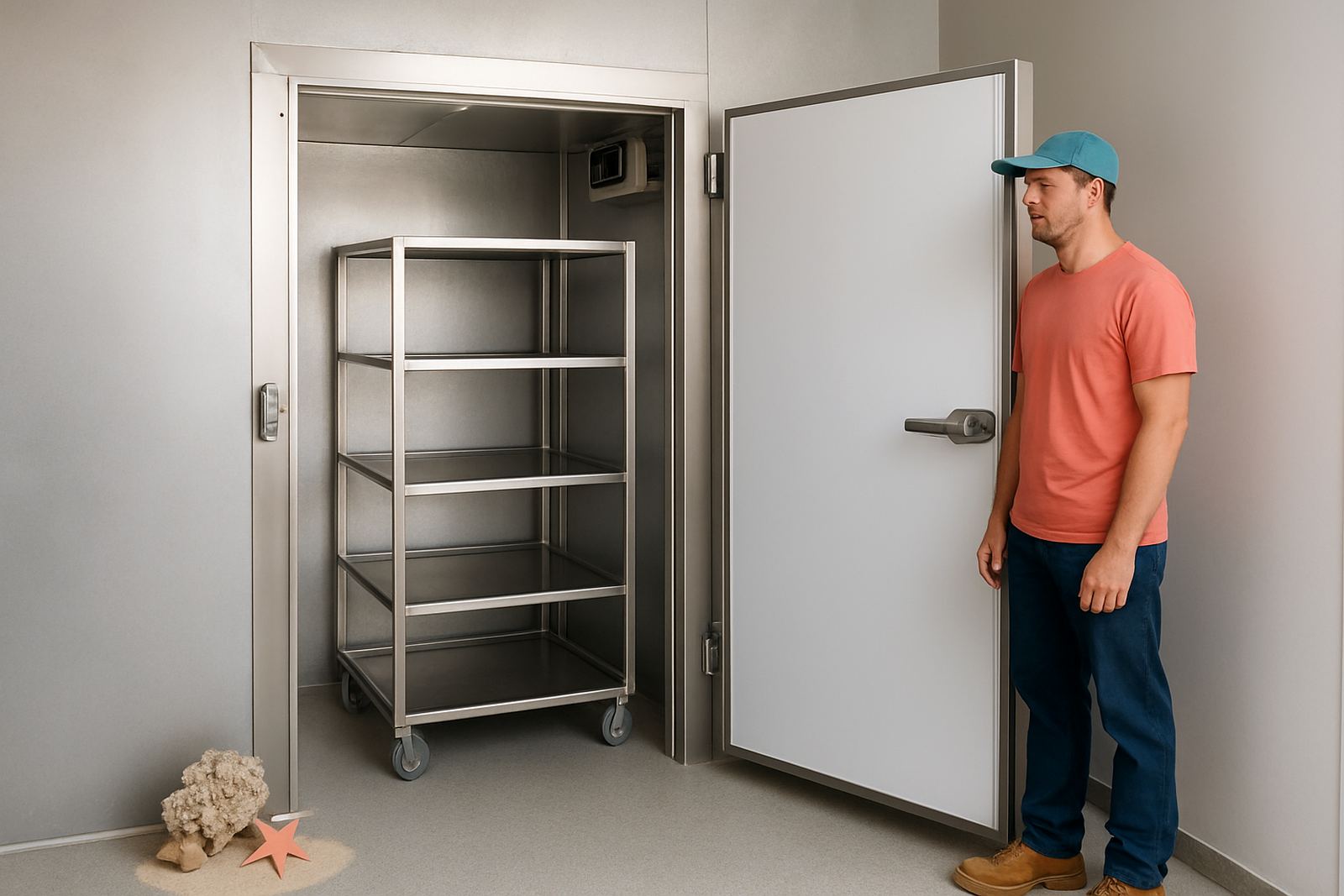
Mortuary cooling rooms are usually built to suit the available floor area and the number of trolleys or body trays you need to store. Small installations may be a single-room unit for a few bodies, while larger sites may need multi-bay rooms with separate access points and clear circulation space for staff.
Common build options include insulated panel rooms, solid insulated doors, glass inspection panels where required, and shelving or tray systems matched to your handling process. We also look at whether the room should be accessed from inside the building or through a service corridor, because that changes the door swing, floor loading and workflow.
- Single-bay rooms for smaller facilities or overflow storage
- Multi-bay rooms for hospitals, undertakers and shared mortuary spaces
- Trolley access with reinforced flooring and level thresholds
- Sliding or hinged doors depending on available space
- Alarm points and temperature display where monitoring is needed
As a guide, panel thickness is usually selected for better insulation in warmer areas, and door hardware must be strong enough for frequent use. We also allow for internal clearance around the trays so staff can move safely without damaging the walls or door seals.
Installation needs, power supply and backup planning
Installation starts with the room envelope, then the refrigeration system, then the electrical and control work. The room must sit on a level slab, with proper ventilation around the condenser section and a drain route for cleaning and defrost water where applicable. If the site is in a high-use part of Durban or along the coast, we check airflow around the plant to prevent heat build-up and unnecessary compressor strain.
Power supply is a key part of the order. Mortuary cooling rooms should be connected to a correctly protected electrical circuit with enough capacity for starting load, controls and any auxiliary heating or anti-sweat components. Where backup power is available, we set up the system so it can recover safely after an outage rather than tripping repeatedly. This matters during planned outages and unplanned load-shedding, especially if the room must remain operational overnight.
- Correct breaker sizing and isolators for the refrigeration circuit
- Voltage checks before commissioning
- Backup power compatibility where the facility has a generator or inverter system
- Drainage and floor falls considered before panel installation
- Access for service work without disrupting the whole facility
If gas piping or remote condensing is needed, line runs are planned to suit the building layout and to keep pressure drop within safe limits. We also verify that controls, sensors and alarms are reachable for staff and maintenance teams.
Where mortuary cooling suits best
These rooms suit places that need controlled short-term or medium-term body storage in a clean, monitored environment. Hospitals often need them for mortuary departments and pathology support. Funeral homes use them to manage intake and preparation timing. Smaller facilities may need a compact room that can handle quieter periods and peak demand without taking over the building.
For coastal and inland KZN sites, we also look at the broader conditions around the room. In Pinetown and inland business parks, dust and heat load can affect condenser performance. In Umhlanga, Ballito and other coastal areas, moisture and salty air can lead to premature corrosion if the system is not protected properly. This is one reason we match the specification to the site rather than fitting the same unit everywhere.
Mortuary cooling can also be combined with separate cold storage for consumables, specimen handling or general refrigerated holding areas, but each zone should be clearly separated so temperatures and hygiene controls stay consistent.
Care, servicing and temperature monitoring
Like any refrigeration system, mortuary cooling rooms need planned maintenance. Filters, fans, door seals, door closers, controls and condenser coils should be checked on a schedule so the room does not drift out of range. A minor fault can become a major issue quickly if the room is busy and the door is opened often.
We recommend regular temperature logging and routine compliance checks. That includes confirming set points, checking alarms, checking defrost cycles and reviewing any warm spots inside the room. In a healthcare setting, records are often just as important as the plant itself. If a sensor starts reading incorrectly or a door seal weakens, the room may still appear to be running while conditions inside are changing.
- Planned maintenance for compressors, fans and controls
- Leak detection and refrigerant checks
- Electrical fault finding if the unit trips or struggles to start
- Temperature logging and alarm verification
- Breakdown call-outs across Durban and the KZN coast
Our service team can support both new installations and older rooms that need better reliability. Where a site has been patched over time, we inspect the full system and identify the parts that are causing repeat faults, rather than only treating the symptom.
What to check before you order
Before ordering a mortuary cooling room, it helps to have a clear picture of how the room will be used. Count the number of bodies or trays the room must hold at peak times, measure the space available, and note any access restrictions such as tight corridors, steps or shared passageways. If the building is occupied while the work is done, installation sequencing matters too.
You should also confirm the required temperature range, available power supply, backup power arrangement, door orientation and whether the room must include alarms, viewing windows or special hygiene finishes. The wrong assumptions at quote stage can lead to a room that is difficult to use and costly to operate.
- Room dimensions and clear access route to the installation area
- Required holding temperature and expected daily use
- Number of trays, trolleys or storage positions needed
- Electrical supply details and backup power available
- Cleaning and drainage requirements for the facility
If you are planning a new mortuary room or replacing an older unit in Durban, Glen Anil, or anywhere along the coast, our team can assess the site and specify a practical system. We handle installation, commissioning and ongoing service support, with one point of contact for operations, maintenance and breakdown response.
Key facts
| Product type | Controlled mortuary cooling room |
|---|---|
| Typical temperature range | 2 °C to 8 °C, depending on use |
| Build style | Insulated panel room with refrigerated plant |
| Room sizes | Compact single-bay to multi-bay layouts |
| Power needs | Dedicated electrical supply with backup planning |
| Service support | Installation, maintenance, temperature logging and fault finding |