What a Process Chiller Does on Site
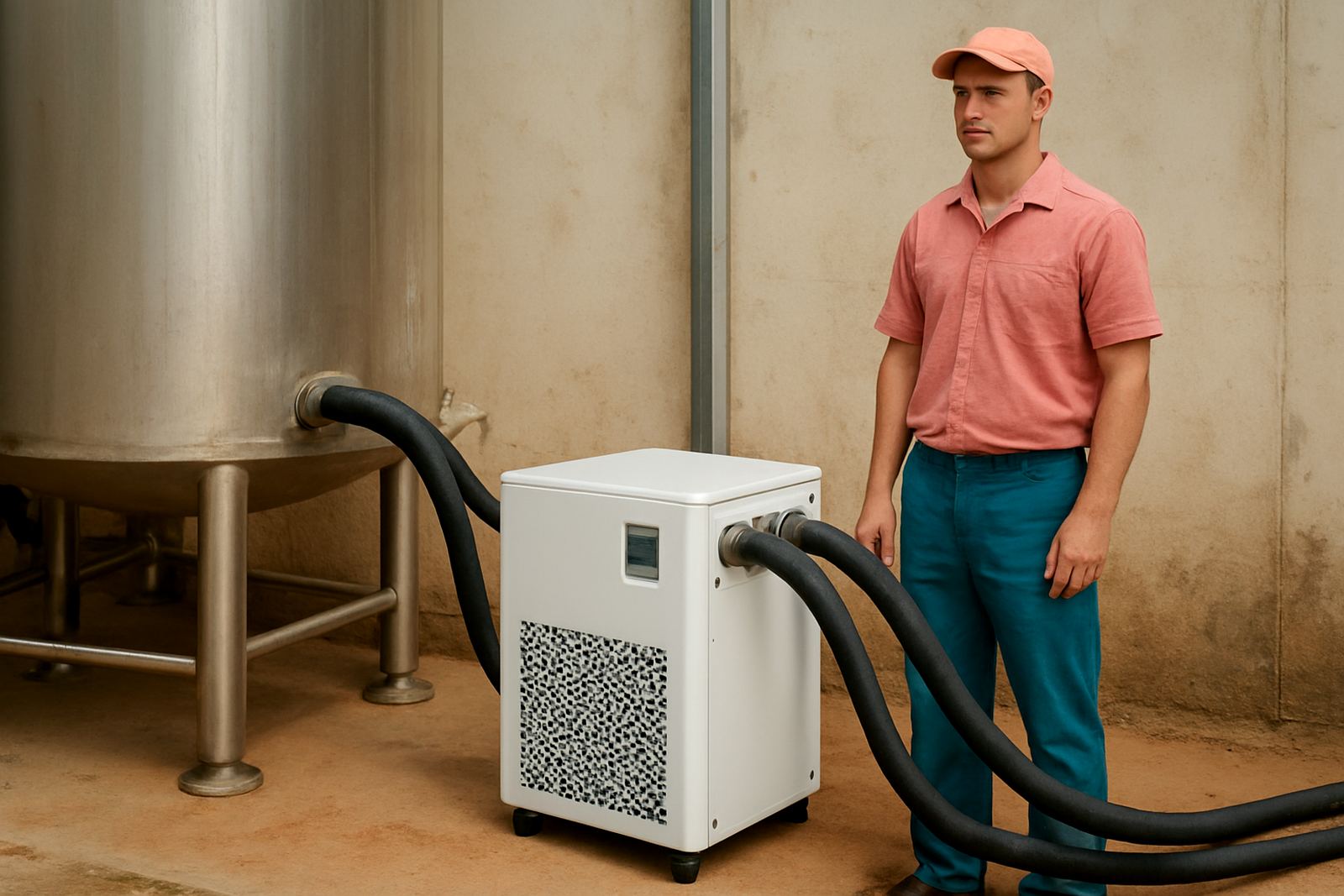
A process chiller removes heat from water or a water-glycol mix and holds that liquid at a set temperature while your equipment keeps running. In plain terms, it gives you controlled cooling for a production line, moulding machine, laser cutter, packaging plant, brewery, dairy, print room or any setup that cannot afford hot spots or drift in temperature.
Unlike a comfort air-conditioner, a process chiller is built for continuous duty and steady load. That matters in Durban where humidity stays high, sea air is hard on metal parts, and power interruptions can upset equipment if the cooling side is not properly managed. A good unit helps protect product quality, reduce downtime and keep your output more consistent shift after shift.
Sizes, Capacities and Control Options
Process chillers are sized to suit the heat load of the machine or process they serve. Smaller units may suit single machines in a workshop, while larger systems are used for multi-point cooling, chilled storage loops or production lines running all day. We supply air-cooled and water-cooled options, with packaged units for straightforward installs and custom layouts where pipe runs are longer or the load varies through the day.
- Cooling capacity from small workshop units to larger industrial systems
- Set temperature ranges for chilled water or glycol circuits
- Single circuit or multi-circuit control, depending on the load
- Digital temperature display and alarm functions
- Remote monitoring options for sites that need temperature logging
Where a process needs tighter control, we can include variable speed fans, pump protection, low temperature safety controls and flow switches. For KZN coast sites, stainless or coated components are often worth specifying because salty air and fine dust can shorten service life if the unit is undersized or poorly protected.
Where Process Chillers Suit Best
These units are commonly used in food production, beverage cooling, plastic moulding, medical and laboratory spaces, engineering plants, cold pack systems and product test rooms. They are also a good fit for businesses that need process water at a stable temperature even when outside conditions change from a cool morning in Ballito to a hot humid afternoon in Durban North.
If your process creates heat quickly, or if product quality changes when water temperature rises by only a few degrees, a dedicated chiller is usually better than trying to share cooling duties with general air-conditioning. It gives you one system doing one job properly, with less strain on your other equipment and fewer production stops.
- Factories and production floors
- Workshops with CNC, welding or fabrication equipment
- Food and beverage plants
- Packhouses and distribution sites
- Labs, clinics and testing areas
Installation, Power Supply and Piping Needs
Correct installation is as important as the chiller itself. We look at pipe size, pump pressure, return temperature, ventilation, drainage, access for cleaning and where the unit can discharge heat without recycling hot air back into the condenser. On some sites in Pinetown or Umhlanga the best location is not the nearest wall, it is the position that lets the machine breathe and service teams reach it without blocking production.
Electrical supply must be checked before ordering. Some units need single phase power, while larger systems require three phase supply with suitable isolators, cable size and protection. If the site has load-shedding or unstable voltage, we may recommend phase protection, soft start options or a standby strategy so the process does not trip on restart. Water quality also matters. Hard water, scale and dirt can block strainers and reduce heat transfer, so filtration should be included from the start.
Care, Servicing and Temperature Logging
A process chiller needs planned maintenance if you want it to keep holding set temperatures in summer and through long production shifts. Routine care usually includes cleaning coils, checking refrigerant pressures, testing electrical connections, inspecting pumps and fans, confirming flow rates and making sure alarms are working properly. If the unit runs near the coast, the fins and panels should be checked more often because corrosion and salt build-up can creep in quietly.
We offer planned maintenance, breakdown call-outs, leak detection, electrical fault finding and compliance checks for cooling systems. For sites that need records, we can set up temperature logging and service notes so you know what the unit did during each visit. That is useful for food handling, QA files and internal audits, especially where a temperature drift could lead to spoilage or rejected batches.
What to Check Before You Order
Before you order, it helps to have a few basic details ready so the chiller is matched to the job properly. The most important point is the actual heat load, not a guess based on equipment size. A line running one shift a day will need a different solution from a machine running flat out in summer with water returning at a higher temperature.
- Required supply temperature and return temperature
- Heat load or equipment to be cooled
- Flow rate and pipe distance
- Available power supply and breaker capacity
- Indoor or outdoor installation space
- Need for alarms, logging or remote checks
If you are replacing an older unit, send the model details, the process temperature target and any problem you have had, such as tripping, icing, poor cooling or high running costs. We can then advise on a suitable size, control setup and service plan for Glen Anil, Durban North, Ballito, the South Coast and surrounding areas. A correct match upfront saves time and avoids costly rework later on.
Key facts
| Cooling capacity | Sized to the process load, from small workshop units to larger industrial systems |
|---|---|
| Temperature range | Commonly set for chilled water or glycol circuits with stable control |
| Power supply | Single phase or three phase, depending on capacity and site conditions |
| Installation type | Air-cooled or water-cooled, packaged or custom configured |
| Controls | Digital display, alarms, flow protection and optional remote monitoring |
| Service interval | Planned maintenance recommended, with frequency based on dust, load and coastal exposure |