What a prep table fridge does in a busy kitchen
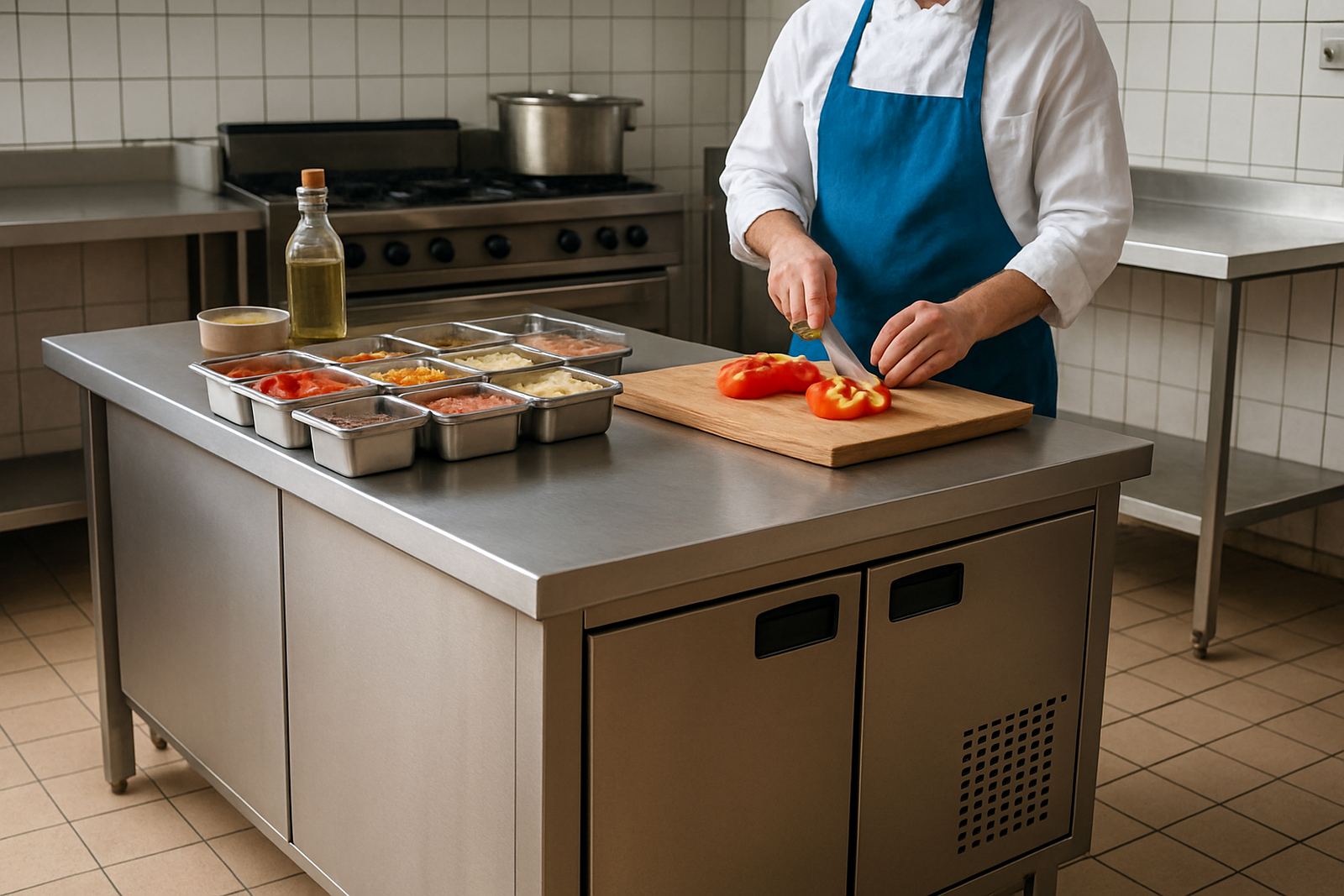
A prep table fridge is a refrigerated worktop unit with cold storage underneath and a usable top for food preparation. It keeps ingredients such as sliced meats, sauces, vegetables, cheese and dough close to the chef, so there is less walking back and forth to a walk-in cold room. For service kitchens, takeaway shops, hotels, canteens and supermarket back-of-house areas, that extra convenience saves time during peak periods.
These units are built for daily use in warm kitchens and they are sized to suit different line layouts. On Durban sites, especially where humidity is high and doors open often, good door seals, correct ventilation and regular cleaning matter. A well-set unit should hold food safely, recover quickly after opening, and stay consistent even when load-shedding or generator changeovers put pressure on the power supply.
Common sizes and configuration options
Prep table fridges are available in compact single-door units for smaller kitchens, through to two-door and three-door models for higher output operations. Widths commonly start at about 900 mm and go up to 2 000 mm or more, with standard worktop depths around 700 mm to 800 mm. Some models have a solid stainless-steel top, while others are fitted with ingredient pans and a lift-up lid section for quicker service.
Depending on the menu, you can order units with drawer sections, removable pan rails, splashbacks, cutting-board tops or undercounter storage. A deeper top works well for kitchen prep teams, while a lower profile unit may suit a serving line where sight lines matter. If your team works long shifts, ask for a layout that lets the most-used ingredients sit nearest the front, not tucked away at the back.
- Single, double or triple door storage
- Pan top or plain stainless worktop
- Drawer options for smaller prep items
- Can be ordered with castors or fixed legs
Where prep table fridges suit best
These units suit pizza shops, burger kitchens, deli counters, hotels, school kitchens, hospital catering, coffee shops and industrial canteens. They are also useful in supermarket bakeries and butchery prep rooms where chilled ingredients need to stay close to the hands of the team. In coastal towns like Umhlanga, Ballito and the South Coast, prep tables are often chosen because they can handle frequent door opening and the warmer ambient conditions better when they are correctly installed and maintained.
They are not the same as a display chiller, because the focus is not on customer viewing but on fast internal workflow. If your operation serves high volumes at lunch or evening rush, a prep fridge can reduce bottlenecks at the pass and keep food handling more orderly. In smaller kitchens, one unit can replace separate counter space and a stand-alone fridge, which frees up metres that are always needed somewhere else.
Power, ventilation and installation checks
Prep table fridges usually run on standard single-phase electrical supply, although some larger commercial models may need a different connection depending on the compressor size and the total load on site. Before installation, the kitchen must have enough clear space around the condenser area for air movement. If the back or sides are boxed in, the unit will work harder and use more power, which shortens compressor life. That is a common issue in tight Durban kitchens where counters are fitted wall to wall.
Installation should also consider floor level, drainage if the unit has a condensate tray or drain point, and access for cleaning. If the site is affected by generator use or frequent load-shedding, voltage protection and correct restart settings are worth checking. A prep fridge that cycles on and off badly after power interruptions can lose temperature quicker than expected. The unit should be installed where heat from ovens, fryers and dishwashers will not blow directly onto the cabinet, because hot ambient air pushes running costs up.
- Allow ventilation space around compressor area
- Check power supply and plug point position
- Keep away from direct heat sources
- Level the unit so doors close properly
Care, servicing and temperature control
Commercial prep fridges need regular cleaning, seal checks and temperature checks. Staff should wipe spills immediately, clear crumbs from door seals and keep pans covered when possible. The condenser coil must be kept free of grease and dust, otherwise the machine will draw more amps and cool less efficiently. In kitchens with heavy frying or bakery dust, monthly cleaning may be needed, not just occasional wiping.
Coastal Cooling Systems offers planned maintenance, breakdown call-outs, leak detection, electrical fault finding, temperature logging and compliance checks across Glen Anil, Durban North, Umhlanga, Pinetown, Ballito and the South Coast. If a unit starts frosting badly, running continuously or showing warmer product temperatures, it should be checked before the issue affects stock. That saves wastage and avoids emergency replacement during trading hours.
- Check door seals for gaps and tears
- Clean condenser coils on a routine basis
- Monitor product temperature, not just air temperature
- Log faults early to prevent stock loss
What to check before you order
Before choosing a prep table fridge, measure the available floor space and confirm the kitchen workflow. Check whether you need a plain worktop, ingredient pans, drawers or a mix of storage and prep space. Think about the number of staff working at once, the ingredients used most often, and whether the unit has to fit under an extractor line or beside another cold cabinet. It is also worth checking door swing direction, as a small layout mistake can slow the whole prep area.
You should also confirm the electrical supply, ambient kitchen temperature and whether the unit must operate during outages on backup power. Ask for the temperature range, insulation thickness, compressor access and finish details. Stainless steel is common for food areas because it is easier to clean and holds up well in humid conditions. For sites with strict hygiene checks, make sure the unit can be wiped down quickly and that trays, rails and shelves are easy to remove for service.
- Exact footprint and door swing space
- Number of doors, drawers or pans needed
- Power supply and backup power arrangement
- Cleaning access and maintenance routine
- Expected kitchen temperature and daily workload
Key facts
| Product type | Commercial prep table fridge for chilled ingredient storage and food assembly |
|---|---|
| Typical sizes | About 900 mm to 2 000 mm wide, with single, double and triple door options |
| Temperature range | Usually set for chilled food storage around 0 °C to 5 °C |
| Top options | Plain stainless worktop, pan top, cutting-board top or splashback |
| Power | Single-phase on most models, subject to unit size and site supply |
| Finish | Stainless steel body and food-safe internal surfaces |