What a temperature controller does in your refrigeration system
A temperature controller is the control point that tells a refrigeration system when to start and stop. It measures the cabinet, room or product temperature through a probe, then switches the compressor, fans, defrost cycle and alarms according to the set programme. In practical terms, it helps keep a freezer room at the right holding temperature, stops a display chiller from drifting too cold, and gives warning when conditions move outside the safe range.
On the KZN coast, where humidity is high and doors open often, stable control matters. A room that runs too warm can affect stock life and product quality. A room that cycles too hard can waste electricity and put extra strain on components during load-shedding recoveries. A properly selected controller gives better control over temperature swings, short cycling and fault alerts, which is useful for supermarkets, butchers, kitchens and small cold stores.
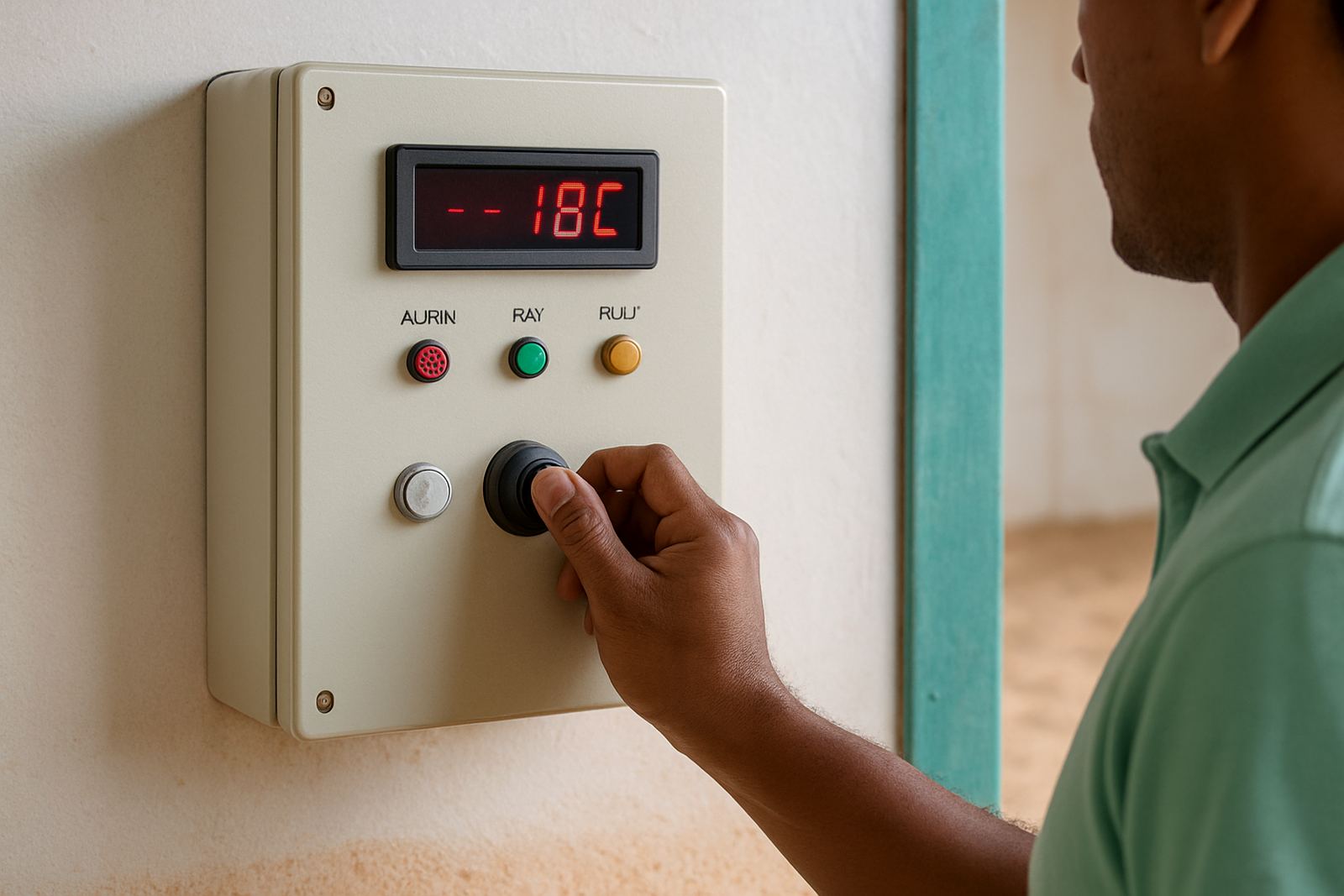
Most controllers used in commercial refrigeration are digital, with a front display, programmable buttons and relay outputs. Some models also manage timed defrost, fan delay, door alarms and high or low temperature alarms. If the plant is larger, the controller may be linked to separate contactors, pressure controls or a management system for logging and fault tracking.
Typical sizes, inputs and control options available
Controllers are selected to suit the size of the plant and the level of control required. A small display chiller may only need one temperature probe and one compressor output. A freezer room or walk-in cold room often needs more functions, including defrost control, evaporator fan control and alarm output. The main choice is not only size of the faceplate, but the number of inputs, relays and probe types that match the installation.
- Single-stage control for simple refrigeration circuits
- Multi-stage control for larger systems with separate outputs
- Temperature-only models for basic chillers and cold rooms
- Models with defrost timer, fan delay and alarm contacts
- Units with remote probe options for room, coil or product sensing
- 230 V or low-voltage control supply options, depending on the panel
We also consider the operating range. A chilled cabinet may run around 2 °C to 6 °C, while a freezer room may need -18 °C or lower depending on the product. The controller should suit that range without hunting around the set point. If the application needs tighter control, a more precise probe and finer set-point adjustment may be specified.
Where these controllers suit best in Durban and coastal KZN
Temperature controllers are used in retail, food service and light industrial refrigeration. In Durban North, Umhlanga, Ballito and the South Coast, we often see them fitted to display chillers, cold rooms, freezer rooms, bottle coolers and prep room cabinets. In Pinetown and Glen Anil, they are also common on warehouse rooms, packhouses and equipment that needs clean daily control.
They suit sites where product loss is expensive or where compliance records are needed. That includes meat stores, fish handling rooms, bakeries, supermarkets, takeaways, hotels and pharmaceutical or laboratory spaces where stable temperature is part of the operating requirement. If your business has regular municipal inspections, a controller with alarm history and temperature logging can make it easier to show that stock has stayed within the required range.
For coastal sites, we often recommend checking the enclosure, cable glands and probe route as part of the selection. Salt air and moisture can shorten the life of poor connections, so a controller with correct mounting and sound wiring practice lasts longer. The same applies in rooms that are washed down daily.
Installation details, wiring and power requirements
Installing a temperature controller is not just a case of swapping a box on the wall. The probe position, relay rating, compressor control and defrost logic all need to be checked against the actual refrigeration circuit. A controller may operate the compressor directly on small systems, or it may signal a contactor on larger plant. If the load exceeds the controller rating, an intermediary relay or contactor is used.
We check the available supply voltage, the control circuit and the existing protection devices before fitting or replacing a unit. Many commercial sites in Durban have mixed electrical conditions, and after load-shedding the restart sequence can trip weak components. Correct installation helps avoid nuisance alarms and false temperature readings. Probe cables should be kept away from live power runs where possible, and they must be fixed so that vibration does not wear the insulation.
Some controllers also need attention to the refrigerant side because operating issues are sometimes blamed on the controller when the real problem is low gas, iced coils or poor airflow. If the system is undercharged, the controller may show temperature drift and longer run times. That is why the control panel, the evaporator and the refrigerant circuit should be checked as one system not separately.
Care, fault finding and planned servicing
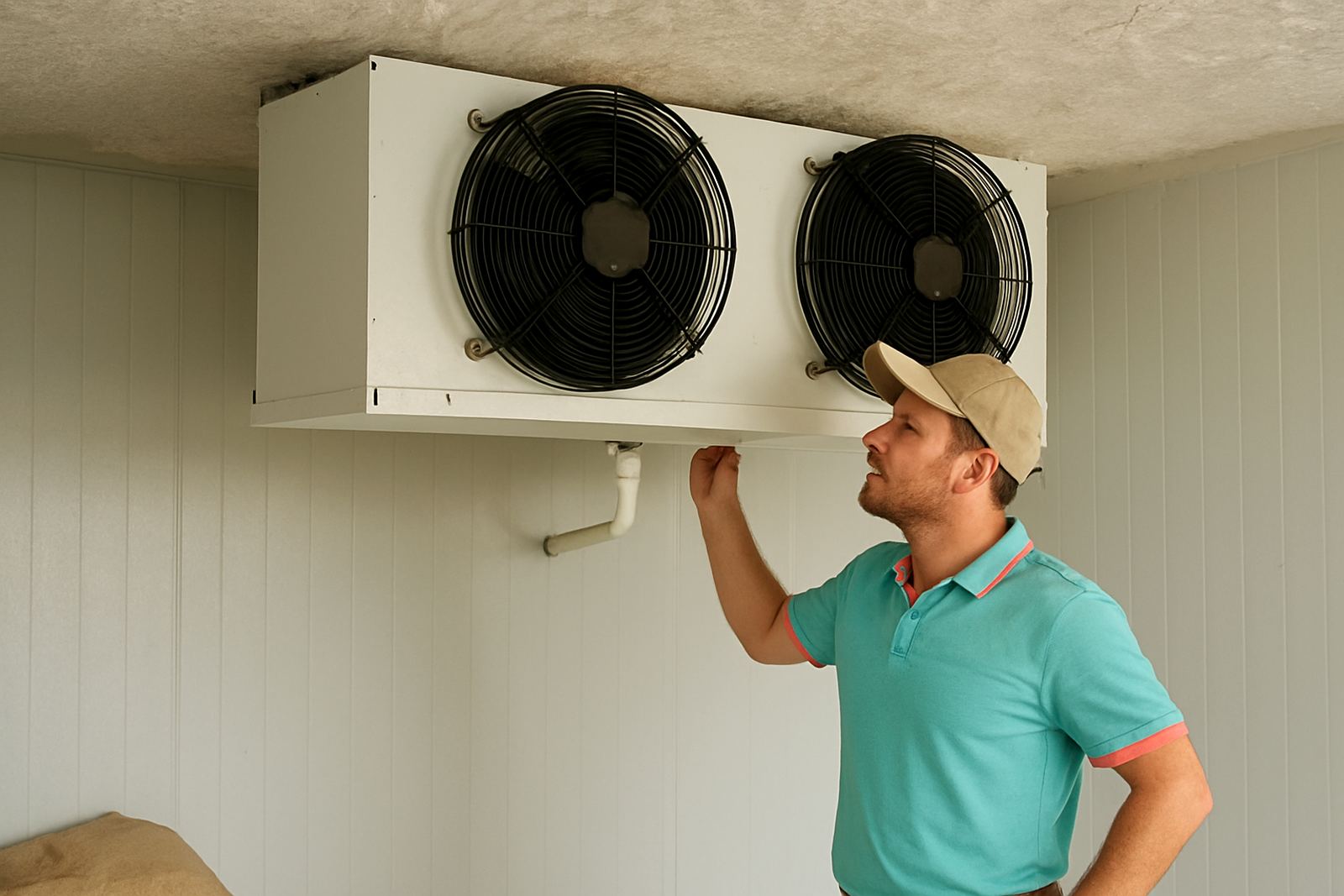
Controllers are low-maintenance items, but they still need basic care. The faceplate should stay clean and dry, the probe should be secure, and the display should be checked for alarm history or erratic readings. If the room temperature seems unstable, we inspect the probe calibration, compressor switching, relay condition and any frost build-up on the evaporator.
During planned maintenance, our technicians will often confirm set points, alarm delays and defrost settings against the actual room use. A freezer room storing frozen stock does not need the same settings as a display chiller holding drinks. If the controller is cycling too often, we check whether the deadband is too tight, whether the door seals are failing, or whether the condenser is dirty and running hot.
- Check that the displayed temperature matches a trusted hand-held reading
- Confirm alarm limits after any product change or reset
- Inspect probe clips, cable joins and gland seals
- Clean dust from the panel face and cabinet ventilation area
- Record faults after power interruptions or breaker trips
For businesses with service contracts, controller checks can be added to routine visits together with leak detection, temperature logging and electrical fault finding. That helps catch small problems before they turn into stock loss.
What to confirm when ordering a replacement controller
Before ordering a replacement or upgrade, it helps to know the exact application and what the existing system is doing. A controller that suits a display chiller may not suit a freezer room, and a unit with a simple temperature output may not be enough for a cabinet with timed defrost and fan control. We normally ask for the room type, supply voltage, probe type, current control method and the temperature range required.
It also helps to know whether the controller must manage one compressor or several functions. If your site needs alarms, logging or remote monitoring, that should be specified from the start. For busy sites in Ballito, Pinetown and Durban North, we often recommend keeping a spare probe and noting the programming settings, because that reduces down time after a fault or a lightning-related surge.
When we match a controller to your plant, we look at the full picture: room size, refrigerant system, door opening frequency, ambient heat, and whether the site runs through power interruptions. That way the controller does its job properly instead of becoming another fault source.
Key facts
| Type | Digital refrigeration temperature controller |
|---|---|
| Control range | Suitable for chilled and frozen applications, depending on model |
| Inputs | Temperature probe, alarm and optional defrost or fan control |
| Outputs | Compressor relay, defrost relay, fan control and alarm output |
| Supply | Typically 230 V AC control supply or low-voltage options |
| Typical use | Cold rooms, freezer rooms, display chillers and prep cabinets |