What a package aircon does in daily use
A package aircon is a self-contained cooling unit that brings the refrigeration circuit, fan section and controls together in one system. It is used where you want dependable cooling for a single zone or a large open area, without splitting the system into multiple indoor heads. That makes it a practical choice for commercial and light industrial buildings that need steady temperatures through long trading hours and summer humidity on the coast.
These units are commonly installed for retail floors, small factories, server rooms, boardrooms, restaurants and back-of-house areas where space on the wall is limited. On hotter Durban days, especially when doors open often or the building gets afternoon sun, a correctly sized package unit keeps the temperature more stable and takes pressure off staff and stock.
For owners running on generators or dealing with load shedding, package aircons can be matched to the available supply and starting current, so the building keeps working without constant tripping. A unit that is right for the room is quieter, cheaper to run and easier to keep clean than an undersized system pushed too hard.
Sizes and configurations available
Package aircons are selected by cooling duty, airflow and installation space. We size them in kilowatts and match the unit to the heat load from occupants, equipment, lighting, glass area and fresh air. Smaller units may suit a small office or guard room, while larger systems are used in workshops, halls and production spaces where doors open often and internal heat is high.
Common options include ducted supply into ceiling ducting, short-throw discharge into one zone, or units set up for roof mounting where floor space must stay open. Depending on the building, units can be configured for cooling only or with additional heating function for inland winter use. Coastal sites usually prioritise corrosion resistance and service access over heating features, because salt air and constant use are the main concerns.
- Cooling capacities typically from about 7 kW to 70 kW, depending on the room load
- Single phase options for smaller sites, and three phase for larger commercial applications
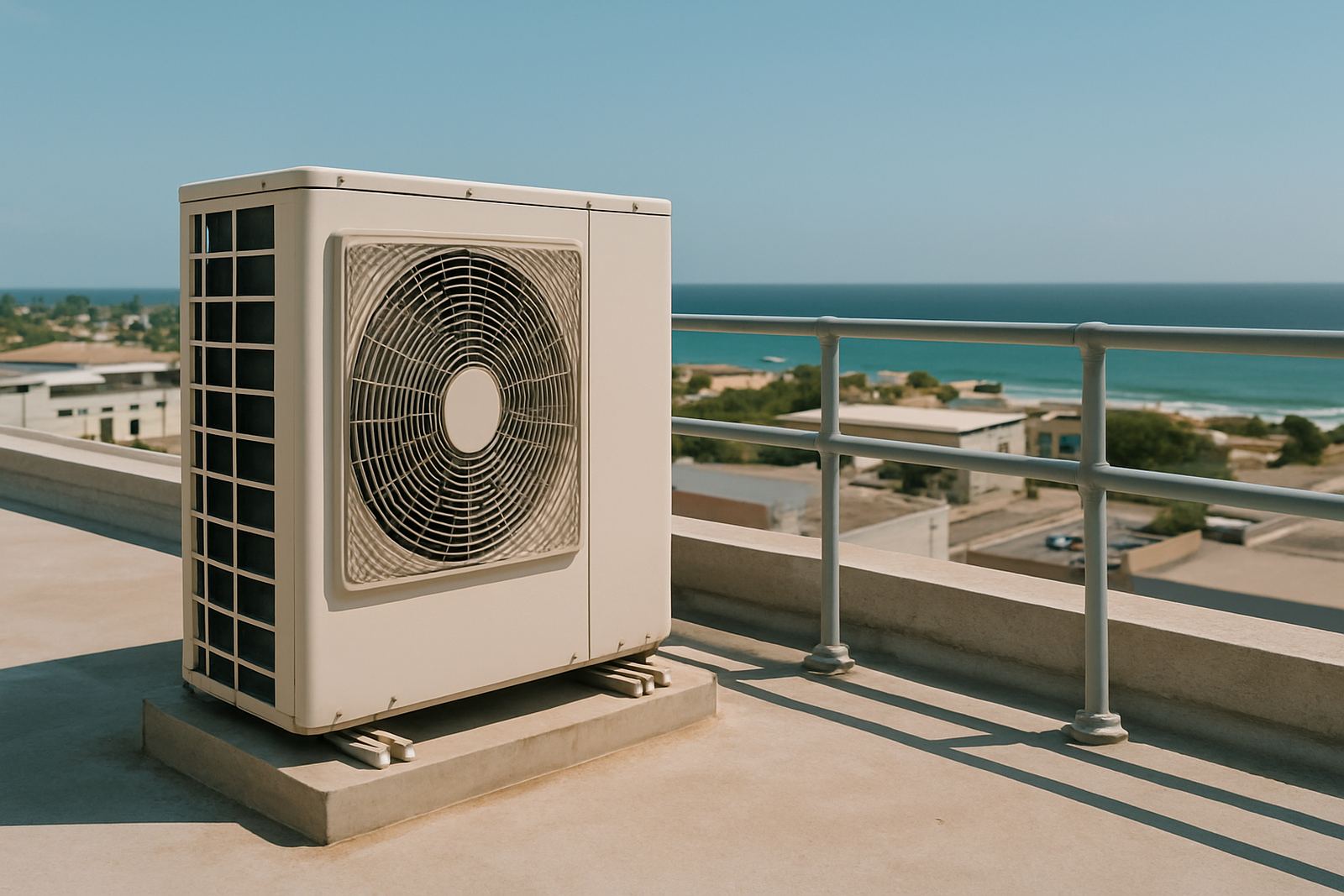
- Rooftop or ground mounted installation, subject to access and structure
- Ducted or direct discharge air delivery, based on the room layout
- Controls that can be set for fixed temperature, timed operation or BMS connection where required
Where package aircons suit best
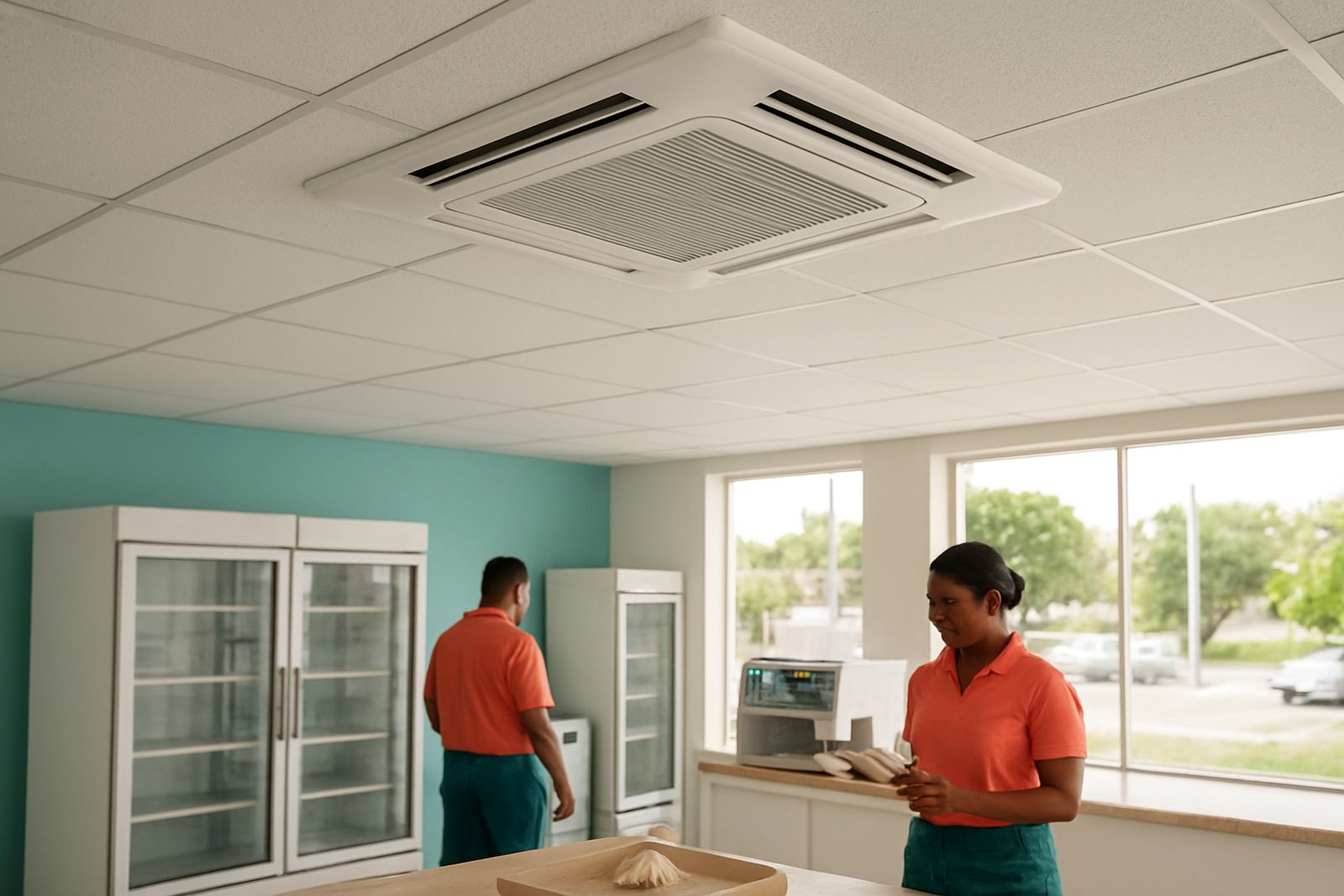
Package units work well in buildings where cooling demand is steady and there is a clear zone to serve. They are often used in open plan retail areas, takeaway kitchens, clinic waiting rooms, small warehouses, and production rooms where dust control and temperature matter. If the building has high ceilings or large glass frontage, package units can handle the load better than a small split system, provided the air distribution is planned properly.
They also suit sites where access for maintenance is easier from a roof or external platform. That helps in places like Pinetown industrial areas or Ballito business parks, where technicians need to reach the unit without disrupting trading. For coastal clients, we also look at corrosion protection because humid air and sea spray can shorten the life of fins, fixings and electrical parts if the unit is left exposed.
- Retail stores and convenience shops
- Small factories and light manufacturing areas
- Restaurants, canteens and food prep spaces
- Offices, meeting rooms and reception areas
- Server rooms and equipment spaces with controlled cooling needs
Installation, power supply and site checks
Before installation, the site needs a proper heat load assessment, electrical check and review of the roof or slab where the unit will sit. A package aircon is heavier than a small wall unit and may need a steel frame, anti-vibration mounts or weather cover, depending on the position. Drainage must also be planned so condensate leaves the building safely and does not drip across walkways or stock areas.
Electrical supply is a major point. Larger package units usually need three phase power, correctly sized isolators and protection devices, and a clean supply that can handle starting load. On sites with generators or unstable supply, we check for voltage dips and phase balance because poor power quality can cause nuisance faults. Refrigerant piping is often shorter than with split systems, but the air distribution ducting still needs to be sealed and insulated properly to avoid sweating and energy loss.
For Durban and the coast, we also look at wind exposure, salt in the air and service access. A unit placed where it can be reached quickly for coil cleaning and fault finding will cost less to maintain over time. It sounds simple, but many cooling problems begin with poor access and blocked airflow.
Care, servicing and coastal maintenance
Package aircons work best when the coils, filters, fans and electrical terminals are checked on a planned basis. In commercial use, filters may need cleaning monthly or even more often if the building sits near a road, workshop or food area. Dirty filters reduce airflow, push up running cost and can lead to icing, warm air complaints and compressor strain. On the coast, fin cleaning and corrosion checks are just as important as gas pressure checks.
We recommend regular maintenance that includes temperature checks, current draw readings, drain inspection, belt and fan inspection where fitted, and tightness checks on terminals and contactors. If the unit is running longer hours because of load shedding recovery or seasonal heat, the service interval may need to be tighter. A good maintenance record also helps when you need warranty support, municipal compliance evidence or proof that the site is being looked after properly.
- Clean or replace filters on schedule
- Wash condenser and evaporator coils carefully
- Check refrigerant charge and leak signs
- Inspect drain pans, traps and pipe falls
- Test thermostats, starters and safety controls
- Log temperatures and fault history for site records
What to check before you order
When ordering a package aircon, the most important details are the room size, heat load, roof or floor space, available electrical supply and the type of air distribution needed. You should also note whether the site is on a coastal strip, because that affects material choice and maintenance planning. If the building has frequent door openings or high internal heat from equipment, the unit may need extra capacity. Under-sizing is a common mistake and it usually shows up in peak summer, not on the day of install.
Ask for a proper spec match on the following points. These details help avoid delays and costly changes once the unit arrives.
- Room dimensions, ceiling height and number of people using the space
- Internal heat sources such as ovens, machinery or computers
- Power supply available, including single phase or three phase
- Preferred installation position and roof access
- Noise limits if the unit sits near offices or neighbours
- Any corrosion concerns from sea air, dust or chemical exposure
If you are unsure, we can help assess the site from Glen Anil, Durban North, Umhlanga, Pinetown, Ballito or the South Coast. A quick check now usually saves a bigger fault call later, especially when the weather turns humid and every degree counts.
Key facts
| Cooling capacity | Approx. 7 kW to 70 kW, sized to the room load |
|---|---|
| Power supply | Single phase or three phase, subject to unit size |
| Air delivery | Ducted supply or direct discharge |
| Installation | Roof mounted or ground mounted, depending on access and structure |
| Controls | Thermostat control with timed options and BMS compatibility on selected units |
| Typical use | Retail, offices, workshops, food areas, plant rooms and light industrial spaces |