What an ice machine does on a working site
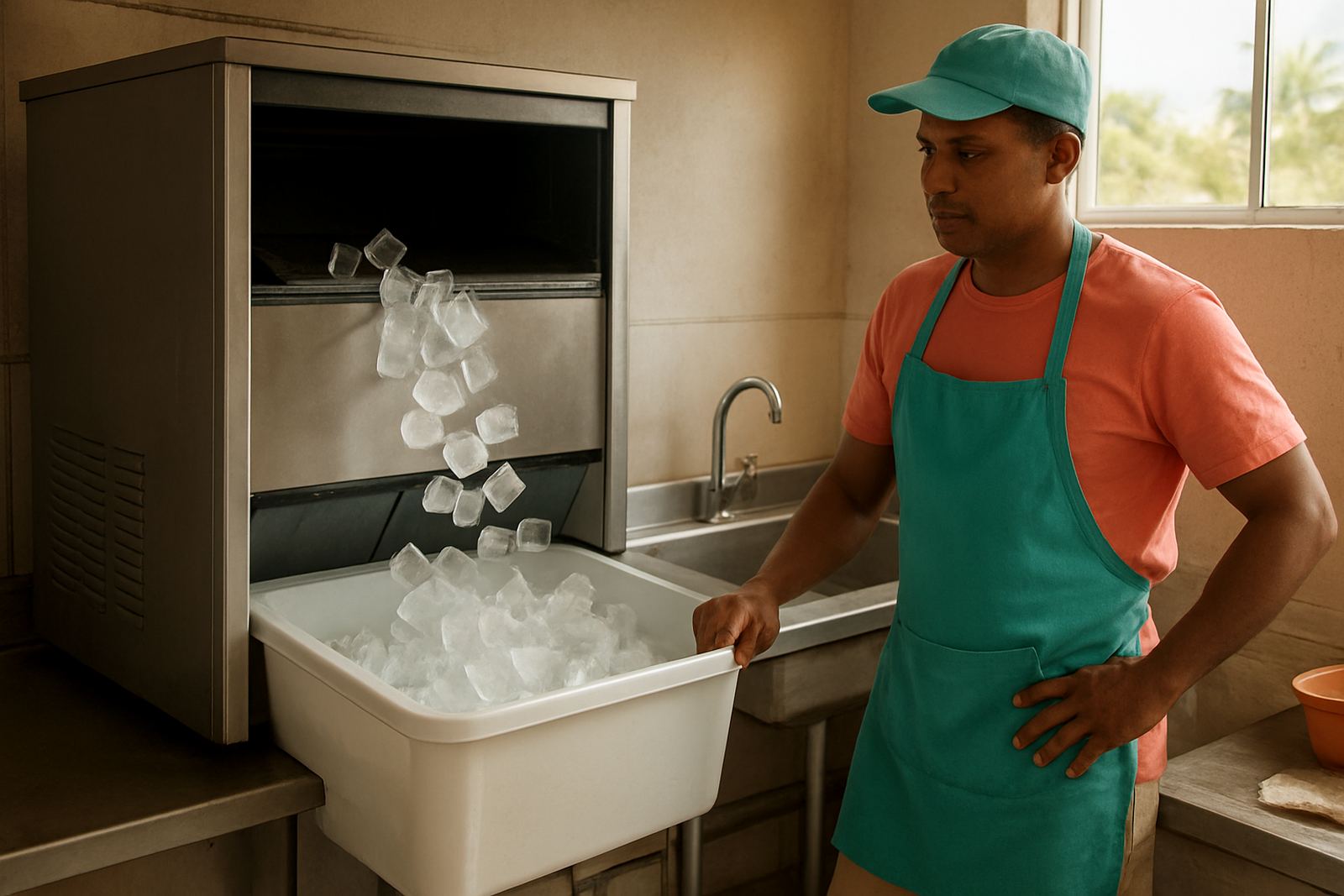
An ice machine makes ice on site instead of relying on deliveries or bagged stock. For restaurants, hotels, fish counters, butchers, bakeries and canteens, that means you can keep service going through peak trade, hot afternoons and weekends when demand jumps. Cube ice is usually used for drinks, display and general food handling, while flake ice suits seafood, salad bars, trays and product cooling where full surface contact matters.
On the KZN coast, humidity and heat can put extra strain on refrigeration equipment, so the machine has to be sized for the room it sits in, the water quality coming in and the amount of ice used each day. A unit that is too small will struggle during lunch rushes. One that is oversized may cycle badly and waste water and power.
Cube and flake options, with practical sizes
We fit both cube and flake ice systems in commercial spaces, from compact undercounter units to larger production machines with storage bins. The right size depends on daily use, storage space and whether the machine serves front of house, a prep area or a cold room packing line. Many sites in Durban North, Umhlanga and Ballito prefer a smaller unit near the bar or kitchen, while seafood and food processing sites often need higher output machines with separate bins.
- Small cube machines: around 20 to 50 kg per 24 hours, suited to bars and smaller kitchens
- Medium cube machines: around 60 to 150 kg per 24 hours, suited to restaurants and guest houses
- Large cube machines: 200 kg and up per 24 hours, for hotels, canteens and high turnover venues
- Flake ice units: from 100 kg per 24 hours upward, often paired with insulated storage bins
- Undercounter or self contained models: better where floor space is tight
- Remote condenser options: useful where heat and noise need to be moved away from the service area
Some sites need clear cube ice for presentation, while others need softer flake ice for packing and cooling. The choice comes down to how the ice is used, not just the amount produced.
Where these systems suit best
Ice machines are common in hospitality, seafood handling and food preparation sites, but they also suit bottle stores, hospitals, guest lodges and central kitchens. In Durban and along the South Coast, they are often used where hot weather and busy service make it hard to keep stock cold enough with trays alone. For seafood counters, flake ice keeps product chilled without bruising the fish. For hotels and bars, cube ice gives a cleaner look in drinks and self service stations.
They also help in back of house where ingredients need fast cooling after cooking or where packed goods need to stay within temperature control before dispatch. If a site already runs display chillers, freezer rooms or prep fridges, an ice machine can support the rest of the cooling set-up and reduce strain on staff during busy periods.
- Restaurants, hotels and lodges
- Seafood shops and fish processing areas
- Butchers, bakeries and prep kitchens
- Hospitals, schools and canteens
- Bars, bottle stores and entertainment venues
Installation needs, power supply and water quality
Before installation, the site needs enough space for airflow, cleaning access and safe drainage. Ice machines reject heat while making ice, so they should not be boxed into a tight corner or placed beside ovens and dishwashers if it can be avoided. In warmer rooms or where ambient temperatures run high, output may drop if ventilation is poor. For some sites, a remote condenser or better room ventilation is the better option.
Most commercial units run on standard electrical supply, but the actual load depends on the machine size and whether it uses a storage bin heater or built in pump. During load-shedding, many clients pair critical refrigeration with backup power so ice production does not stop during service hours. Water quality matters too. Hard water, sand and sediment can block valves and shorten the life of the machine, so filtration and proper flushing are worth putting in from the start.
Care, cleaning and service contracts
Ice machines need regular care because they work with water, scale and temperature control all at once. On the coast, salt in the air and humid conditions can affect coils and metal parts, while poor water can leave scale on the evaporator and reduce output. A site that skips cleaning often ends up with cloudy ice, slow freezing and more call-outs than it should. It is a small machine, but it still wants proper attention.
Our planned maintenance visits can include cleaning, leak checks, electrical fault finding, temperature logging and compliance checks where a site keeps food safety records. We also look at water filters, drain lines, pumps and sensors so the machine keeps producing clean ice without surprises. If a machine starts making less ice, sounds louder than usual or leaves water in the bin, it should be checked before the problem grows.
- Clean the bin and food contact areas on a set schedule
- Replace filters before flow drops too far
- Check water pressure and drainage
- Inspect condenser coils and fans for dirt build up
- Log output changes, alarms and temperature issues
- Book service before peak season, not after a break down
What to check before you order
When ordering an ice machine, start with the daily ice use, not just the space available. A site serving 60 meals a day will need something very different from a seafood counter packing product all morning. Check whether you need cube ice, flake ice or both, and decide how much storage you need between production runs. It also helps to confirm where the machine will sit, because the room layout affects access for cleaning and filter changes.
It is also worth checking the incoming water supply, drain point, electrical supply and whether the site has stable backup power. If the machine will run beside a hot line or in a coastal kitchen with poor airflow, say so up front. That saves trouble later and helps us specify the right equipment first time. For projects in Pinetown, Glen Anil or the South Coast, we can plan the install around the site conditions and keep the setup practical, not overcomplicated.
- Required ice type: cube or flake
- Daily output needed in kg per 24 hours
- Storage bin size and available floor space
- Water quality and filtration needs
- Electrical supply and backup power plans
- Drainage, ventilation and cleaning access
Key facts
| Ice types | Cube and flake |
|---|---|
| Output range | About 20 kg to 500 kg plus per 24 hours, depending on model |
| Power supply | Single phase or three phase, subject to machine size |
| Installation | Indoor commercial kitchens, bars, prep areas and seafood rooms |
| Water needs | Filtered supply recommended for cleaner ice and longer service life |
| Typical add-ons | Storage bin, water filter, remote condenser, backup power support |