How an air curtain works at the doorway
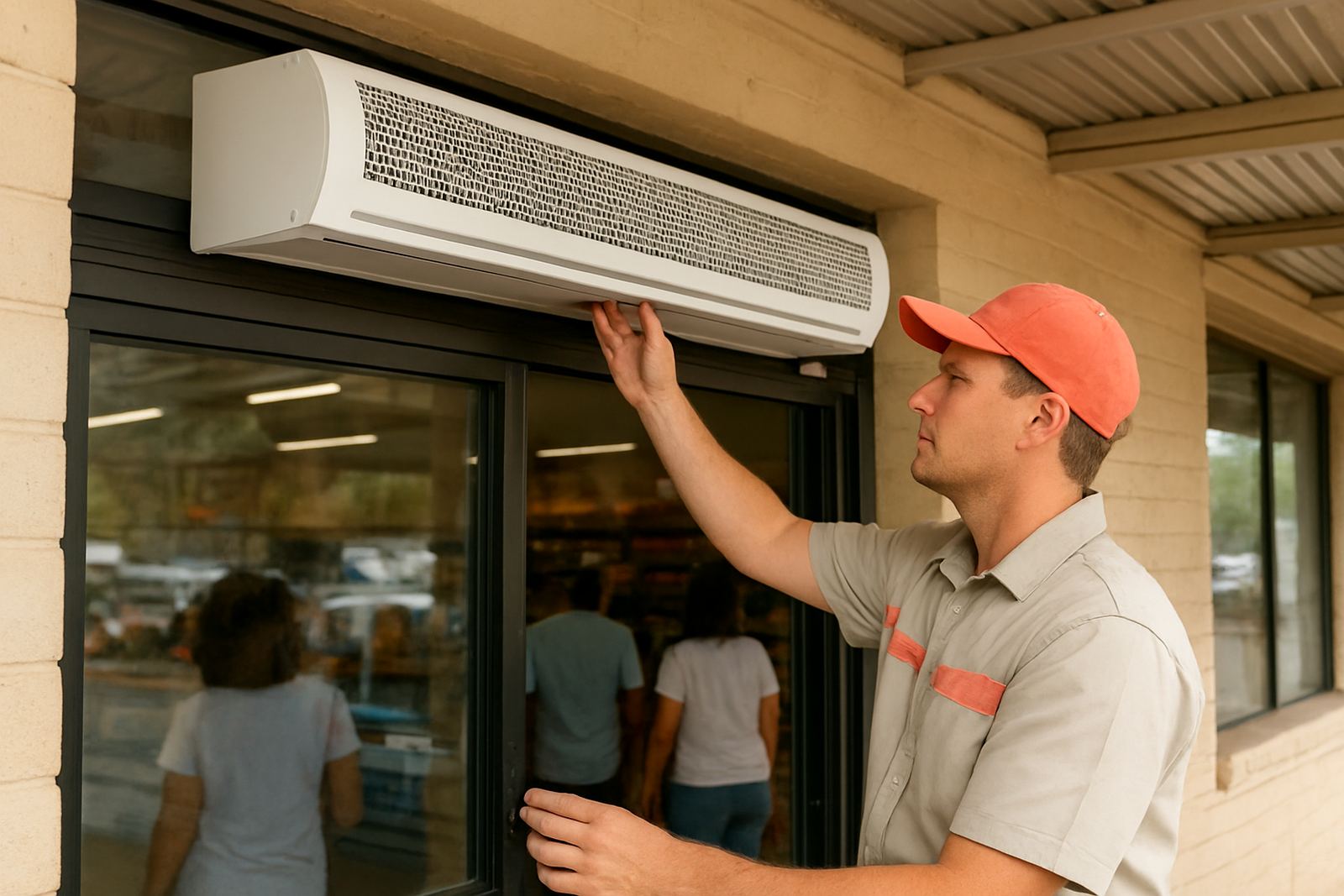
An air curtain is fitted above or beside an opening and blows a steady sheet of air across the doorway. That moving air helps separate inside and outside conditions, so cooled air stays in, warm humid air stays out, and people can move through without stopping to open a solid door every time.
In Durban this matters a lot in summer. A shopfront in Umhlanga, a loading bay in Pinetown, or a cold room entry in Glen Anil can all lose temperature quickly when doors stay open for deliveries and foot traffic. An air curtain is not a replacement for proper insulation or a closing door, but it is a useful support where access must stay frequent.
Air curtains are commonly used over entry doors, receiving bays, kitchen doors and cold room access points. They also help reduce draughts at customer entrances, which can make a business feel more comfortable without adding extra load to the air-conditioning system.
Sizes, airflow types and mounting options
Units are selected by opening width, mounting height and the type of space they serve. A small doorway at a retail entrance may only need a compact unit, while a wide warehouse opening or freezer ante-room may need a longer unit with higher airflow. Some doors need a warm air curtain, while others use unheated ambient air. The right choice depends on the job, not just the doorway width.
- Widths commonly range from about 900 mm to 3 000 mm, with larger options available for wide service openings.
- Mounting styles include horizontal over-door units and vertical side-mounted units where top clearance is limited.
- Air delivery can be simple on/off, multi-speed, or linked to door switches and building controls.
- Heating is optional on some models, useful where cold draught control matters more than dust control alone.
- Casings are usually powder-coated steel or corrosion-resistant material for humid coastal conditions.
For coastal sites, corrosion resistance is worth asking about. Salt air, moisture and regular wash-downs can shorten the life of poor fittings. In food areas and back-of-house spaces, easy-clean finishes and accessible filters make maintenance easier and reduce downtime.
Where air curtains make the most sense
Air curtains suit spaces that lose temperature because doors open often or stay open for long periods. They are useful where the business needs steady internal conditions but cannot shut off access. That includes supermarkets, butchery entrances, pharmacies, restaurants, bakeries, reception entrances and industrial doorways where forklifts and staff are moving through the same opening.
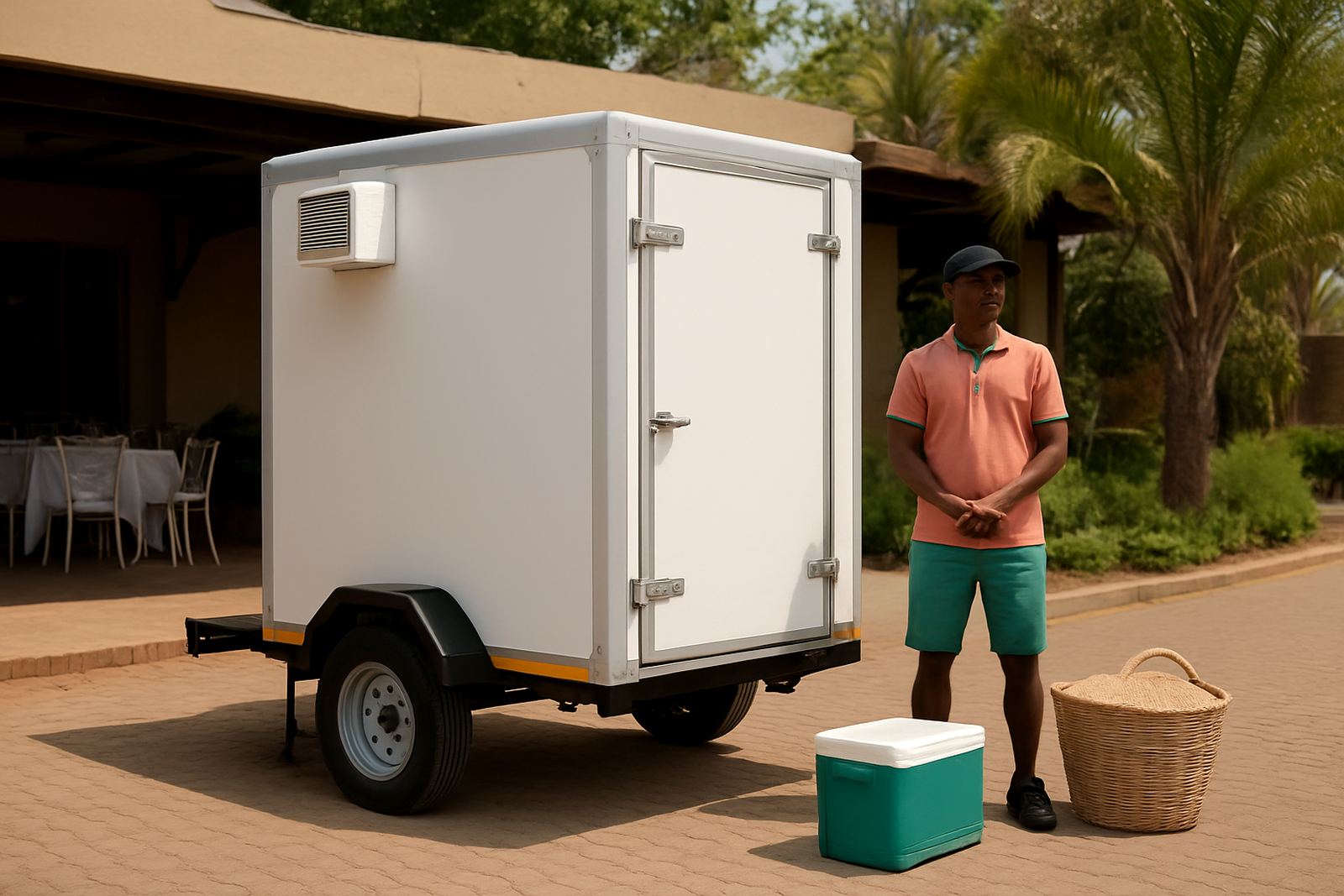
They are also helpful for cold rooms and freezer rooms with heavy traffic. When a cold room is opened many times a day, moisture and warm air get in, ice builds up faster and the cooling plant works harder. An air curtain can reduce that exchange and help keep temperatures more stable. It will not fix a poorly sealed room, but it can make a noticeable difference when the room is used properly.
On the KZN coast, humidity is a constant issue. A doorway that faces prevailing sea air or afternoon heat can pull in enough moisture to affect comfort, product quality and energy use. An air curtain helps, provided it is sized correctly and the doorway is not oversized for the unit.
- Shop entrances and mall access points
- Cold rooms and freezer room ante-rooms
- Kitchen and prep area doors
- Loading bays and receiving doors
- Pharmacies, clinics and office reception entries
Installation, power supply and control requirements
Proper installation is just as important as the unit itself. The air discharge angle, mounting height and door width all affect performance. If the unit is mounted too high or too low, the air stream can miss the doorway and the barrier weakens. A unit that is too small for the opening may still run, but it will not do the job properly.
Most air curtains need a suitable electrical supply and correct isolation for maintenance. Small units may run on standard single-phase supply, while larger commercial or industrial units may need three-phase power. Controls can include wall switches, door contacts, remote controllers or integration with the building management system where required. For sites with load-shedding backup, the starting current and available generator capacity should be checked before installation.
Where heating is included, the electrical load increases. On older sites in Durban North, Pinetown or older strip centres, it is worth confirming the existing supply before ordering. Ventilation around the unit must also be considered, especially where there are suspended ceilings, smoke control requirements or fire doors nearby. Municipal and building safety rules should be followed so the unit does not interfere with safe escape routes or door operation.
Servicing, cleaning and common wear points
Like any moving air equipment, an air curtain works best when it is kept clean and checked on a schedule. Dust buildup on the intake or discharge grille reduces airflow. Loose mounting brackets can cause vibration and noise. Worn fan motors, damaged bearings or failing controls can lead to uneven airflow across the doorway.
For businesses on service contracts, a planned visit should include the basic checks that keep the unit dependable through the busiest months. That is especially helpful before summer, when outdoor temperatures and humidity rise and the doorway has to work harder. It is also useful after building work, because dust from renovations can block filters and coat internal parts.
- Clean intake and outlet areas regularly
- Check fan operation, switches and door sensors
- Tighten mounting brackets and vibration points
- Inspect wiring, isolators and control settings
- Confirm the air stream still covers the full opening
If the air curtain starts to whistle, rattle or leave a cold or warm gap at one side of the opening, it needs attention. Sometimes the fix is a simple cleaning or realignment, other times it points to a motor, bearing or control fault. Catching it early prevents bigger downtime later.
What to check before ordering one for your site
Before ordering, measure the doorway properly and confirm the use case. A cold room door, retail entrance and warehouse opening all need different airflow and control choices. It also helps to know how many times the door opens per hour, whether the space is air-conditioned, and whether the unit must run all day or only during trading hours.
- Door width and mounting height
- Whether the opening is internal, external or exposed to wind
- Power supply available, single-phase or three-phase
- Need for heated or unheated air delivery
- Control preference, manual, door-linked or timed operation
- Corrosion resistance required for coastal or wash-down areas
It is also worth checking whether the site has enough clear space above the door for mounting and future servicing. If there are sliding doors, shutters, signage or sprinkler pipes in the way, the installation may need a different arrangement. Getting these details right upfront saves repeat call-outs and avoids a unit that looks suitable on paper but underperforms on site.
Key facts
| Type | Air barrier unit for doors and open entries |
|---|---|
| Typical widths | 900 mm to 3 000 mm, larger on request |
| Mounting | Horizontal over-door or vertical side-mounted |
| Power supply | Single-phase or three-phase depending on model |
| Options | Ambient air, heated air, speed control, door-linked control |
| Common settings | Retail entrances, cold rooms, kitchens, loading bays and industrial doors |