Display Chillers For High-Visibility Sales Areas
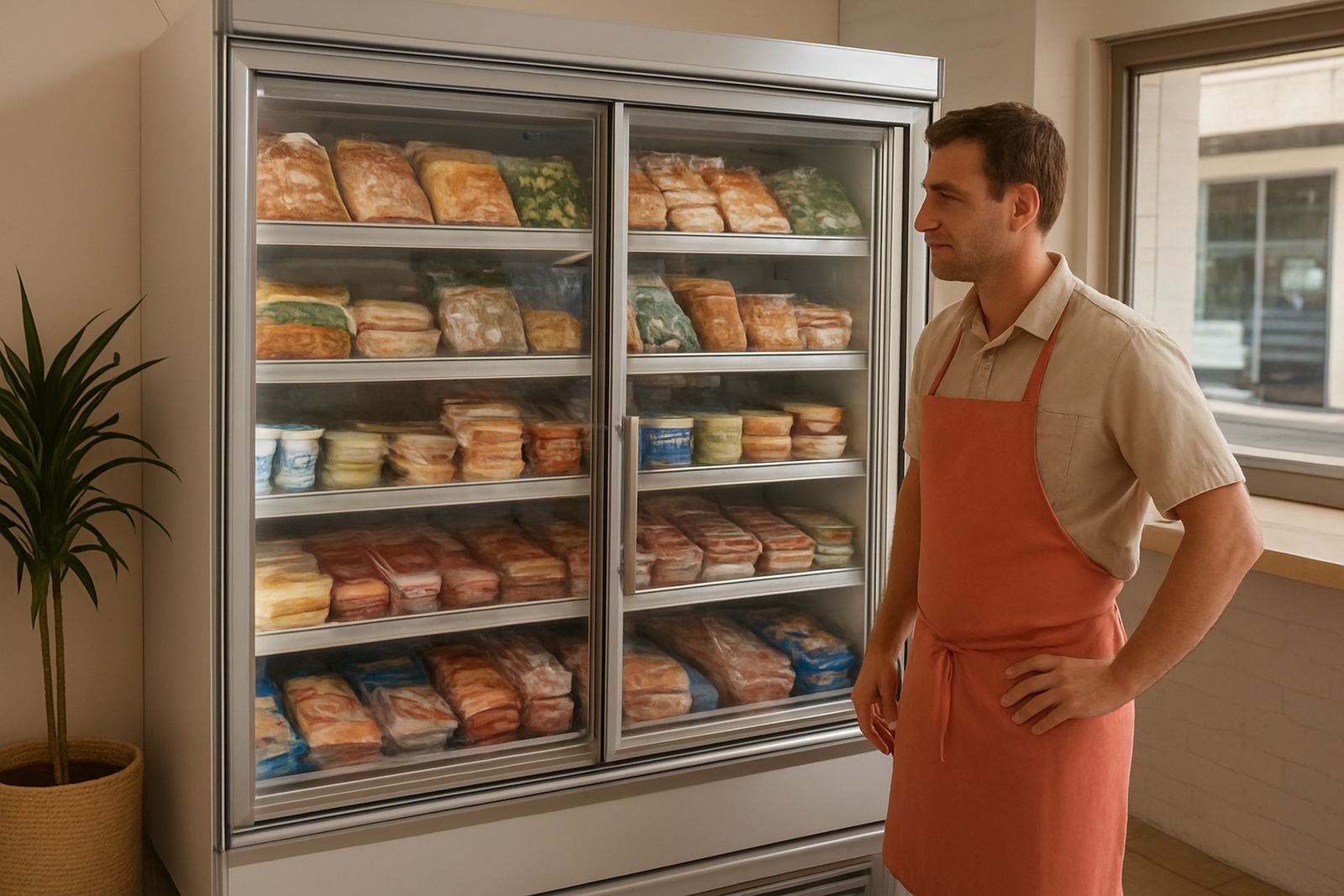
A display chiller is a refrigerated cabinet built to hold chilled products in view of the customer. It is used where people need to see the stock before they buy, so the cabinet must keep a steady temperature and give a clear front view without fogging or uneven cooling. In practice that means good airflow, proper shelf spacing and glass that stays clean enough for daily trading.
We work with cafés, butchery counters, forecourt shops, bakeries, canteens and small supermarkets in Durban, Umhlanga, Ballito and along the South Coast. Some sites need a compact upright unit for drinks and dairy, others need a wider multideck cabinet for self-service sales. The right choice depends on floor space, product mix and how often the door is opened during the day.
Sizes, Door Styles And Cabinet Options
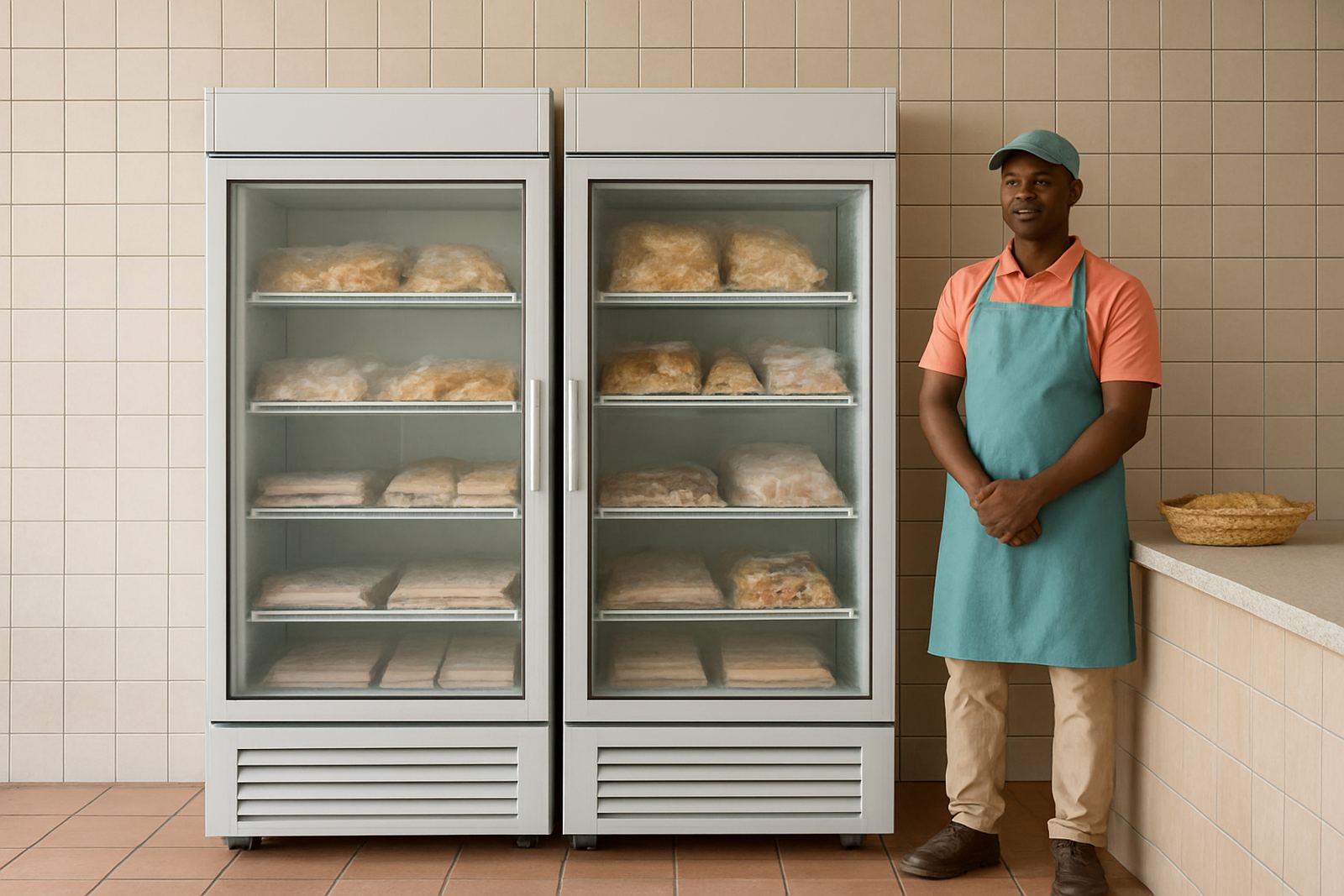
Display chillers are commonly supplied as single-door upright units, two-door cabinets, open-front multidecks and counter-top units for smaller service areas. Typical cabinet depths range from about 600 mm to 800 mm, with widths from 600 mm up to 1 800 mm or more. Heights usually sit between 1 800 mm and 2 100 mm, although the final size depends on the serving area and access routes on site.
Options can include solid or glass side panels, sliding or hinged doors, internal LED lighting, adjustable shelving and digital temperature display. For busy stores it is worth checking the door self-close action and the strength of the shelving. A cabinet that is easy to load but hard to clean becomes a problem after a few weeks, so fitment detail matters.
- Upright glass-door chillers for bottled drinks, dairy and pre-packed food
- Open-front multidecks for self-service sales and fast turnover
- Counter display chillers for sandwiches, cakes and deli items
- Back-of-house holding cabinets for prep and service areas
Where Display Chillers Work Best
These units suit any trading space where visibility supports sales. A convenience store in Durban North may need a chilled drinks cabinet near the till, while a café in Glen Anil might need a smaller display fridge for desserts and takeaway items. In Ballito and Umhlanga, coastal humidity can affect glass and door seals, so the unit must be installed with enough air movement around the condenser and enough space for cleaning.
Display chillers are also used in staff canteens, tuck shops, butcheries and small hospitality counters. They are not ideal for sites that plan to pack the cabinet too tightly or leave the doors open for long periods. If stock is likely to sit overnight or the room gets very warm, ask for a cabinet sized a bit bigger than the daily need so the unit is not straining all day.
- Food retail and convenience stores
- Cafés, bakeries and coffee counters
- Butcheries, delicatessens and prep rooms
- Forecourt shops and takeaway points
Installation, Power And Site Readiness
Before installation, check floor level, doorway width, clearance around the unit and the route for moving it into place. A display chiller must sit level so the doors close properly and the condensate drains as intended. It also needs free space for air intake and discharge, otherwise the compressor runs longer and electricity use climbs.
Most commercial display chillers run on standard 230 V single-phase supply, although larger cabinets may need dedicated circuits or three-phase supply depending on size and load. In Durban and Pinetown we often check the switch board capacity, breaker size and plug position before delivery so there are no surprises on the day. With load-shedding still a real issue, some clients also plan for backup power or a holding strategy for the stock. If the cabinet is installed close to glass frontage or a kitchen line, heat build-up can be a problem too, so location should be chosen carefully.
Temperature Control And Product Care
For most chilled retail lines, the cabinet should hold a stable product temperature in the range of 0 °C to 5 °C, depending on what is being displayed. Drinks, dairy, cooked items and prepared foods often need different handling, so the shelf plan should follow the stock type. If warm air enters too often, the top shelves may drift warmer than the lower shelves and this can affect shelf life.
Good practice is simple: do not overload the cabinet, keep vents open and avoid loading warm product straight from prep. Door gaskets should seal properly, shelves should allow air to move around the stock, and defrost cycles must run as intended. A display chiller that is not cleaned or checked can start misting, build ice on the evaporator or cycle on and off more than it should. Small issues become expensive if they sit too long.
- Wipe glass and seals daily
- Check and record temperatures each shift
- Keep the base and condenser area free of dust
- Replace damaged door seals quickly
Servicing That Keeps Sales Stock Safe
We provide planned maintenance, breakdown call-outs, leak detection, temperature logging and electrical fault finding for display chillers across Durban, Glen Anil, Umhlanga, Ballito, Pinetown and the South Coast. Routine servicing helps catch low refrigerant, blocked drain lines, dirty condensers and worn fans before they cause product loss. That matters when the cabinet carries stock that must stay saleable through the day.
Service intervals depend on use, site dust and how hard the unit works. Coastal sites usually need closer attention because salt air and humidity can shorten the life of seals, fan motors and electrical parts. We also check compliance points where a site needs records for audits or internal controls. For a retail manager, a clean temperature log and a well running cabinet are just as important as the price of the stock inside.
What To Check Before You Order
Before placing an order, confirm what you are selling, how much stock must fit in the cabinet, and whether customers will serve themselves or be served by staff. Then measure the available floor space and check the path to the final position. A cabinet may fit in the sales area but still not pass through the entrance or around a tight corner, so the access route matters as much as the footprint.
Also confirm the power point position, ventilation clearance and whether any additional refrigeration pipe work or drain connection is needed. If the site runs on a generator, ask whether the starting current and running load can be handled. For food safety, check that the intended temperature range matches the products and that the cabinet layout supports daily cleaning. A short discussion at the start saves a lot of back and forth later on.
- Product type and daily turnover
- Cabinet width, height and depth
- Power supply and backup arrangements
- Access route, ventilation and cleaning space
Key facts
| Temperature range | Typically 0 °C to 5 °C for chilled retail stock |
|---|---|
| Power supply | Usually 230 V single-phase, larger units may need dedicated supply |
| Cabinet styles | Upright glass-door, open-front multideck, counter display, back-of-house |
| Common sizes | About 600 mm to 1 800 mm wide, 1 800 mm to 2 100 mm high |
| Use cases | Drinks, dairy, deli items, cakes, pre-packed food and takeaway stock |
| Service cover | Planned maintenance, breakdown call-outs, temperature logging and fault finding |