What Strip Curtains Do In Busy Openings
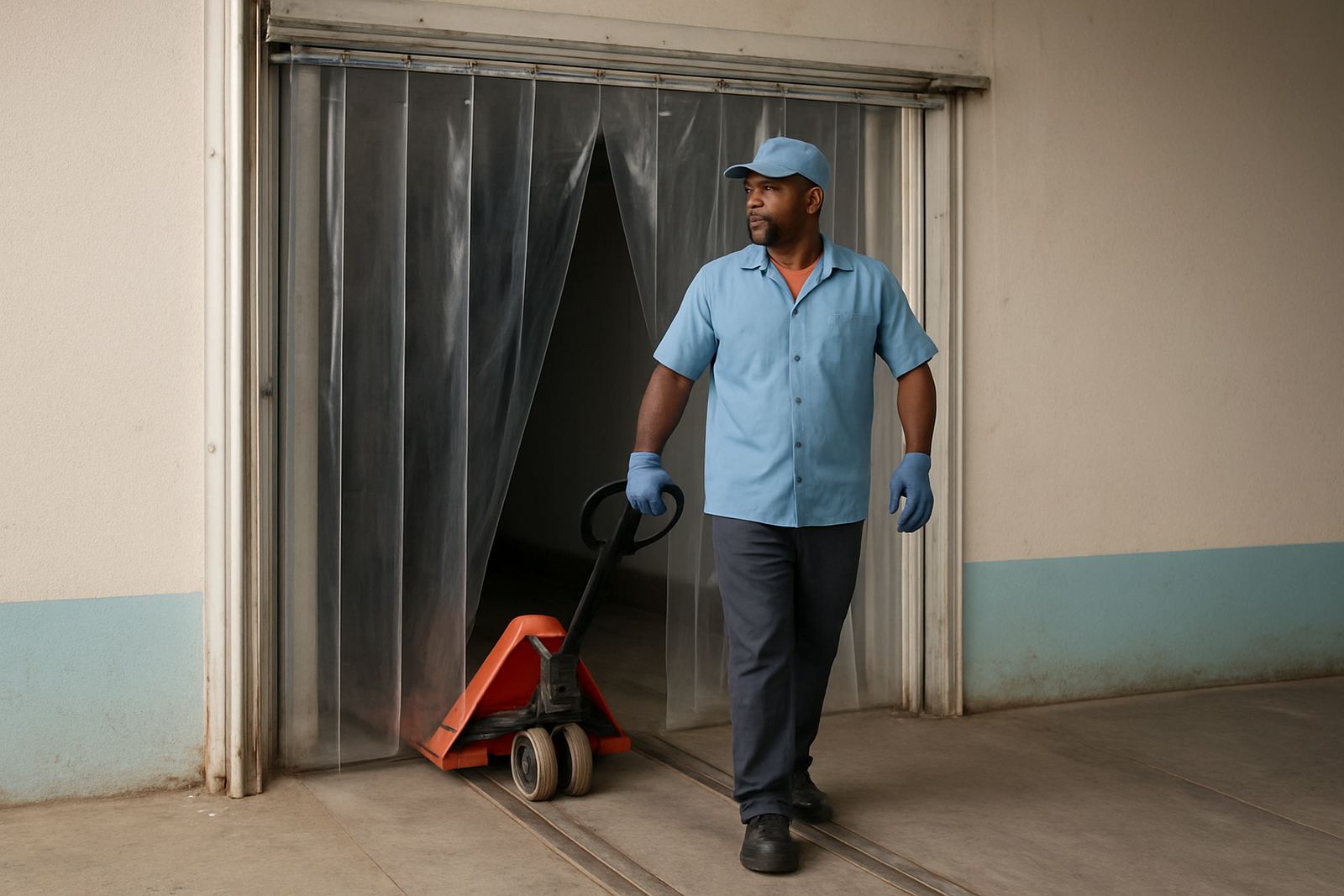
Strip curtains are made from overlapping PVC strips fixed to a top rail above a doorway or loading opening. The strips hang in a slight overlap, so people and wheeled traffic can pass through without opening a solid door every time. That helps limit temperature loss, dust movement and insect entry, which matters in cold rooms, freezer rooms, prep areas and back-of-house access points.
In Durban and along the coast, these barriers are often fitted where doors stay open longer than they should, especially during deliveries, stock movement and staff changeovers. They are a practical add-on for sites trying to control running costs and reduce strain on refrigeration plant in hot weather.
Common Sizes, Strip Types And Rail Options
Strip curtains are normally made to suit the opening size, the traffic pattern and the temperature zone. We measure the clear opening, then allow for the correct overlap and fixing height so the strips hang properly without dragging on the floor or lifting in a breeze.
- Strip widths commonly used: 200 mm, 300 mm and 400 mm
- Strip thicknesses: 2 mm, 3 mm and 4 mm depending on traffic and temperature
- Mounting styles: fixed top rail, hook-on rail or removable rail for cleaning access
- Strip grades: standard clear PVC, low-temperature PVC and tinted or ribbed options
- Typical overlap: 30% to 100% depending on the application
For forklift or high-volume trolley traffic, wider and thicker strips may be better. For smaller personnel doors, lighter strips can improve access without making the doorway awkward. The aim is simple, keep the cold in and the movement easy.
Where Strip Curtains Suit Best
These barriers suit places where a door opens often and temperature control matters. They are commonly used in cold rooms, freezer rooms, vegetable storage, bakeries, butcheries, bottle stores, kitchens, production areas and loading bays. They also help on plant rooms and service corridors where dust and warm air can create trouble.
On the KZN coast, humidity can make refrigeration work harder, especially when a chilled room opens into a hot loading area. Strip curtains help reduce that exchange. They are also useful where municipal or food safety checks require better control of access, pest exclusion and housekeeping around cold storage.
- Cold rooms and freezer rooms
- Display chillers and prep areas
- Dispatch doors and loading points
- Dust-prone industrial spaces
- Areas needing easier staff access than a solid door allows
Installation, Fixings And Site Conditions
Strip curtains do not need power or gas. They work mechanically, which makes them useful during load-shedding and in areas where a simple solution is preferred. Installation is usually quick, but the fixing surface must be sound. We check the lintel, wall finish, door frame and available clearance before fitting the rail.
Some sites need stainless fixings because of coastal air and washdown conditions. Others need a split curtain, a weighted bottom strip or side sealing changes to suit trolley movement. If the opening has a roller door, swing door or uneven floor, we adjust the layout so the curtain works properly and does not wear out too fast.
In some older buildings the opening is not square, so a measured fit matters more than a standard size kit. That kind of detail saves a lot of grief later.
Care, Cleaning And Ongoing Service
Strip curtains need simple maintenance, but they do need it. Dirt, grease and hard knocks shorten the life of the PVC, especially in food areas and busy stores. Regular wiping with a mild cleaner keeps the strips clear and easier to use. If a strip tears or becomes brittle, it should be replaced before the damage spreads across the set.
As part of planned maintenance, we can inspect the curtain during refrigeration servicing and check whether the overlap is still correct, the rail is secure and the fixings have not loosened. In a cold room that is opened all day, this small check can make a noticeable difference to temperature recovery. It also helps cut down on condensation and ice build-up near the doorway.
- Wipe strips with a non-abrasive cleaner
- Check for splits, curling edges and cloudy sections
- Make sure the bottom edge is not dragging or icing up
- Inspect fixings after hard knocks or delivery damage
What To Check Before You Order
Before ordering strip curtains, it helps to know exactly what the opening is used for. A personnel door in a chilled store does not need the same setup as a forklift entry to a freezer room. The more detail you give at quote stage, the better the fit first time.
Have these details ready: clear opening width and height, type of traffic, temperature range, whether the area is chilled or frozen, and whether there is a lot of washdown or coastal moisture. If the site runs 24 hours or has tight hygiene rules, say so upfront. That lets us spec the right strip thickness, overlap and fixing method.
- Opening size in millimetres
- Traffic type: staff only, trolley, pallet jack or forklift
- Room temperature and whether the opening is internal or external
- Cleaning method and washdown frequency
- Any special access needs for deliveries or compliance checks
For Durban businesses, timing also matters. If the opening sits in a busy loading zone, we plan the fit around trading hours so the work causes as little disruption as possible.
Key facts
| Product type | PVC strip curtain barrier for temperature control and traffic access |
|---|---|
| Common strip widths | 200 mm, 300 mm, 400 mm |
| Common thicknesses | 2 mm, 3 mm, 4 mm |
| Temperature use | Chilled rooms and freezer rooms, depending on strip grade |
| Power or gas required | None |
| Typical use areas | Cold rooms, freezer rooms, loading doors, prep areas and service openings |