What an upright freezer does in a busy trade setting
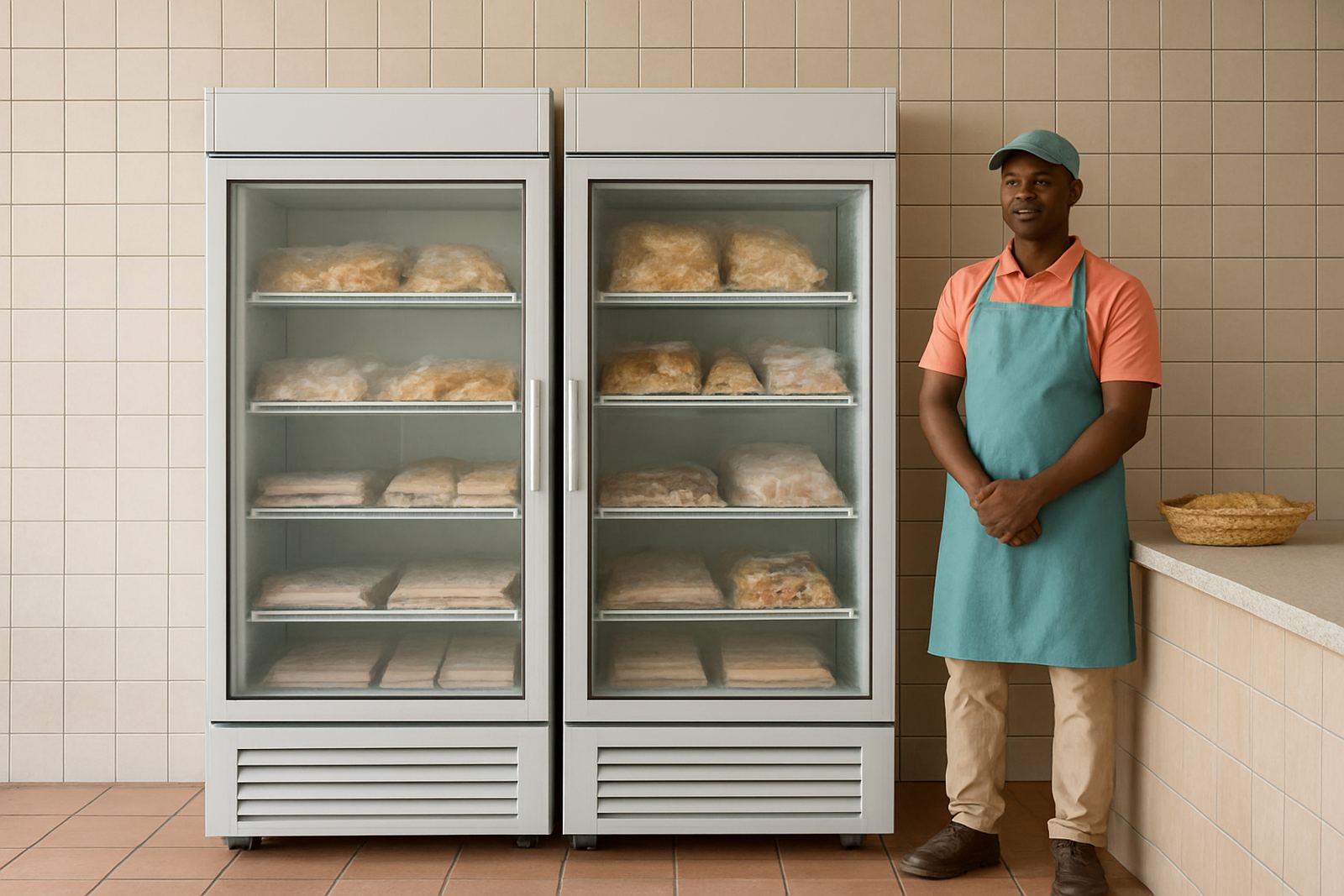
An upright freezer is a vertical frozen storage cabinet with insulated doors, shelving and a refrigeration system that holds product at steady sub-zero temperatures. It uses floor space well, makes stock easy to reach and suits sites where frozen goods need to be visible or sorted by line, such as meals, meat, seafood, ice cream and bakery products.
For front-of-house use, glass door upright freezers help customers see stock without keeping the door open too long. For back-of-house, solid door units are better for storage, because they hold temperature well and hide the daily wear of a working kitchen. In Durban and along the coast, it also helps to choose a unit that can cope with warm rooms, salty air and frequent door opening.
Sizes and cabinet options to consider
Upright freezers come in single door, double door and larger multi-door formats. Capacity is usually measured in litres, with smaller cabinets around 300 to 600 litres and larger commercial units often running from 700 litres up to 1 400 litres or more, depending on the layout and shelf count.
- Solid door cabinets for storage rooms, prep areas and kitchens
- Glass door cabinets for display counters, forecourts and retail floors
- Fan-assisted models for better temperature spread across shelves
- Lockable doors for stock control in shared or public areas
- Castors or adjustable feet for cleaning and levelling on uneven floors
Shelf spacing matters if you store boxed products, trays or larger packs. If the cabinet will be used for mixed stock, ask for adjustable shelves so the space can be changed as product ranges change. A cabinet that is too small for the load will cycle harder and waste power.
Where upright freezers suit best in Durban and KZN
These cabinets suit convenience stores, butchery counters, cafes, bottle stores, hotels, school kitchens, takeaways and industrial canteens. They also work well in store rooms where frozen stock needs to be organised by date and product line. In humid coastal areas, glass doors and door seals need regular checks because condensation can form quickly when the cabinet is opened often.
Upright freezers are practical where floor area is limited but wall space is available. In a busy shop, a vertical cabinet can keep the frozen range neat and easy to browse. In a kitchen, it can hold portioned stock at eye level, which saves time during service and reduces unnecessary door opening.
- Retail frozen food displays
- Restaurant and hotel kitchens
- Butchery and seafood storage
- Bakery frozen ingredients and desserts
- High turnover back-of-house stock rooms
Installation, power and room conditions
Most upright freezers need a dedicated electrical supply, proper earthing and enough clearance around the cabinet for air movement. The exact load depends on cabinet size and compressor type, but the circuit must be sized by a competent technician so the freezer does not share power with heavy kitchen loads. In areas with load-shedding, a suitable changeover plan or backup supply should be considered early, not after the stock has warmed up.
Leave space above and behind the unit for ventilation, and make sure the floor can carry the weight when the cabinet is fully loaded. A level floor is important because a cabinet that leans can cause doors to swing, seals to gap and condensate to collect where it should not. If the site is near the coast, the external coil and metalwork should be checked often for corrosion, especially if the unit sits close to an open delivery door or wash area.
Care, servicing and temperature control
Good care keeps an upright freezer stable and lowers the risk of spoiled stock. Doors should close firmly, seals must stay clean and the condenser needs to be cleared of dust and grease. If the cabinet frosts up too quickly, it may be getting warm air through a damaged seal, poor door discipline or a refrigeration fault that needs attention.
Planned maintenance usually includes temperature checks, leak detection, cleaning of coils, checking fans and motors, and making sure the thermostat and defrost cycle are working as they should. We also look at electrical fault finding and temperature logging for sites that need records for audits or internal controls. If a freezer is running flat out all the time, or taking too long to recover after trading hours, it should be inspected before the compressor gets damaged.
- Clean the door seals and check them for splits
- Keep vents and coils clear of dust and grease
- Watch for excess frost on product or shelving
- Log temperatures during busy periods and after power cuts
- Arrange routine service before peak trading seasons
What to confirm before you order
Before you order, check the cabinet size, door type, internal shelf layout and whether the freezer is meant for display or storage. Confirm the temperature range required for your stock, the available electrical supply, and whether the unit must fit through a doorway, lift or narrow passage on site. If the freezer will sit in a shopfront or kitchen with heavy traffic, ask for a finish that is easier to keep clean.
It also helps to know how often the door will be opened, what type of product will be stored, and whether you need a unit for dry indoor use or a harder working environment with more heat and humidity. These details affect compressor size, insulation choice and how often the cabinet will need servicing. A small mistake at order stage can cost more later, especially if the unit has to be moved or replaced after installation.
Our team in Glen Anil supports upright freezer supply and service across Durban North, Umhlanga, Pinetown, Ballito and the South Coast, with breakdown call-outs and service contracts available for commercial and industrial sites.
Key facts
| Product type | Vertical frozen storage or display cabinet |
|---|---|
| Typical capacity | 300 litres to 1 400 litres plus, depending on cabinet size |
| Door options | Solid door or glass door |
| Temperature range | Designed for sub-zero frozen storage |
| Power needs | Dedicated electrical supply with correct earthing and circuit sizing |
| Common features | Adjustable shelves, internal lighting, lockable doors, fan-assisted cooling |