What a blast chiller does in a busy kitchen
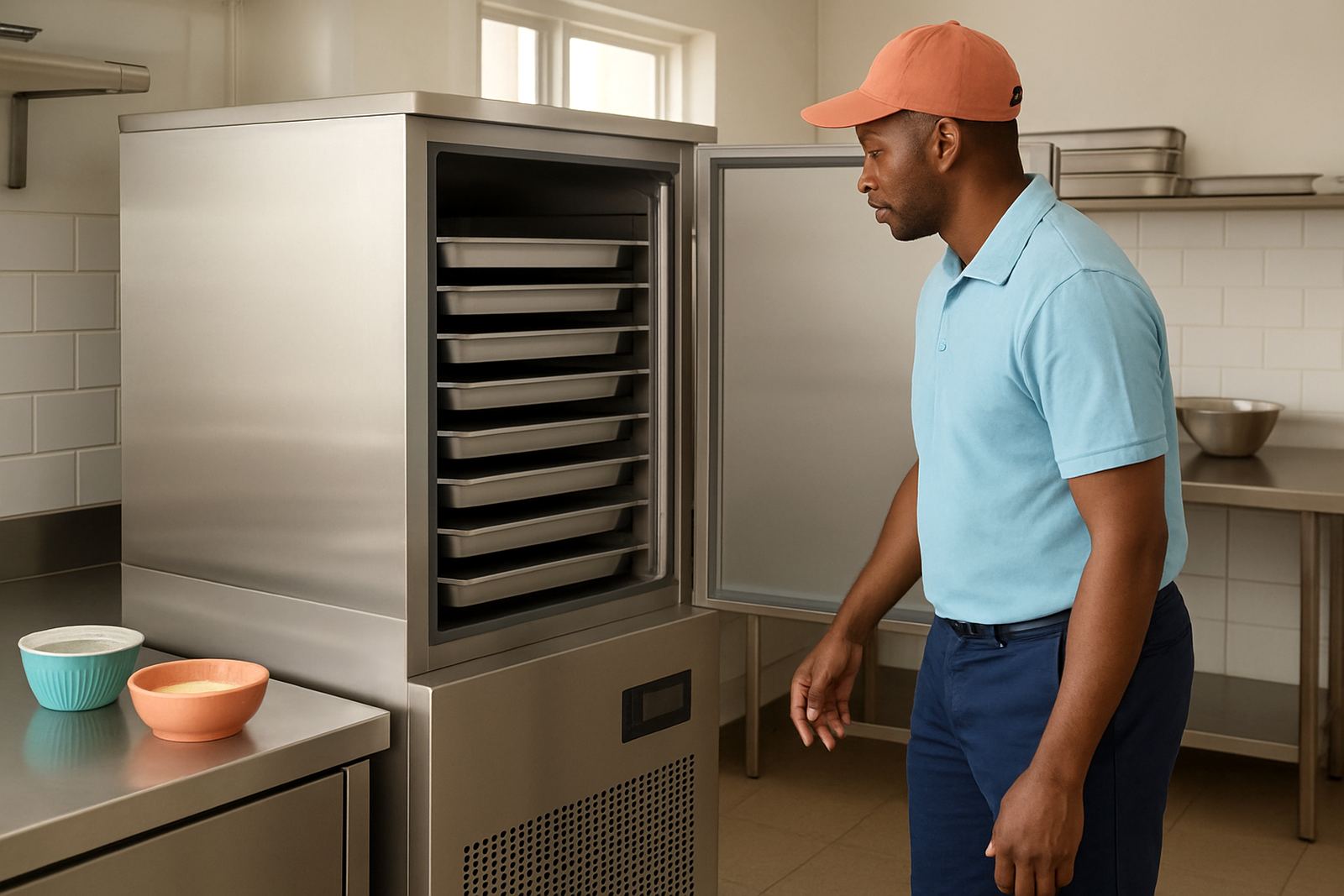
A blast chiller is built to pull heat out of food fast after cooking so the product can be stored safely or sent straight into freezing. In simple terms, it shortens the time food spends in the danger zone, which is important for hotels, canteens, bakeries, butcheries and food production rooms where stock turns over quickly. For many operations, this is not about convenience only. It is about food safety, batch control and making sure the kitchen can handle peak service without rushing product into a standard fridge that is already full.
On the KZN coast, the extra heat and humidity make recovery times longer for ordinary refrigeration. A proper blast chiller gives you controlled pull-down at a set capacity, instead of overloading a display chiller or cold room that was never meant for rapid chilling. If your site has load-shedding, the unit also needs a plan for restart, alarm memory and temperature logging so you know what happened during a power cut.
Typical sizes, formats and temperature range
Blast chillers are usually selected by tray count, pan size or kg per cycle. Smaller undercounter units suit bakeries, cafés and satellite kitchens, while upright cabinet units work better for restaurants, school kitchens and central production areas. For larger sites, trolley or roll-in models can handle full batches from combi ovens and high volume prep lines.
- Small units: 3 to 5 tray capacity, suited to about 10 kg to 25 kg per cycle.
- Medium units: 6 to 10 trays, commonly used for 25 kg to 50 kg per cycle.
- Large units: roll-in or trolley type, often 50 kg to 100 kg plus per cycle.
- Typical pull-down targets: from +90°C cooked product to +3°C chilled, or to -18°C for hard freezing.
- Finishes often include stainless steel interiors and exteriors for easy wash-down and corrosion resistance.
Options can include digital temperature control, probe entry, automatic defrost, fan delay and cycle programmes for different foods. If your operation handles soups, sauces, cooked meats, pastry or plated meals, ask for the cycle times and load limits in writing so the unit suits your actual output rather than a brochure figure.
Where a blast chiller suits best
We fit and service blast chillers for commercial kitchens, food factories, butcheries, bakeries, supermarkets, hospitals, retirement kitchens and caterers around Durban, Umhlanga, Ballito, Pinetown and the South Coast. They are also common in sites that want better stock rotation between prep and service, especially where food is made early and held for later use.
These units suit operations that need repeatable results. A bakery may chill sponge, cream desserts or dough items before storage. A butcher may need rapid chilling after cooking joints for ready meals. A production kitchen may portion cooked meals into sealed trays before dispatch. In each case the goal is the same: controlled cooling, less spoilage and cleaner compliance records.
If your premises have limited room, we check door swings, ventilation clearances, floor loading and the route from delivery point to kitchen. In older buildings around Durban North or older retail sites, power supply and drainage can also affect what size unit makes sense, so it helps to plan the fit before ordering.
Power supply, installation and site checks
Most blast chillers run on standard commercial electrical supplies, but the exact requirement depends on size and whether the unit is air-cooled, water-cooled or connected to remote plant. Single phase may suit smaller cabinets, while larger models usually need three phase supply and dedicated protection. We check starting current, cable size, breaker rating and isolation position before installation, because a unit that trips at peak time is no use to the kitchen.
Good installation also means enough airflow around the condenser, correct drain fall and a level base. In coastal areas, salt air and humidity can shorten component life if the plant room is poorly ventilated. Where a unit sits near ovens or hot prep lines, extra heat in the room will affect pull-down times, so the layout matters just as much as the machine size.
- Dedicated electrical supply with correct breaker and isolator.
- Clearance for service access and condenser airflow.
- Drain connection or suitable drip management.
- Floor loading checked for larger cabinet or trolley units.
- Alarm, probe and temperature logging setup tested on handover.
Routine care and service work that keeps temperatures steady
Blast chillers work hard and need regular cleaning, inspection and temperature checks. Grease on the evaporator, blocked drains, worn door seals and dirty condenser fins all slow performance. On busy sites, a neglected unit can start chilling slowly long before it fails completely. That means longer cycles, more electricity use and food sitting too long before it reaches safe storage temperature.
Our service work covers planned maintenance, breakdown call-outs, leak detection, electrical fault finding, compliance checks and temperature logging. We also check fans, probes, controls, drains and defrost operation. If a site has service contracts, we can schedule visits around production times, which helps reduce downtime and keeps records in order for audits. One quick note for coastal kitchens, keep the area around the condenser clean and dry because corrosion can creep in faster than people expect.
When the unit is used for both chilling and freezing, it should be checked against the actual menu load not just empty cabinet performance. Heavy pans, deep trays and crowded shelves all change airflow. This is where a technician’s eye matters, because the machine may be fine but the loading pattern is causing the problem.
What to confirm before you place an order
Before you buy, ask for clear answers on capacity, cycle times, temperature recovery and the type of product you will chill. A proper quotation should also cover where the condenser sits, what power supply is needed, and whether installation includes commissioning and training for your kitchen team. If you are replacing an older unit, the new model should match your available space and the actual tray sizes already in use.
- How many kg per cycle do you need at peak time?
- Do you need chilling only, or chilling plus hard freeze?
- Will the unit fit through doors, passages and plant areas?
- What power supply is available on site, including backup during load-shedding?
- Do you need temperature logs for compliance or HACCP records?
- Will the unit sit in a hot kitchen, cold room area or separate plant room?
If you are not sure on one of these points, we can help you compare options in plain terms. That usually saves money, because the right unit on day one avoids oversizing, poor pull-down and repeat service calls later.
Local support for Durban and the KZN coast
Coastal Cooling Systems has been working in commercial refrigeration and air-conditioning since 1998 from Glen Anil in Durban. We support kitchens and production sites across Durban North, Umhlanga, Pinetown, Ballito and the South Coast with installation, repairs and ongoing maintenance. Because we work locally, we understand the realities of power cuts, warm plant rooms and the way coastal moisture affects refrigeration gear over time.
For blast chillers, that local knowledge matters. It helps with sizing, placement, spare parts planning and honest advice on whether a repair or replacement will give better value. If your operation needs dependable rapid chilling and a team that can follow through after installation, we can assist from first check through to service contract support.
Key facts
| Product type | Commercial blast chiller for fast pull-down of cooked food |
|---|---|
| Capacity range | 3 to 10 tray cabinets, trolley units and larger production models |
| Temperature range | +90°C down to +3°C for chilling, and to -18°C on freezer-capable models |
| Power supply | Single phase or three phase depending on model and load |
| Finish | Stainless steel cabinet with food-grade interior surfaces |
| Common options | Core probe, digital controls, alarm, logging, automatic defrost |