Purpose-built cooling for IT rooms that must stay on
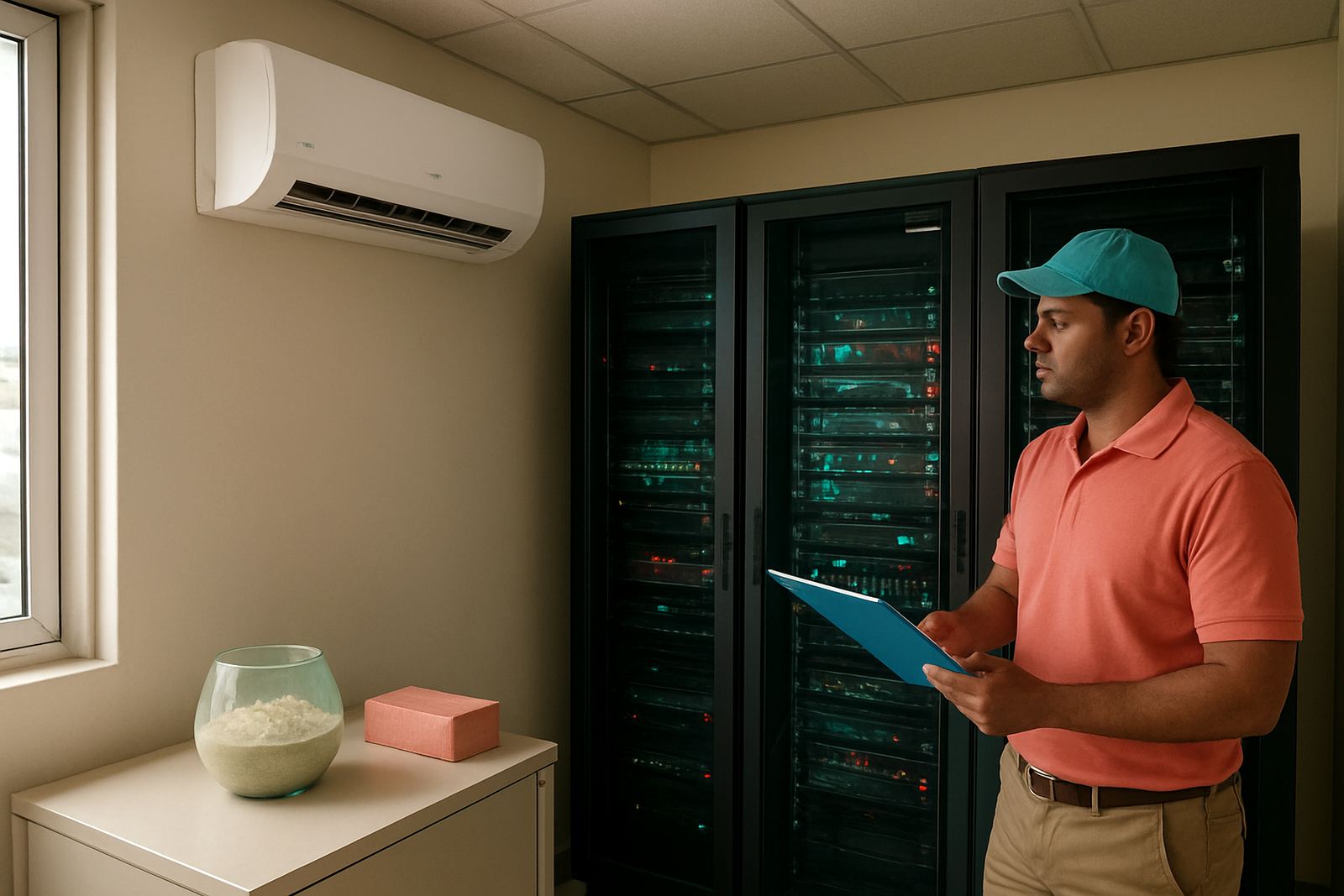
Server room cooling is not the same as comfort air-conditioning. A small rise in temperature, poor air movement or a brief outage can affect switches, servers, storage and network gear. In practice, these rooms need equipment that can hold set temperatures for long hours, deal with constant heat load, and recover quickly when doors are opened or power is unstable. Coastal conditions in Durban and Umhlanga add another layer too, with humidity and salt air making coils and controls work harder.
We supply and maintain cooling for small comms rooms, back-of-house IT spaces, branch server rooms and larger data and network areas. The aim is steady operation, sensible running costs and safe working conditions for equipment. A well-sized system should run quietly, remove heat from racks and allow for planned maintenance without leaving the room exposed.
- Suitable for single-rack rooms and multi-rack IT spaces
- Can be arranged as one unit or duty and standby units
- Works with temperature logging and maintenance records
- Can be planned around after-hours access and live systems
Sizes, configurations and control options
The right size depends on heat load, room volume, occupancy, door opening frequency and the amount of equipment running inside. We size server room cooling systems from small split-type units to larger ducted or precision-style arrangements for busier sites. On smaller sites, 5 kW to 12 kW may be enough. Medium rooms often sit between 12 kW and 25 kW. Larger IT rooms, or rooms with generator backup and high rack density, may need 25 kW to 60 kW or more, depending on the layout.
Options can include fixed-speed or inverter-driven systems, wall-mounted indoor units, ceiling-mounted units, ducted discharge, filtration upgrades and changeover control for backup duty. Where continuity matters, we can design for lead-lag operation so one unit can carry the load while the other is on standby or service. That matters when a site cannot afford downtime during business hours, or when load-shedding puts extra pressure on the system.
- Cooling capacities from about 5 kW to 60 kW plus, based on the room load
- Single unit, twin unit or staged duty and standby layouts
- Temperature set-points commonly kept between 20°C and 24°C
- Alarm interfaces and monitoring connections can be included where required
Where server room cooling suits best
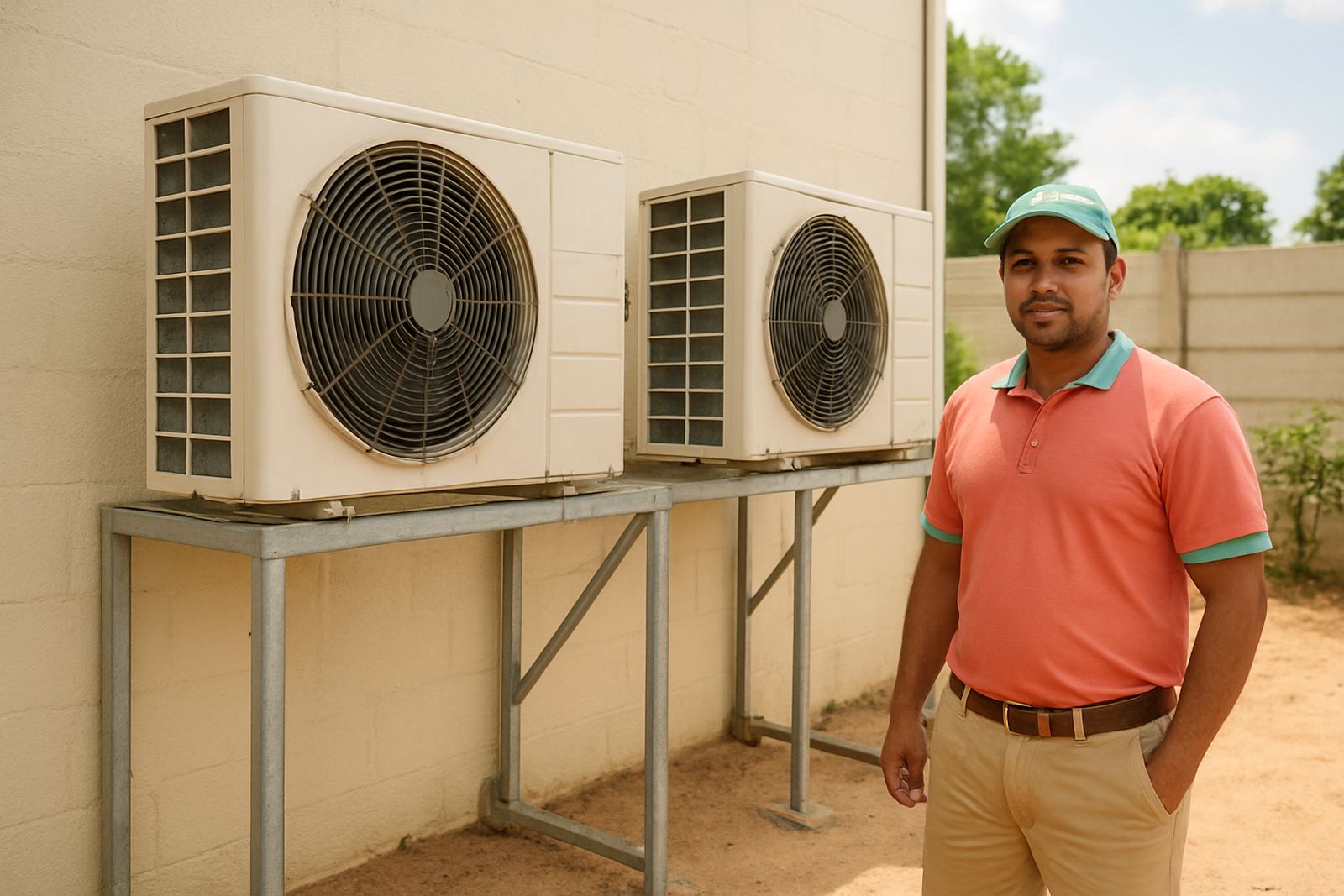
These systems suit offices, warehouses, retail head offices, security control rooms, medical practices, schools, and industrial sites where IT gear must stay protected. In Durban North and Umhlanga, we often see rooms affected by glass frontage, roof heat and coastal humidity. In Pinetown and inland industrial areas, dust and high ambient temperatures are usually the main issue. Ballito and South Coast sites often need extra care around corrosion, especially where outside condensers are exposed to salt air.
Server room cooling also suits rooms with little natural airflow, rooms with restricted ceiling height, and spaces where the door opens often for technicians or staff. If the room shares a wall with a plant area, kitchen or print room, the heat load can jump quickly. In those cases, correct sizing and good air distribution matter more than just buying a bigger unit.
For some sites, a dedicated server room unit is the better call than trying to use general office air-conditioning. The room gets a more stable supply of cool air, the thermostat is not affected by the rest of the building, and service checks are easier to manage.
Installation, power supply and refrigerant needs
Installation starts with a proper site visit. We check the room size, heat gain, ceiling space, access routes, drainage, power supply and where condensers can be mounted without causing nuisance noise. On a working site, we also look at cable routes, isolation points and whether the room can stay live during the install. If the space is part of a critical network, changeover planning is important.
Power supply needs depend on the unit size and whether it is single-phase or three-phase. Smaller server room systems may run on standard 230 V supply, while larger units often need 400 V three-phase power and dedicated protection. A clean electrical feed, correct isolators and proper breaker sizing are essential. We also check drainage for condensate and make sure pipe runs are kept neat and accessible for future service. Gas pipes, if used, should be sized correctly and pressure tested before commissioning, not left to chance.
- Single-phase and three-phase options available
- Dedicated isolators and correctly rated protection required
- Condensate drainage and refrigerant pipework must be accessible
- Outdoor units should be positioned for service access and airflow
Care, servicing and temperature control over time
A server room system needs more than a once-off install. Filters clog, fans wear, drainage lines block and coastal air can affect coils faster than people expect. Planned maintenance keeps the unit clean and the room temperature stable, which helps protect equipment and reduce call-outs. We service cooling systems across Glen Anil, Durban North, Umhlanga, Pinetown, Ballito and the South Coast, with breakdown support when a room is running hot and time is tight.
Our maintenance can include coil cleaning, filter checks, gas leak detection, electrical fault finding, temperature logging, condenser inspection and control checks. We can also set up service contracts so the room gets regular attention instead of waiting for an alarm or a late-night failure. On busy sites, that is usually cheaper than dealing with lost data, damaged hardware or emergency shutdowns.
For sites close to the sea, regular washing of outdoor coils and checking for corrosion is important. If the system is underperforming, the first signs are usually higher room temperatures, longer run times, uneven airflow or alarms on the monitoring system. Small issues can become bigger fast, so early checking matters.
What to check before you order
Before ordering server room cooling, it helps to have a few details ready. This avoids under-sizing the unit or missing a practical issue on site. We often ask for room dimensions, number of racks, equipment list, heat output if known, current power supply and whether there is backup generator support. It also helps to know if the room has raised flooring, a suspended ceiling, or limited outdoor space for condensers.
Also check whether the room must stay operational during installation, whether alarms must tie into building management or security systems, and whether any municipal or landlord rules affect external unit placement. In some Durban buildings the outside wall space is tight, so access for lifting and future maintenance needs to be thought through early. If you are unsure, send the basics and we can work from there.
- Room size and ceiling height
- Number and type of racks or IT equipment
- Heat load, power supply and backup arrangements
- Access for installation, service and future replacement
Key facts
| Cooling range | About 5 kW to 60 kW plus, depending on room load |
|---|---|
| Supply options | 230 V single-phase or 400 V three-phase |
| Operating set-point | Typically 20°C to 24°C |
| Control | Digital thermostat with optional monitoring and alarm interfaces |
| Installation types | Wall-mounted, ceiling-mounted, ducted or split system layouts |
| Service support | Planned maintenance, breakdown call-outs, leak detection and temperature logging |