Kitchen loads that match your service times
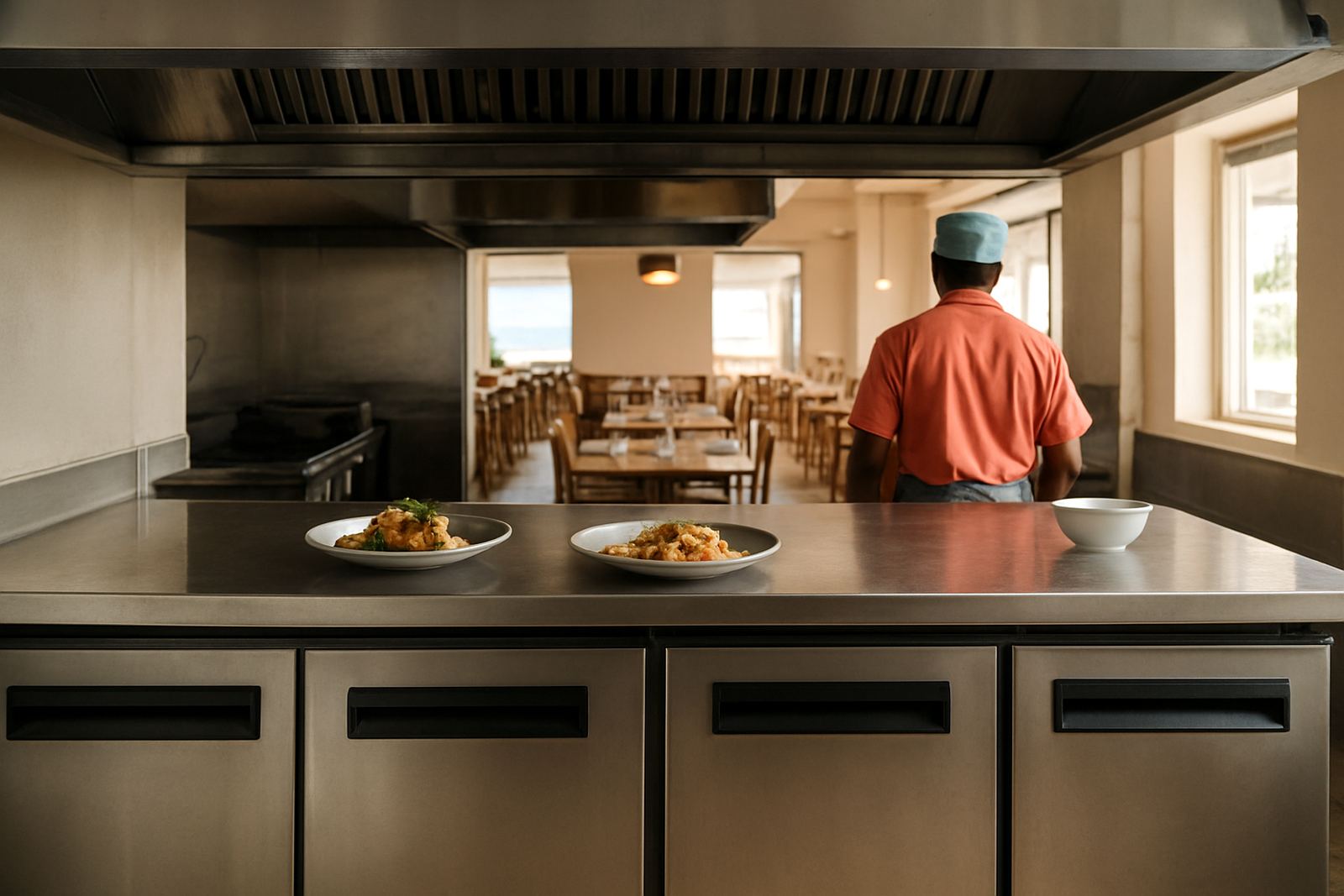
In a restaurant, the cold side and the comfort side have to work together. The kitchen is hot, the doors open often, and storage is tight, so the refrigeration must recover quickly after every delivery and every busy prep period. On the dining side, air-conditioning has to keep the room comfortable without blowing directly onto guests or fighting against open doors near the entrance.
We work with restaurants from Glen Anil to Umhlanga, Ballito and the South Coast where salt air and summer humidity put extra pressure on condensers and electrical parts. A system that is fine in winter can start giving trouble by December if it was not sized and laid out for the real load. That is why we look at trading hours, kitchen heat, extract fans, glazing, and how often the fridges are opened during service.
Typical equipment in a restaurant setup
Most restaurants need a mix of storage, display and room cooling. The right combination depends on whether you are running a café, a busy bistro, a hotel kitchen or a takeaway focused site. We normally assess the equipment already in place, then plan around peak trade and the food range you carry.
- Cold rooms for meat, dairy, prep items and bulk deliveries
- Freezer rooms for stock holding and batch prep
- Display chillers for salads, desserts, bottled drinks and grab-and-go items
- Under-counter and upright fridges near prep lines
- Commercial and industrial air-conditioning for dining rooms, bars and function areas
- Temperature logging and compliance checks for food safety records
If a site is still expanding, we also help with phased planning so the kitchen does not end up with fridges in the wrong place or a dining area that needs a second unit six months later. A small layout mistake can cost more in energy and lost stock than the original installation price.
Layout advice for kitchens, bars and dining rooms
Good planning starts with traffic flow. Cold storage should sit close to prep and receiving, but not where delivery trolleys block staff movement. Display chillers should be easy for customers to reach and for staff to restock without standing in a hot doorway. In the dining room, the air-conditioning should be set to cover the full seating pattern, not just the centre of the room.
We also check where the heat is coming from. Ovens, fryers, dishwashers and extractor discharge points can all affect the way a room performs. On coastal sites, outside units need clear airflow and corrosion protection because damp air and sea spray can shorten component life. A unit tucked too close to a wall or under a drip line will often cost more in call-outs later. simple things matter here.
For restaurants with load-shedding exposure, we can advise on restart procedures and recovery times so that fridges do not sit in the danger zone after a power cut. If the site uses a generator, the refrigeration and air-conditioning loads should be balanced with the kitchen supply. Otherwise the generator works harder than necessary and breakers trip at the wrong time.
Common mistakes that lead to stock loss
Most refrigeration problems in restaurants come from planning errors or poor maintenance, not from one single big failure. A unit can be new and still underperform if it was installed in the wrong position or if the door seals, drains and fans are not checked regularly. The result is warmer product, higher electricity use and more stress during service.
- Undersized cold rooms that cannot recover after deliveries
- Display chillers placed in direct sun or beside hot cooking equipment
- Blocked condenser coils caused by grease and dust build-up
- Poor door discipline in kitchens leading to temperature drift
- Air-conditioning set too low, causing discomfort and high power use
- No temperature logs when municipal or food safety checks are needed
We often find that a restaurant is spending money on emergency call-outs when planned maintenance would have been cheaper. One missed service can turn into a full stock write-off, and that is before you count lost trade during repair time. Our team handles breakdown call-outs across Durban North, Pinetown, Glen Anil, Umhlanga and nearby coastal areas.
Maintenance that suits a trading restaurant
Restaurants cannot afford long downtime, so service work has to be timed around preparation, lunch rush and evening seating. We set up maintenance visits before opening hours or during quieter trading windows where possible. The aim is to keep systems clean, stable and safe without interrupting the floor team or the kitchen pass.
Our planned maintenance can include filter cleaning, drain checks, fan inspections, gas leak detection, electrical fault finding and temperature logging. For air-conditioning, we look at condensate drainage, control settings and airflow because a room that feels stuffy drives guests out quicker than poor lighting. On refrigeration equipment, we check the seals, compressor condition and temperature pull-down so a small fault is caught early.
Service contracts suit restaurants that need predictable costs and faster response times. They also help with record keeping when the health inspector or a landlord asks for proof of regular maintenance. For many sites, the cost of a contract is easier to budget than repeated ad hoc repairs during peak season.
Budget ranges for restaurant refrigeration and air-conditioning
Costs depend on size, access, electrical supply and whether the site needs new equipment or work on an existing system. Small jobs on a single chiller or split unit can stay fairly manageable, while a full kitchen and dining room package can move into a larger project budget. In Durban, most restaurant owners want clear numbers before committing, and that is fair.
As a rough guide, a basic service call for a fridger or small air-conditioning fault may start from a few thousand Rand, while planned maintenance visits for multiple units are usually better priced as a monthly or quarterly contract. Cold room repairs can vary from sensor and fan issues at a lower cost, to compressor or control failures that run into the higher Rand range. New installations are quoted according to capacity, pipe runs, electrical work and access, so a compact café setup is not compared to a full hotel kitchen.
We are upfront about what can be repaired and what should be replaced. If a restaurant is already losing stock, it is better to put money into a repair that will hold through summer than to keep patching the same fault every few weeks.