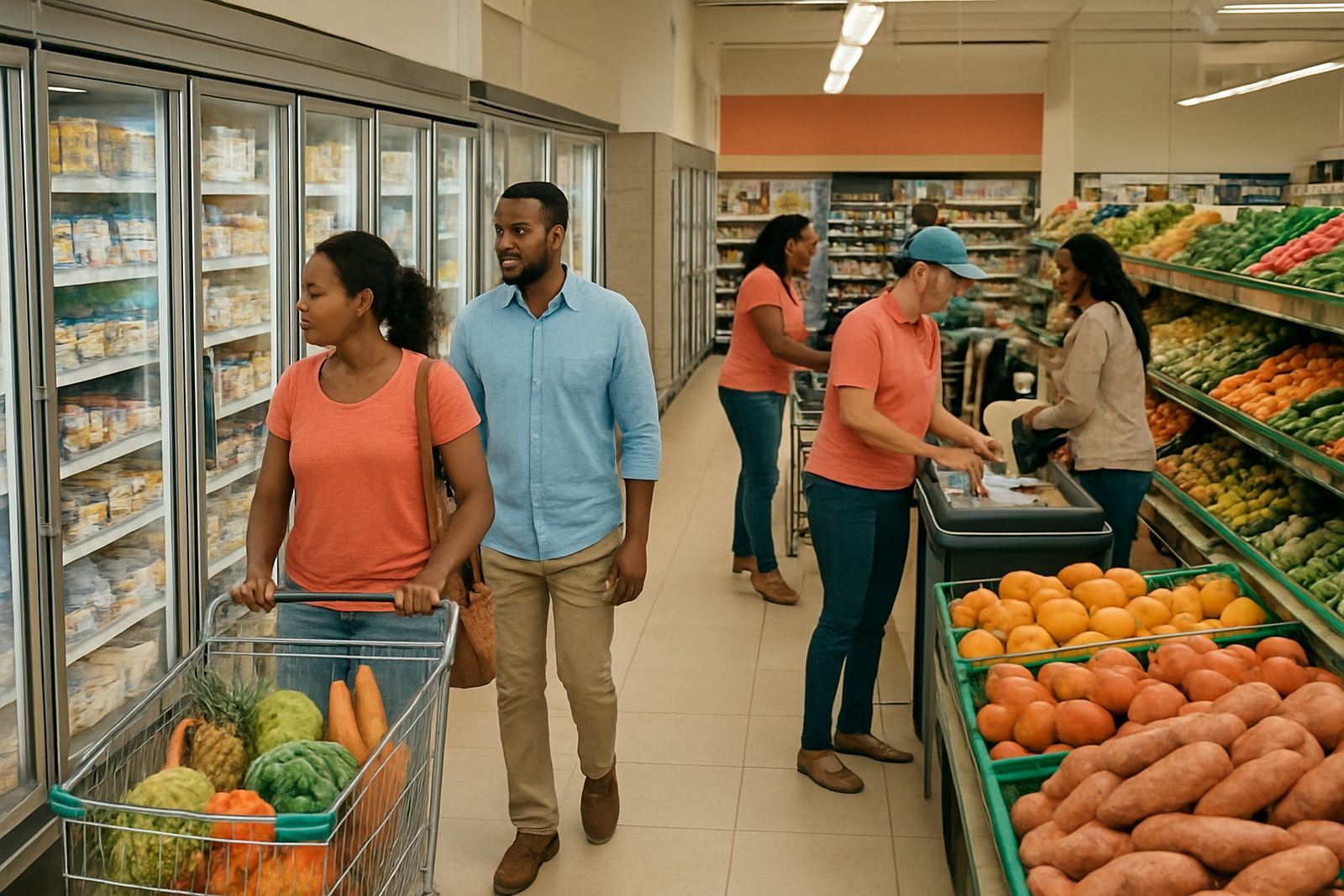
What a supermarket needs to keep trading
A supermarket has more than one cooling load. There is the sales floor, the prep area, the back room, the freezer space and often a small plant area tucked away where airflow is already tight. If one part is under-sized or not matched properly, the whole store feels it in higher power use, warmer cabinets or stock losses.
For stores in Durban, Umhlanga, Ballito and along the South Coast, humidity adds extra strain. Door seals sweat, glass fronts mist up and condenser coils collect salt and dust faster than inland sites. Our team looks at the full site, not just the cabinet or the aircon unit on its own.
- Display chillers for dairy, drinks, fresh produce and deli lines
- Cold rooms for bulk stock, meat prep and daily receivals
- Freezer rooms for longer storage and peak stocking periods
- Commercial and industrial air-conditioning for sales floors and back-of-house spaces
Typical equipment set for a busy store
Every site is different, but most supermarkets use a mix of display chillers, remote condensing equipment or packaged refrigeration units, cold rooms, freezer rooms and split or ducted air-conditioning for customer and staff areas. On larger stores we also specify temperature logging points, alarms and dedicated electrical isolators so faults can be traced quicker during trading hours.
In Glen Anil, Durban North and Pinetown we often see stores that have grown in stages over the years. That can leave you with mixed equipment ages, different refrigerants and a patchwork of controls. It still works for a while, then the maintenance bill starts climbing and the old units begin pulling down the new ones. That is where a proper review helps.
- Duty and standby capacity for cold rooms where stock turnover is high
- Air curtains or controlled entry layouts for doors that open all day
- Fresh air and extract planning for prep areas and staff rooms
- Separate circuits for refrigeration and comfort cooling to limit nuisance trips
Layout and planning that saves money later
Good planning starts with where the stock moves. Receiving, storage, prep, display and waste handling should all sit in a simple flow. If the freezer room is too far from the prep area, staff spend time moving product and doors stay open longer. If the air-conditioning serves a hot back corridor the unit runs harder than it should.
We also look at service access. A condensing unit needs space for cleaning and repairs, and technicians must be able to reach isolators, controls and drain points without pulling apart half the store. In coastal towns, corrosion protection matters as much as capacity. It is cheaper to plan for access and maintenance upfront than to force a breakdown team to work around a tight corner at 7 pm on a Saturday.
Where stores operate under municipal noise or drainage rules, the layout should allow for safe condensate disposal and quieter equipment positions. That matters in mixed-use sites near apartment blocks or busy retail centres.
Common mistakes we see in supermarket sites
Many store problems are not caused by one big failure. They come from small mistakes that build up over time. A cabinet left dirty, a blocked drain, a poorly sealed door or a split system that was sized for opening day only can all push running costs up fast.
We are often called in after a store has already lost stock or had a repeated breaker trip. By then the problem usually includes more than one fault. The aim is to catch the pattern early through planned maintenance, leak detection and regular electrical checks.
- Overloading one cold room instead of spreading stock properly
- Ignoring dirty coils, blocked filters and poor airflow around equipment
- Using the wrong temperature set points for the products being stored
- Putting comfort cooling on the same weak supply as refrigeration plant
- Skipping logs, so small temperature swings go unnoticed until stock is written off
Budget ranges for supermarket cooling in Rand
Costs depend on store size, product mix and whether you are replacing one part of the system or doing a full new build. A small store with a few display units and a compact cold room will sit in a very different bracket from a high-turnover supermarket with multiple freezer rooms and long cabinet runs.
As a working guide, planned maintenance contracts for supermarkets often start from the low thousands per month for smaller sites and rise with cabinet count, after-hours cover and reporting needs. Breakdown call-outs, leak repairs and compressor work are normally quoted per job once the fault is assessed on site. New cold rooms or freezer rooms can range from the tens of thousands into the low hundreds of thousands of Rand depending on panel size, machinery and controls. Full store refrigeration and air-conditioning packages can run well beyond that for larger sites.
The sensible approach is to budget for maintenance first, then set aside a reserve for urgent repairs and component replacement. That is usually better than waiting for a warm display cabinet to tell you the system was under-funded all along.
How we support stores across Durban and the coast
Coastal Cooling Systems works from Glen Anil and supports supermarkets in Durban, Durban North, Umhlanga, Pinetown, Ballito and the South Coast. Our team covers planned maintenance, breakdown call-outs, cold room servicing, freezer servicing, display chiller servicing, aircon maintenance, leak detection, electrical fault finding, temperature logging and compliance checks.
For stores that cannot afford downtime, service contracts help keep the routine work on schedule. That means cleaned coils, checked door seals, tested controls, logged temperatures and a clear picture of which assets are ageing out. It also gives you a direct line when something changes after a power cut or a bad weather spell, which happens often enough on the coast.
Sibusiso Mthembu leads the business with a team that understands retail pressure, delivery windows and trading hours. Priscilla Naidoo coordinates operations, Themba Dlamini handles refrigeration, Kyle Govender oversees air-conditioning, Zanele Khumalo manages service contracts and Aiden Pillay prepares project estimates. If your supermarket needs steady cooling and practical support, we can help keep it that way.