Why a Cold Room Can Be Working Hard and Still Cooling Poorly
A refrigeration system can be running all day and still leave you with uneven product temperatures if the room is packed badly. In Durban and along the coast, where humidity is high and doors open often, bad loading makes the problem worse because the unit has to fight both heat and moisture.
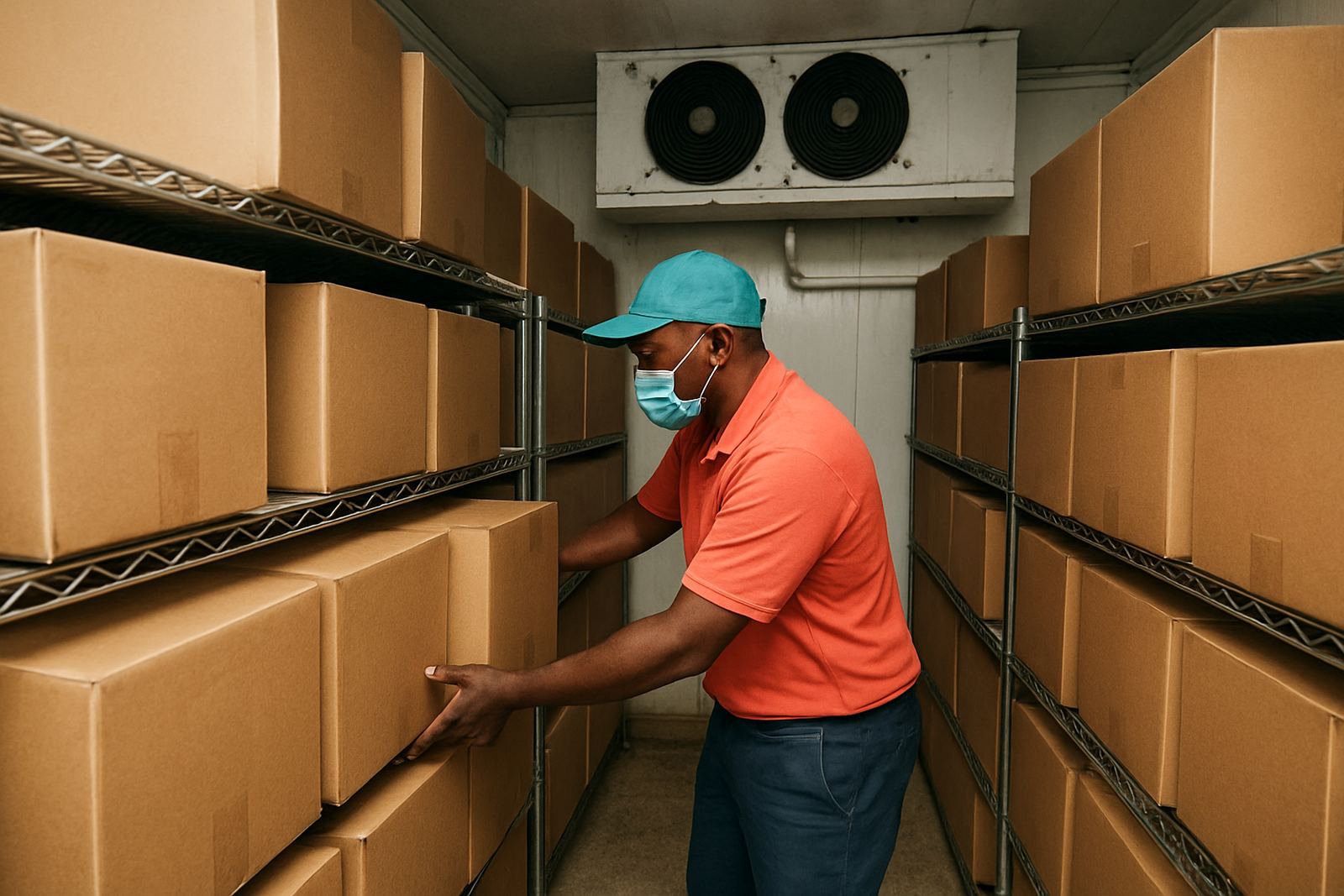
The mistake many teams make is assuming more stock means better use of the room. In reality, overpacking cuts off air paths, so the cold air cannot move around cartons, crates or trays properly. The machine keeps cycling, but the product at the back or against the wall stays warmer than the rest.
That leads to more spoilage, more frost build-up and more call-outs for what looks like a refrigeration fault. Often it is a loading issue first, then a maintenance issue second.
The Stock Loading Errors We See Most Often
In cold rooms, freezer rooms and display chillers, the same loading mistakes show up again and again. The layout looks full and efficient from the outside, but the airflow is being blocked in all the wrong places.
- Pushing stock tight against evaporator fans or air outlets
- Stacking cartons to the ceiling so cold air cannot drop through the room
- Leaving no aisle space for circulation and stock rotation
- Placing warm incoming stock straight into the room without pre-cooling
- Blocking return air paths with pallets, crates or loose packaging
- Mixing fast-moving stock with long-term storage in the same tight bay
In a busy kitchen or warehouse it is easy to say there is no space. But when stock is packed too tightly, the room loses temperature consistency and the compressor ends up running harder than it should.
How Airflow Loss Changes Product Quality
Good refrigeration is not only about getting to the right temperature once. It is about holding that temperature evenly across the whole room. When airflow is blocked, some items freeze too hard while others sit in a warmer pocket and start to soften. That is a real problem for dairy, meat, frozen seafood and prepared food.
Temperature logging often shows the issue clearly. A sensor near the door may read fine, while the back corner is drifting up by several degrees. That gap matters if you are trying to meet customer expectations or comply with internal food safety controls. It also explains why one tray, box or batch looks perfect while another has ice damage or soft edges.
On display chillers the problem is even more visible. Overloaded shelves stop cold air from moving down the cabinet face, so the front product looks fine but the back row starts to sweat or warm up. In a coastal climate, that shortens shelf life fast.
A Durban Example That Could Have Been Avoided
We often see this in takeaway kitchens and smaller food depots around Glen Anil, Durban North and Umhlanga. A room is designed for a certain load, then trade grows and staff keep adding stock until the aisles disappear. The first complaint is usually that the room is not pulling down after deliveries.
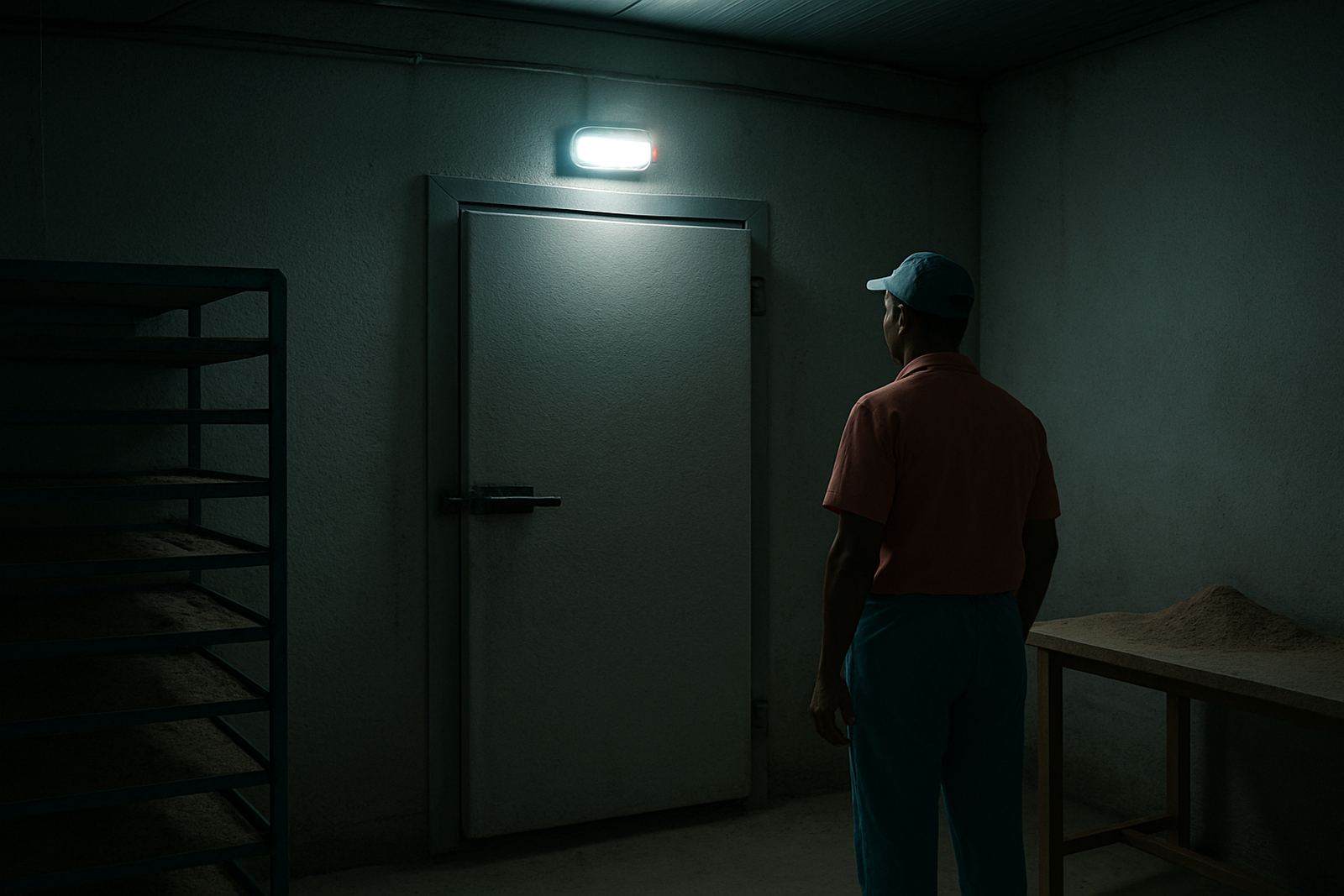
One typical pattern is a freezer room packed after a late delivery, with cartons placed hard against the ceiling and right in front of the evaporator. Overnight the room sits at a higher temperature than expected, and by the morning the product at the top layer is partially softened while the bottom layer is overfrozen. That is not just waste, it creates inconsistency that customers notice immediately.
A quick re-stack, with clear airflow paths and better stock rotation, can often make a bigger difference than replacing parts. The machine still needs proper servicing, but the loading method has to support the equipment not fight it.
Simple Loading Rules That Save Power and Product
You do not need fancy equipment to improve performance. Most sites get better results by keeping to a few practical rules and training staff to follow them every day.
- Leave space between stock and walls, especially around air outlets and returns
- Keep product off the floor on suitable racking or pallets
- Do not fill a room to the point where staff cannot move through it safely
- Rotate stock so older product moves out first
- Allow hot deliveries to cool before loading where possible
- Keep cartons neat and stable so air can pass between them
Even small changes can reduce compressor run time and lower the risk of frost forming where it should not. That helps on load shedding days too, because a room that starts from a better loading pattern will recover faster when power returns.
When Loading Problems Start Looking Like Equipment Faults
If the room is overloaded, technicians may find signs that look like a fault but are really the result of poor stock arrangement. Icing on the evaporator, long compressor cycles, doors sweating and uneven temperatures can all be made worse by blocked airflow. In some cases the system is fine but the room never had a chance to work properly.
That is why planned maintenance should include more than just checking gas pressure and cleaning coils. A good service visit looks at how the room is used, how often the doors open, where the stock sits, and whether there is enough space for air movement. On the KZN coast, moisture and salt air already put pressure on equipment, so the loading pattern needs to help the system, not add extra strain.
If you are seeing repeated warm spots or product inconsistency, it is worth checking the stock layout before assuming the worst. Sometimes the fix is a service call, sometimes it is a better loading plan and a bit of discipline from the team.
What Coastal Cooling Systems Checks On Site
For cold rooms, freezer rooms, display chillers and commercial air-conditioning sites, we look at both the equipment and the way the room is being used. That gives a clearer picture of why temperatures are drifting or why energy bills are climbing.
- Airflow paths and stock placement
- Temperature logging patterns across the room
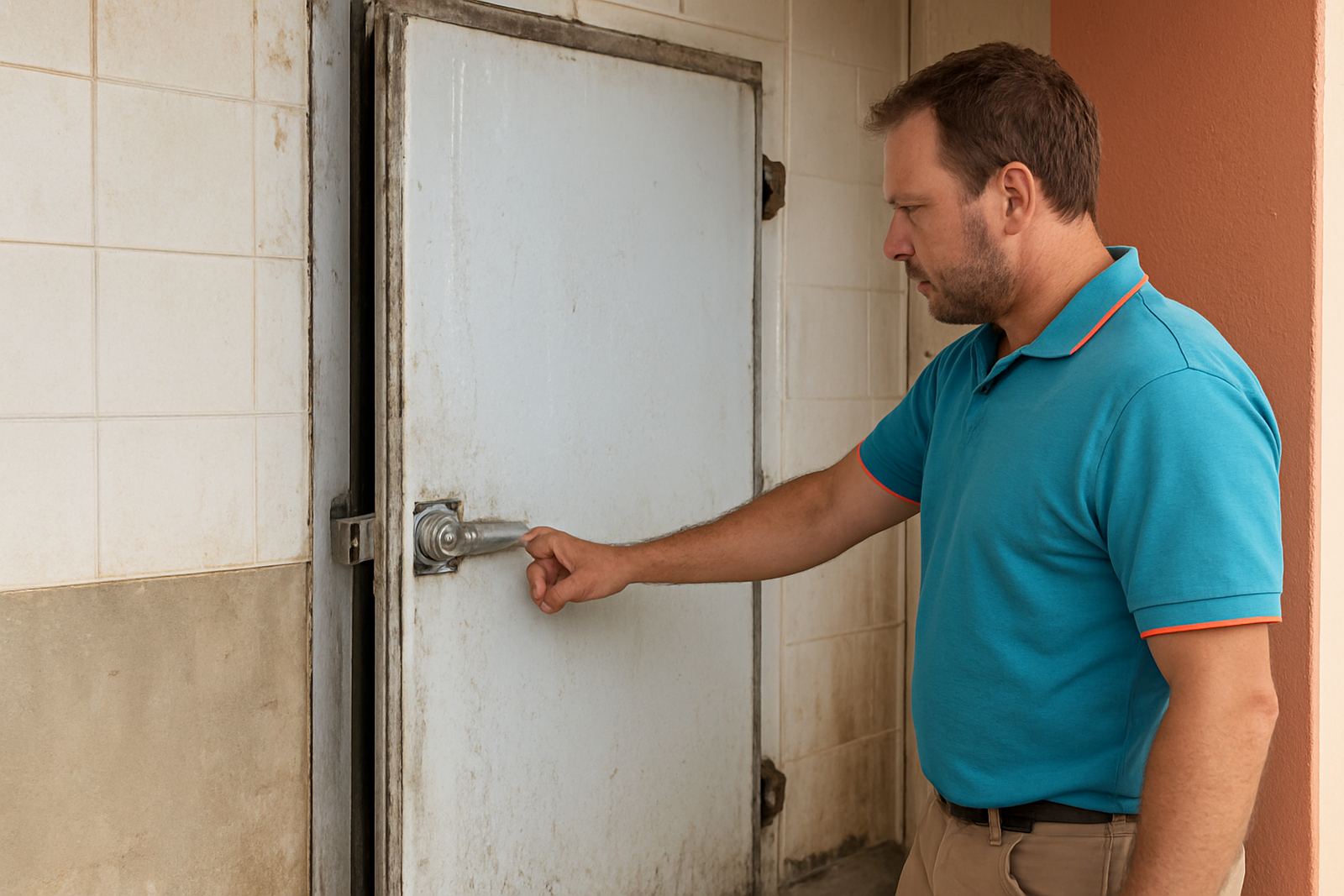
- Door seals, hinges and closing habits
- Evaporator icing and condensate drainage
- Electrical faults, defrost control and fan operation
- Compliance issues and maintenance records
Based in Glen Anil, Durban, we support sites across Durban North, Umhlanga, Pinetown, Ballito and the South Coast. Whether it is planned maintenance, a breakdown call-out or a service contract, the aim is the same: keep temperatures steady, protect stock and cut avoidable downtime.