The first signs a seal is no longer holding
A sound door seal should close firmly all the way round the frame and keep the cabinet drawing tight when the door shuts. When that seal starts hardening, tearing or pulling away from the edge, cold air leaks out and warm air gets in. The change is often gradual, so staff may not notice until the plant is working harder and the room is struggling to recover after each opening.
In a cold room or freezer room, early warning signs are usually easy to spot if someone knows what to look for. You may see condensation around the door, ice build-up at the sill, or a door that no longer closes with a solid seal. In display chillers, the problem can show up as misting glass, uneven product temperatures and compressors running longer than normal. One small issue can affect stock before anyone sees a fault on the thermostat.
- Door needs a second push to close properly
- Visible cracks, flattening or splits in the seal
- Frost or wet patches around the frame
- Warm air coming in at the hinge or latch side
- Cabinet cycling more often than usual
Why Durban humidity makes seal failure worse
On the Durban coast, seals work in tough conditions. Salt in the air, constant moisture and frequent door opening all shorten the life of rubber components. A seal that might last longer inland can harden faster in Glen Anil, Umhlanga or Ballito, especially where a room is opened for loading several times a day. In Pinetown and other inland industrial areas, dust and forklift traffic can damage the seal edge too.
When humidity enters a freezer room, it freezes on the evaporator and inside the door frame. That ice builds resistance, makes the door harder to shut and puts even more strain on the gasket. After that, the plant starts chasing temperature instead of holding it. You end up paying for extra compressor run time, more defrost demand and more wear on components. It is a small part on the door but it can change the whole operating cost of the room.
How wasted air affects stock temperatures and power use
Once a seal fails, the room is no longer stable. A cold room carrying fruit, dairy or prepared foods may sit at the right reading in one corner but drift higher near the door. In a freezer room, a few degrees of warmer air can soften outer packaging, create frost on product surfaces and shorten shelf life. That matters when the room is full and the stock rotation is tight.
Power use climbs too. The compressor has to remove the heat entering through the gap, and the evaporator has to deal with extra moisture. In many cases the first bill spike is blamed on load-shedding or hot weather, but the real cause is air leakage. If a door seal is failing, the room may still look fine on the outside while the equipment is working far beyond what it should.
- Longer compressor run times and fewer rest periods
- Uneven temperatures from top to bottom of the room
- More frost on the evaporator and around the doorway
- Higher electricity use with no change in stock levels
- Product near the door warming faster after each opening
What staff can check before the fault gets bigger
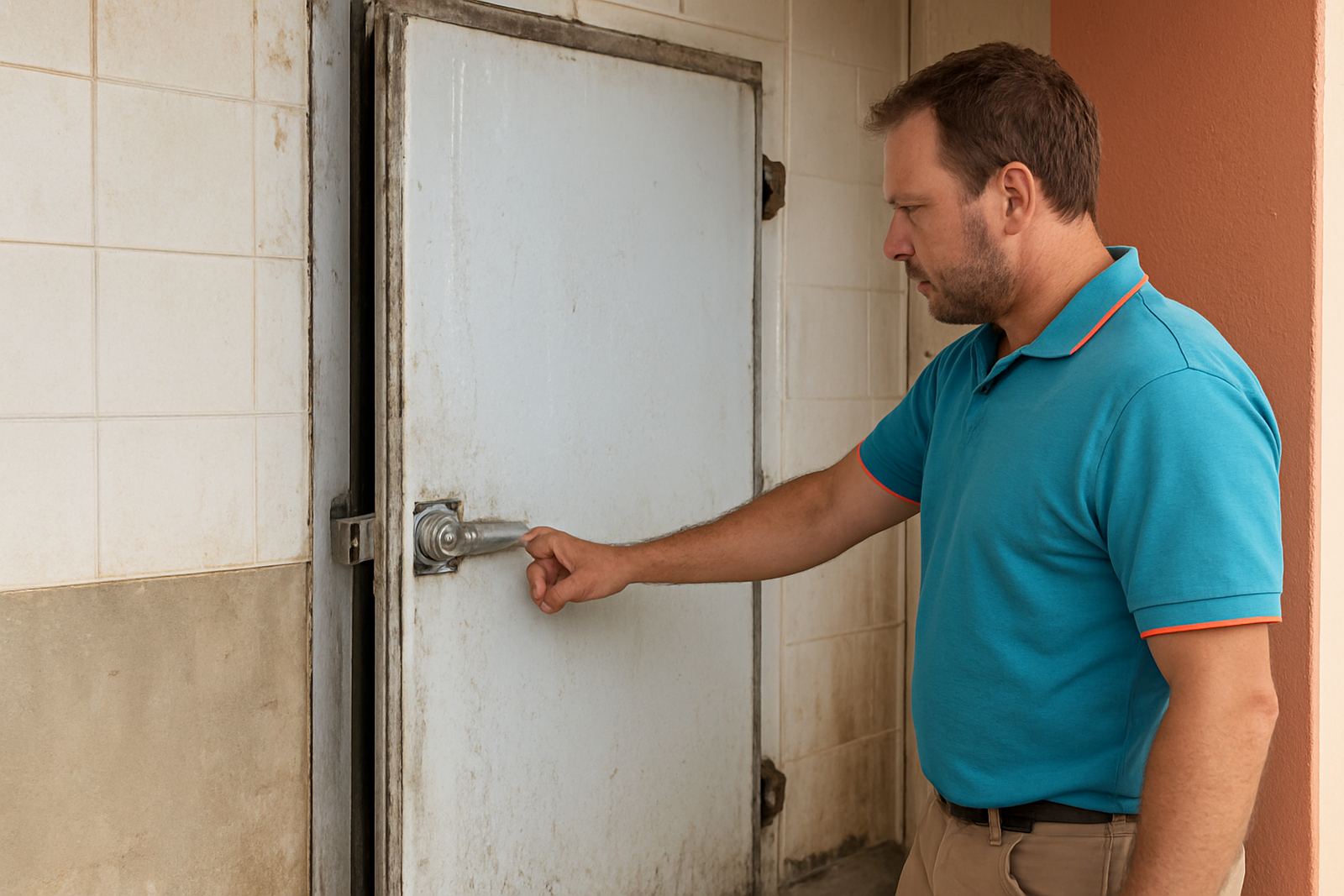
A simple visual check can catch a lot before a breakdown call-out is needed. Ask staff to look at the door edges every day during opening checks. If the seal has gone flat, split at the corners or is hanging loose, it should be reported straight away. The same goes for hinges, latch alignment and any frame damage, because a good seal will not work if the door is sitting out of square.
It helps to close the door on a strip of paper and see if there is even resistance all round. If the paper slips out too easily at one point, the seal is not gripping there. Also check for black mould, sticky residue and cleaned surfaces that have not been dried properly. A build-up of dirt can stop the seal from seating, which means the problem looks like wear but is really maintenance.
- Check the full seal line, not only the visible front edge
- Inspect the bottom sill for chips, ice and debris
- Make sure the latch pulls the door in tightly
- Confirm the frame is not bent after heavy trolley impact
- Log any recurring frost or water on the same side of the door
When replacement is better than another temporary fix
Some seals can be cleaned, realigned or adjusted, but not all of them should be patched again and again. If the rubber has gone hard, the corners have split or the door no longer meets the frame correctly, replacement is usually the better choice. Temporary repairs may hold for a few days, but they often lead to repeat failures and more stock risk.
For a service contract customer, this is where planned maintenance pays off. A technician can compare door performance over time, note any recurring tempertaure drift and advise whether the seal, hinges, latch or frame is the real cause. That matters in cold rooms and display chillers where a bad seal can look like a refrigeration fault when the issue is really mechanical. Getting the right answer early saves labour, gas and wasted product.
A local Durban example from a busy trading week
A seafood and frozen goods site in the Durban North area recently started seeing ice around one freezer room door and a rise in compressor running time after each delivery shift. The staff thought the issue was the hot weather and a few extra door openings, but the real problem was a bottom seal that had flattened and pulled away at the corner. The room was still closing, but not sealing properly.
After the seal was replaced and the latch adjusted, the temperature settled back down and the evaporator stopped frosting so quickly. The team also changed the loading routine so doors were not left open while stock was counted. That kind of practical fix is common along the coast because humidity and frequent access work together. In a place like Ballito or the South Coast, the same fault can hide for weeks if nobody checks the door edge properly.
For businesses that rely on cold storage, this is not a cosmetic issue. It is a running cost issue and a stock protection issue. Once a seal starts failing, the rest of the system has to pick up the slack.
Keep doors, seals and compliance checks on one schedule
Door seals should be part of the same maintenance routine as temperature logging, electrical fault finding and general refrigeration servicing. When all of those checks sit under one planned service schedule, faults are easier to trace and there are fewer surprises. That is especially useful for commercial sites where stock movement, cleaning teams and delivery times all affect door wear.
At Coastal Cooling Systems, we work across Glen Anil, Durban North, Umhlanga, Pinetown, Ballito and the South Coast on cold rooms, freezer rooms, display chillers and commercial air-conditioning. If a seal is failing, we can inspect the door assembly, check the temperature impact and advise on repair or replacement before the problem becomes a bigger bill.