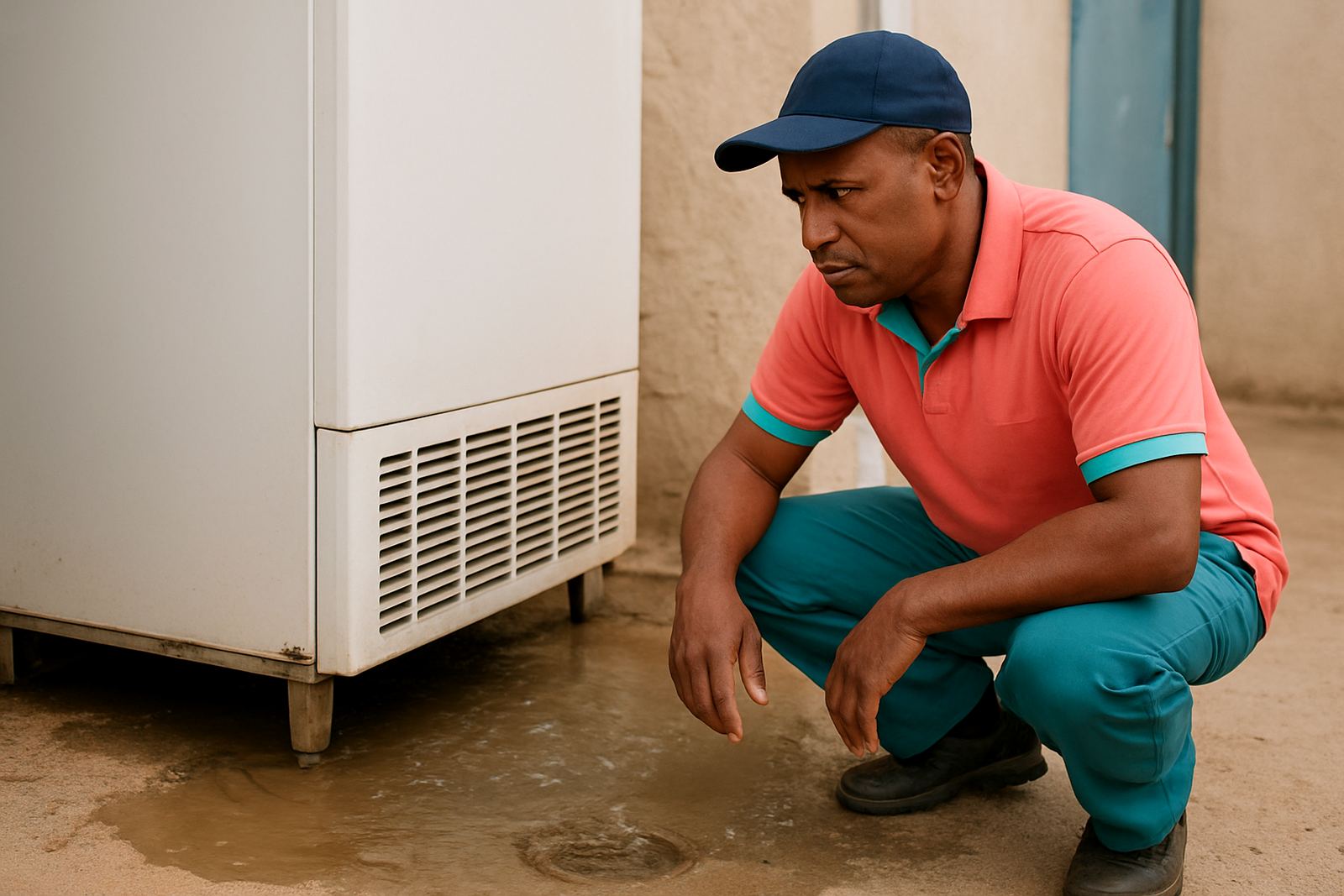
What a blocked drain does inside a cold room or aircon unit
Most refrigeration and air-conditioning systems make water as part of normal operation. In a cold room, freezer room or display chiller, moisture from the air condenses on cold surfaces and must run away through a drain line. On split air-conditioning systems, condensate from the indoor coil does the same job. If that line blocks with slime, dust, mould or ice, the water has nowhere to go.
In Durban and along the coast, warm humid air means these drains work hard. A blocked line can push water back into the drip tray, over the ceiling panel, down a wall or onto the floor. Sometimes the first sign is a wet patch, other times it is a strange smell or a unit that seems to be icing up more than usual.
If the blockage is left too long, the spill can reach electrical parts, damage insulation, rust brackets and create slip risks for staff. In a bakery, butchery, supermarket or storage room, that can turn into stock loss very quickly.
Early warning signs that should not be ignored
The first signs are often small and easy to miss. A manager might notice a damp patch after closing time, or a technician may hear water dripping when the unit cycles off. If you catch it early, the repair is usually simple. If not, the fault can move from a blocked line to a failed pump, tripped breaker or a frozen coil.
- Water pooling below the indoor unit or under a cold room door frame
- Drips from ceiling panels, light fittings or trunking near the unit
- Musty or sour smells from a drip tray or drain point
- Ice building up around the evaporator or on the floor of a freezer room
- Frequent compressor cycling or reduced cooling performance
- Rust marks, staining or damp insulation near the drain route
One sign on its own may seem minor. Two or three together usually mean the drain needs checking before the next busy shift.
Why Durban coastal conditions make drain blockages worse
On the KZN coast, drain issues are more common because the air is wet, salty and full of fine dust from daily traffic and nearby work sites. That mix builds up in trays and drain elbows. Add frequent door openings in a cold room or freezer room and you get extra condensation, which means more water moving through the system.
Load-shedding can also make the problem harder to spot. When power comes back and the unit restarts, ice may melt quickly and send a rush of water through a line that is already partly blocked. If the drain heater or trace heater is faulty, a freezer room can ice over at the drain outlet and the water backs up again.
In older sites around Glen Anil, Durban North and Pinetown, we often find drain lines laid with poor fall or too many tight bends. That slows the flow and lets dirt settle. A little maintenance now saves a bigger cleanup later, which matters when staff are busy and space is tight.
Simple checks staff can do before calling for help
You do not need to strip a unit down to notice a developing drain fault. A quick visual check during opening and closing can catch the problem early. Make it part of routine site checks, especially after heavy rain or a power interruption.
- Look under the indoor unit for fresh water or staining
- Check that the drip tray is not overflowing
- Smell for sour or stagnant water near the unit
- Make sure the drain outlet outside is dripping during operation
- Watch for ice around the drain pan or evaporator
- Check that floor drains near plant rooms are clear and flowing
If the unit is meant to drain but the outside outlet is dry for long periods, that can point to a blockage. If you see water inside and nothing outside, it is time to arrange a proper inspection.
How blocked drains turn into bigger refrigeration faults
A blocked drain does not always stay a water issue. In cold rooms and display chillers, standing water can refreeze and form ice around the coil or fan area. That changes airflow and puts strain on the compressor. In some cases the float switch, safety tray or control board starts acting up because moisture is reaching parts it should never touch.
Electrical fault finding often shows the same pattern. Water from a blocked line may track along cabling and end up where there is a live connection. That is a nuisance in an office aircon, but in a freezer room it can lead to downtime, spoiled stock and a call to your insurance broker. If compliance records are part of your site process, drain faults should be logged too because they affect hygiene and temperature control.
For food sites especially, the risk is not only damage but also contamination. A wet floor near packing or storage areas can cause slips and make cleaning harder to manage properly.
When to book a technician and what good maintenance should cover
If a drain is blocked once, it usually means there is a cause, not just a one-off event. Good planned maintenance should include cleaning the tray, flushing the line, checking the fall, inspecting insulation and confirming that heaters, pumps and switches are working as they should. On freezer rooms, the technician should also look for frost around the drain route and test any anti-ice arrangements.
At Coastal Cooling Systems, we handle planned maintenance, breakdown call-outs and service contracts across Glen Anil, Durban North, Umhlanga, Ballito, Pinetown and the South Coast. For sites running cold rooms, freezer rooms, display chillers or commercial air-conditioning, we check the drain path as part of the full service, not as an afterthought.
If your staff are seeing repeated drips, odd smells or water near the unit, it is better to call early. A small blockage can be cleared quickly, but once water has reached walls, stock or electrical parts the job becomes more disruptive and costly.