Why clean ice machines fail sooner than they should
Ice often looks clean even when the machine making it is not. Inside the cabinet, water lines, bins and pumps collect scale, slime and fine dirt from the air, and once that starts the machine works harder for less output. In Durban and along the KZN coast, high humidity speeds up moisture build-up so hygiene issues can move quickly from minor to costly.
For hotels, bars, hospitals, butcheries and food prep areas, dirty ice is not only a service issue. It can affect compliance, customer trust and the performance of the whole refrigeration system. A machine that is not cleaned properly may make cloudy ice, slow production or shut down on a fault that could have been avoided.
- Restricted water flow from scale or sediment
- Slower freezing cycles and uneven cube size
- Off smells or tainted taste in the ice bin
- More strain on compressors, pumps and valves
- Higher call-out costs when faults are left too long
What builds up inside an ice machine
Most owners wipe the outside panel and think the job is done, but the trouble usually starts where no one sees it. The water reservoir, spray nozzles, filter housings, bin corners and drain points can all hold residue. In coastal areas, salt in the air can add to corrosion on exposed fixings and electrical parts if the machine is not kept dry and clean.
We often find a mix of limescale, biofilm and dust. Limescale comes from hard water and narrows small passages. Biofilm is a slippery layer of bacteria and organic matter that can form on wet surfaces. Dust from kitchens, storerooms and loading areas then sticks to that moisture. If the machine sits near fryers or open prep benches the build-up can be worse, especially where filters are overdue.
- Scale on evaporator plates and water circuits
- Slime in the bin, pump sump or drain tray
- Blocked filters and narrow water jets
- Corrosion on brackets, screws and terminals
- Mould around door seals and insulation edges
How often cleaning should be done in Durban conditions
There is no single answer for every site because usage varies. A busy restaurant in Umhlanga may need a different schedule from a small guesthouse in Ballito or a school canteen in Pinetown. What matters is matching the cleaning routine to the load, the water quality and the room conditions. If the machine runs all day, every day, the service interval must be shorter.
As a general rule, light-use machines need regular visual checks and a proper clean at planned intervals, while heavy-use machines should be checked more often for scale and hygiene. During load-shedding, some units cycle harder after power returns and that can stir up debris in the system. If the machine is also in a warm plant room, the risk of bacterial growth increases. A quick look is fine, but it should not replace a proper clean and sanitising process.
- Check the bin and door seals weekly
- Inspect water filters and drainage monthly
- Deep clean and sanitise at planned service intervals
- Increase checks after water supply interruptions
- Review cleaning frequency in peak summer months
Signs your ice machine needs attention now
Some warning signs are obvious, but others are easy to miss until the machine stops making ice altogether. A good operator will notice changes in ice shape, output speed and noise before the fault becomes serious. If the unit starts making small, hollow or cloudy ice, the water path may already be restricted. If the bin smells stale, the problem is usually hygiene rather than refrigeration.
It is also worth watching for electrical issues. A machine that trips, short cycles or struggles after a restart may have moisture where it should not be. We have seen sites where a small drain problem led to water around wiring, then a breaker trip and a full production stop during a weekend function. That is the kind of avoidable disruption that lands on the operations team when nobody has time for it.
- Cloudy, soft or misshapen ice
- Ice that tastes stale or smells musty
- Slower production than normal
- Water pooling in or under the bin
- Frequent trips, warning lights or reset faults
What a proper hygiene service should include
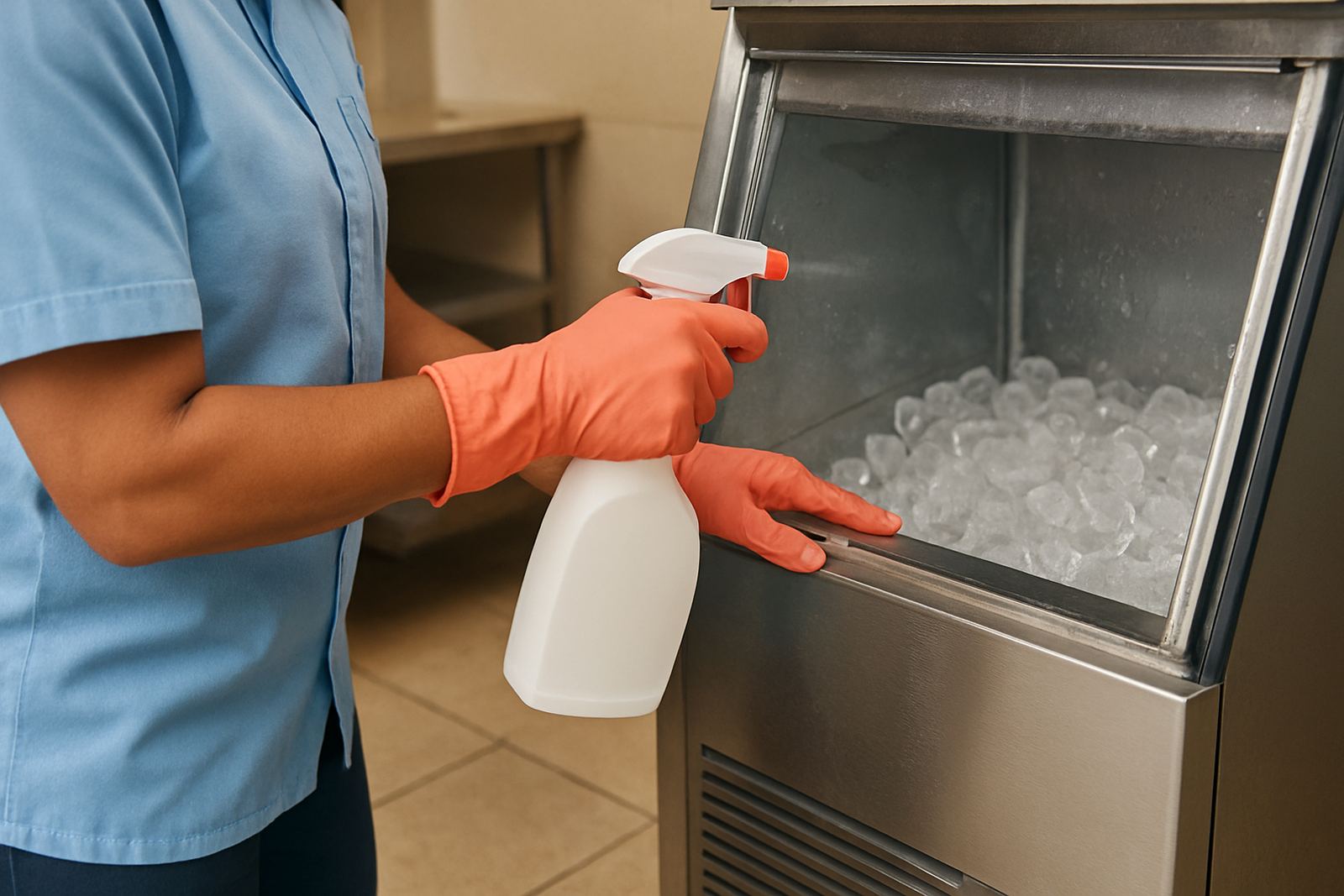
A proper service is more than spraying cleaner and wiping surfaces. It should follow a clear process that cleans the food contact areas, checks the mechanical parts and confirms the machine is safe to run. The technician should isolate the machine, remove loose contamination, clean the evaporator and water system, inspect drain points and check for wear on seals, pumps and switches.
Where needed, the machine should also be tested for temperature performance and ice output. This matters because some machines look clean after a quick wipe but still have hidden scale or airflow problems. At Coastal Cooling Systems, our team works across Glen Anil, Durban North, Umhlanga, Pinetown, Ballito and the South Coast, so we see the full range from small counter units to larger commercial systems. A clean machine should not just look better, it should work steadier and give fewer surprises.
- Safe isolation and inspection before cleaning
- Cleaning of food contact surfaces and water circuits
- Drain, seal and cabinet checks
- Electrical fault finding where needed
- Temperature and output checks after reassembly
A Durban example: one small service issue that grew fast
A coastal restaurant in Durban North called after noticing the ice smelled odd and the bin was wet by mid-afternoon. The machine had been running for months without a proper deep clean, and the water filter was overdue. The evaporator had scale, the drain was partly blocked and the bin seal was letting warm air in. Nothing was completely broken, but the machine was working too hard and the ice quality had slipped.
After cleaning, descaling and checking the drain and seals, the unit returned to normal output. The owner said the biggest difference was not only cleaner ice but fewer complaints from staff during service. That is often how it goes. The fault is rarely one big thing. It is usually a few small issues that stack up until the machine starts behaving badly. A bit of routine care would have saved them a busy Friday night, no doubt about it.
For businesses on the coast, this kind of maintenance is practical insurance. Sea air, humidity and constant use are tough on refrigeration gear. Regular hygiene service keeps ice machines dependable, helps protect the rest of the cold chain and gives staff one less problem to deal with when the kitchen is under pressure.