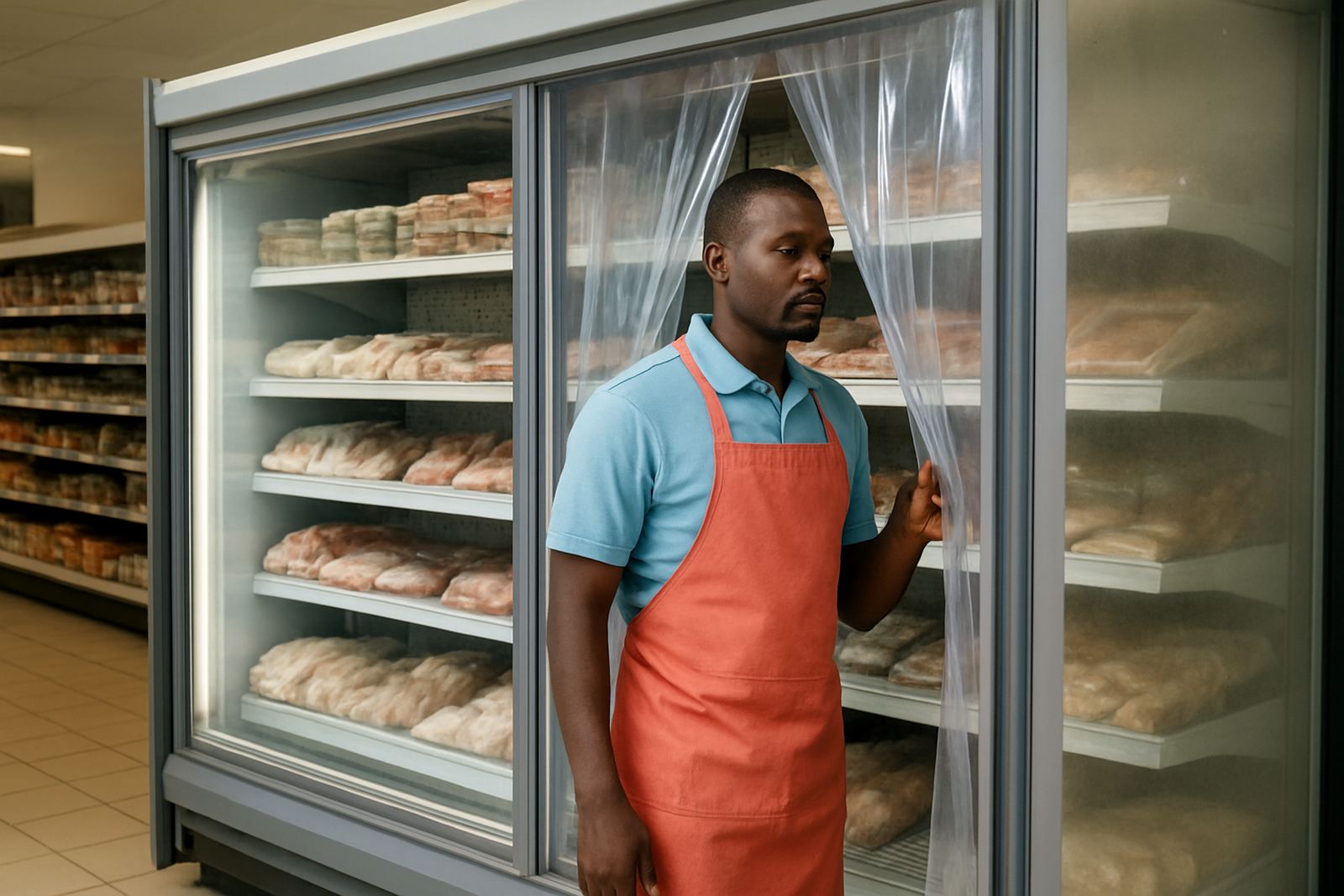
Why open cabinets lose so much cold after hours
During trading hours, open display fridges do a job that comes with a cost. Every time a customer reaches in, warm room air pours across the product face and the cabinet has to pull that heat back out. After closing time, if the unit stays open all night, the same air movement continues with no sales benefit. In a Durban supermarket or convenience store, that means the system keeps fighting warm coastal air, humidity and shop lights long after the till has closed.
That is where night covers earn their keep. A fitted cover slows down the transfer of warm air into the cabinet, so the evaporator is not working overtime from sunset to opening. The savings are not only on the power bill. You also reduce wear on the compressor, fans and defrost components, which matters when a shop is trying to stretch service intervals and avoid a breakdown on a Friday morning.
How night covers help in Durban conditions
On the KZN coast, humidity is the part many owners underestimate. Moist air entering an open cabinet condenses on cold surfaces and adds to frost build-up. That pushes the refrigeration system into more frequent defrost cycles, which can raise energy use and affect product temperatures. A night cover gives the cabinet a better chance of holding its cold mass until trading starts again.
It is especially useful in stores that sit near the sea, where evening air still carries dampness even when temperatures drop. We see this in Durban North, Umhlanga, Ballito and along the South Coast. If the store also has load-shedding exposure, keeping the cabinet covered overnight can help protect temperature stability when the site is not under full control.
- Less cold air loss overnight
- Lower compressor run time
- Reduced frost build-up on coils
- Better temperature recovery at opening
- Less strain during humid weather and power interruptions
Where night covers make the most difference
Not every cabinet needs the same treatment, but open display units in busy food stores usually benefit most. Think dairy cases, deli displays, drinks cabinets and open freezer islands where product is exposed to the shop floor. These units are often loaded heavily during the day, so every degree of unnecessary heat gain overnight costs money.
Night covers are most useful where the cabinet sits close to an entrance, under strong air movement from ceiling fans, or near a door that opens for cleaning and restocking. In Pinetown and Glen Anil we often see stores with mixed traffic patterns, where the back of house is cooler but the sales floor stays warm until late. That is a good place for a cover because the cabinet is not only fighting ambient heat, it is fighting movement in the room as well.
- Open dairy cabinets in supermarkets
- Display chillers in butcheries and delis
- Open freezer islands in forecourts and convenience stores
- Cabinets near entrances or delivery passages
What a proper night cover routine should look like
A cover only works if staff use it properly every night. It must fit the cabinet correctly, be kept clean and be checked for damage. A torn or badly fitted cover lets cold air escape and can trap moisture where it should not sit. The same goes for covers that are too short or too loose, because they leave gaps along the top and sides.
Store teams should follow a simple routine after closing: clear the face of the cabinet, make sure product is within the loading line, pull the cover fully into place and confirm that nothing is caught in the seals or rails. In the morning, remove it before trading starts so the cabinet can recover on time. If the site is short-staffed, that routine needs to be quick and easy. Otherwise it gets skipped, and then the saving is lost.
- Inspect covers for tears, mould or worn edges
- Clean them with a mild approved solution
- Train staff to fit them the same way each night
- Log any damage so repairs happen early
What we check when a cabinet is still losing cold
If a display cabinet still struggles after night covers are fitted, the problem may be deeper than the cover itself. Air leaking through seals, poor defrost settings, blocked condensers or low refrigerant charge can all undo the benefit. That is why a good service call looks at the whole system, not only the cover.
Our team checks temperature performance, door and gasket condition where fitted, fan operation, electrical faults and whether the cabinet is holding its set point through the night. We also look at temperature logging, because repeated warm-up overnight is often a sign of a hidden fault. Sometimes the issue is simple, like a damaged cover or a staff habit that leaves the cabinet open for too long after closing. Other times it needs leak detection, electrical fault finding or a planned maintenance visit to put things right.
A Durban example from the coast
A food store in the Durban North area was seeing higher than expected power use on its open dairy line, and the manager was worried about product temperatures during humid spells. The cabinet was in good physical condition, but it was left uncovered every night and the sales floor stayed warm until late. We fitted night covers, checked the cooling settings and set up a regular close-down routine for staff.
Within a short period the cabinet was holding temperature better overnight and the morning pull-down time improved. The result was not magic, just less wasted cold and less strain on the system. That kind of improvement is practical, especially for stores that cannot afford surprise breakdowns when trading is busy. It also means less stress for the team, because they are not starting the day with a display unit that is already fighting to recover.
Keeping the saving in place all year
Night covers should be part of a wider refrigeration plan, not a one-off fix. If you are already doing planned maintenance, adding covers to the close-down process is an easy step. If you are not logging temperatures, start there first. A few weeks of readings will show whether the cabinet is stable overnight or losing control when the store is closed.
For businesses on the Durban coast, the real value is consistency. Humidity changes, power cuts happen and trading hours shift. A cabinet that is looked after properly is less likely to fail when conditions turn difficult. At Coastal Cooling Systems in Glen Anil, we support commercial refrigeration and air-conditioning across Durban, Umhlanga, Ballito, Pinetown and the South Coast, including service contracts, cold room servicing, freezer servicing, display chiller servicing and breakdown call-outs. Night covers are one of those small practical measures that can make a real difference if they are used with the right checks and the right maintenance.