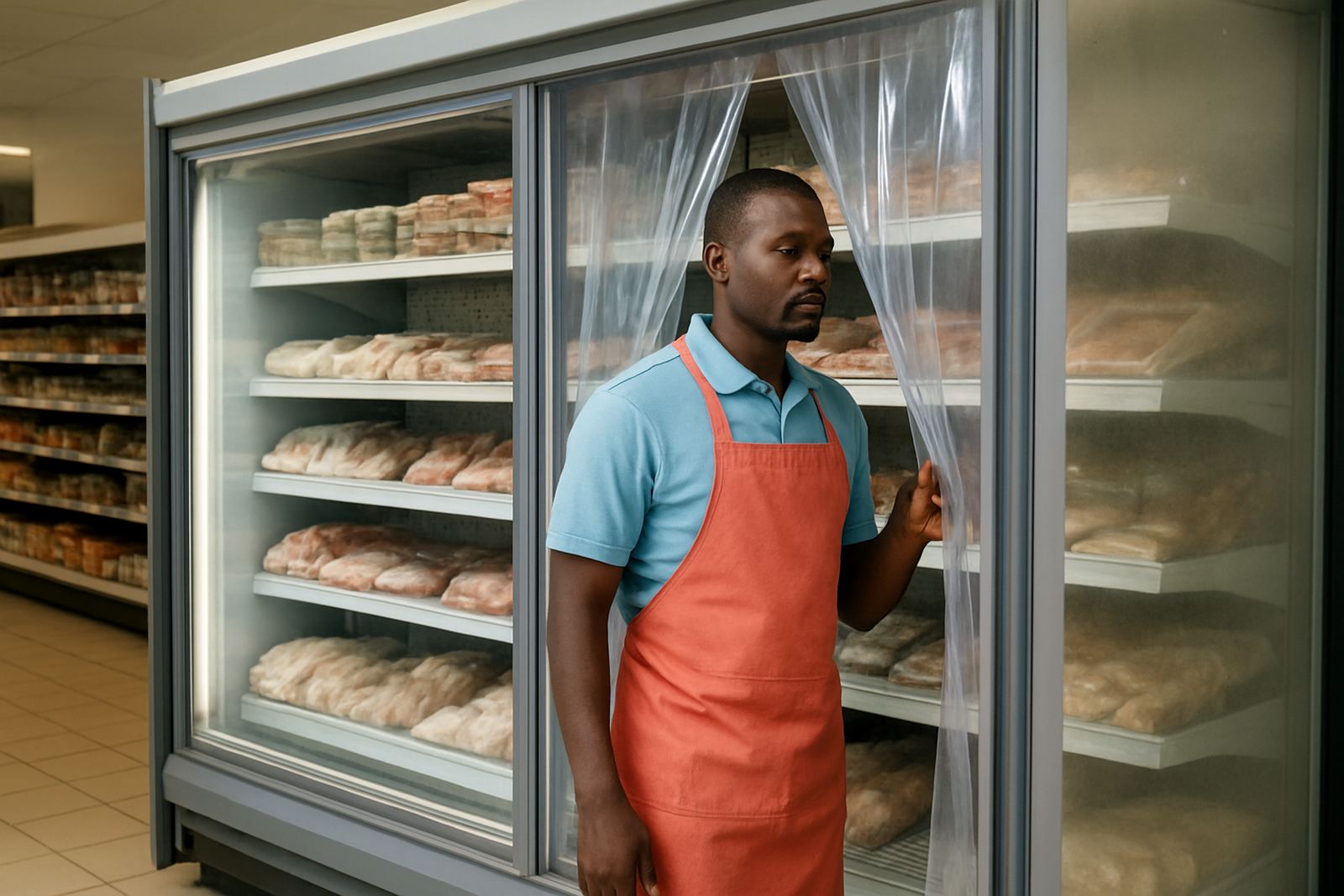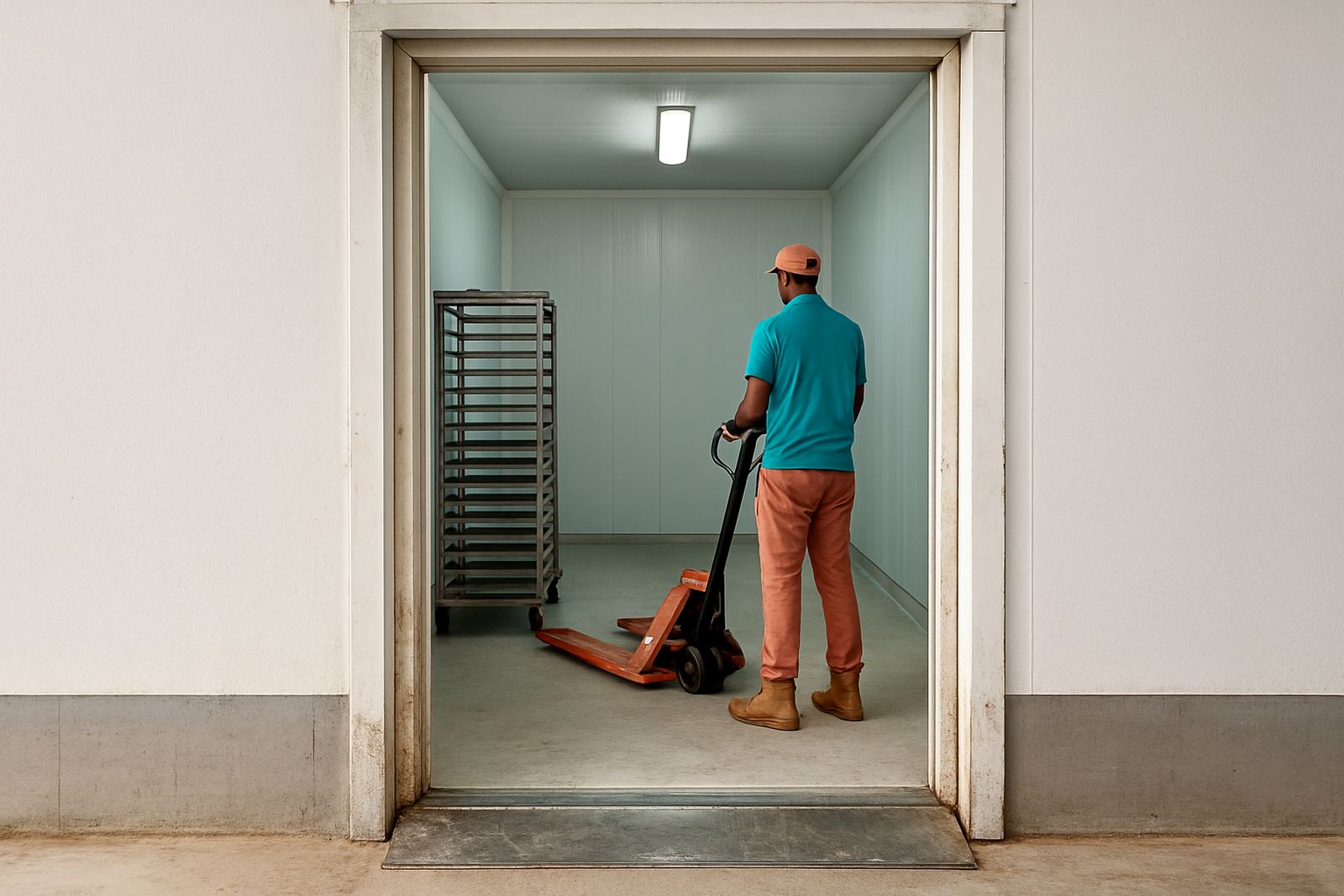
Where movement causes the first damage
In a working cold room, freezer room or chilled store, the damage usually starts at the points people touch every day. Doors get bumped by trolleys, pallet jacks scrape the threshold and the lower wall panels take repeated knocks from boots, crates and hand trucks. Over time that sort of movement bends hardware, loosens fixings and lets warm air creep in around seals.
On the KZN coast, the risk is worse because of humidity and salt in the air. A small dent at the edge of a panel can lead to rust at the cut line, then the panel skin starts to fail. In a Durban kitchen store or a Ballito bottle room, that can mean higher running costs and more frequent defrost problems. The room still looks fine from a distance, but the damage is already there.
Why doors fail before the machinery does
When traffic is heavy, the door assembly often carries the load first. Hinges loosen, closers lose tension and bottom rails go out of line. If staff have to shoulder the door open because it sticks, the problem gets worse each day. A room with a poor seal will struggle to hold temperature even if the refrigeration plant is in good order.
We see this in busy sites from Glen Anil to Pinetown where deliveries come in all day and staff move stock in a rush. The issue is not always a big crash. Often it is hundreds of small hits from wheels, feet and hands. That is why a door can begin leaking air, icing up or dragging on the frame long before anyone notices a major fault.
- Worn hinges and cracked hinge plates
- Damaged door gaskets and latch points
- Broken closers that let doors slam shut
- Floor tracks packed with grit or product spillage
Panel dents and floor-edge wear add hidden costs
Wall and ceiling panels do more than keep the room insulated. They protect the cold envelope from warm air, moisture and physical impact. Once a panel skin is dented or punctured, the insulation can absorb moisture and lose value. That leads to cold spots, staining and in time, internal breakdown that is costly to repair.
Floor edges are just as important. In freezer rooms, the threshold and skirting zone are exposed to heavy trolleys, cleaning equipment and repeated traffic. If that edge breaks away, water gets into places it should not be. During defrost or cleaning, the damage can spread under the floor finish and become a much bigger job. On commercial sites near the coast, corrosion can also creep under trims and fasteners quickly if the area is not kept dry.
How poor handling shows up in daily operation
Traffic damage rarely appears as one dramatic failure. It shows up in the daily complaints that managers learn to live with, until the costs start rising. Staff may say the room feels colder near the door, stock near the entrance is frosting over, or a freezer takes longer to recover after each opening. Those are warning signs, not just nuisance issues.
If you are running display chillers or storage rooms in a retail, hospitality or distribution setting, watch for these patterns:
- Temperature swings after frequent door openings
- Ice around the bottom of the door or threshold
- Condensation on frames, handles and nearby panels
- Unusual scraping, grinding or rattling when the door moves
- Floor chips or cracked sealant at the room edge
Practical ways to reduce damage on busy sites
A few simple changes can make a real difference and they do not need a full shutdown. The aim is to control the route traffic takes, protect the most exposed edges and keep the door equipment checked before it fails. In many Durban North and Umhlanga sites, that means making the movement pattern as predictable as possible so staff are not cutting across the same corner all day.
Good housekeeping matters too. Loose shrink wrap, broken crates and spillages all create extra impact and slip risk. If a trolley catches a floor edge once, it will keep catching. If a door is heavy, staff will force it. That is why small corrections at the start save money later.
- Fit bumper strips or edge protection where trolleys pass
- Mark approach lanes so pallets do not swing into the frame
- Keep thresholds clean and dry, especially after wash-down
- Check seals and closers during planned maintenance
- Repair dents and chipped coating before rust starts
A Durban example from a high-traffic store
At a busy wholesale store in the Durban North area, the cold room door started icing at the bottom every afternoon. Staff thought it was a refrigeration fault, but the real problem was traffic. Trolleys were taking a tight turn into the room, clipping the lower frame and leaving the door slightly out of line. The threshold had also worn down on one side, so the seal was no longer sitting correctly.
After the alignment was corrected, the damaged strip repaired and the loading route adjusted, the icing reduced straight away. The store also changed the daily closing check so the door, gasket and floor edge were inspected before knock-off. That kind of fix is simple, but it works better than waiting for a full breakdown. In a coastal climate, small mechanical wear can become a much bigger problem if it is left for months.
What a maintenance contract should cover
For sites with regular foot traffic, vehicle movement or loading activity, a maintenance contract should go beyond compressor checks. The cold room structure, doors and floor edges need attention as well. That is especially true in food service, retail and industrial stores where one damaged seal can affect stock quality and electricity use very quickly.
Coastal Cooling Systems supports commercial refrigeration and air-conditioning clients across Glen Anil, Durban, Umhlanga, Pinetown, Ballito and the South Coast with planned maintenance, breakdown call-outs and compliance checks. Our team looks for the signs that traffic has started to wear a room down, then deals with them before they turn into product loss or major repair work. On a live site, that is often the difference between a small fix and a full shutdown.