Start With How The Room Is Used
The first question is not the door type, it is how the room works through the day. A small restaurant store with a few entries may do well with a hinged door, while a wholesale packhouse with trolleys moving in and out all day usually needs a sliding door. In Durban heat and humidity, every extra second a door stays open matters because warm air pulls into the room and frost builds faster on the seals and floor. That means more strain on the refrigeration plant and higher electricity use.
Think about the actual traffic pattern. Is the room opened 10 times a day or 100 times a day? Do staff carry crates by hand, or push pallet jacks and trolleys? Is the room for chilled stock at 2 C to 5 C, or a freezer room running far below zero? The colder the room, the more important it is to control opening time and air leakage.
- Low traffic, short access times, light goods: hinged door can work well
- High traffic, trolley movement, wider openings: sliding door is often better
- Freezer rooms need tighter sealing and stronger door hardware
- Coastal sites may need better corrosion protection on hinges, runners and fasteners
When A Hinged Door Makes Sense
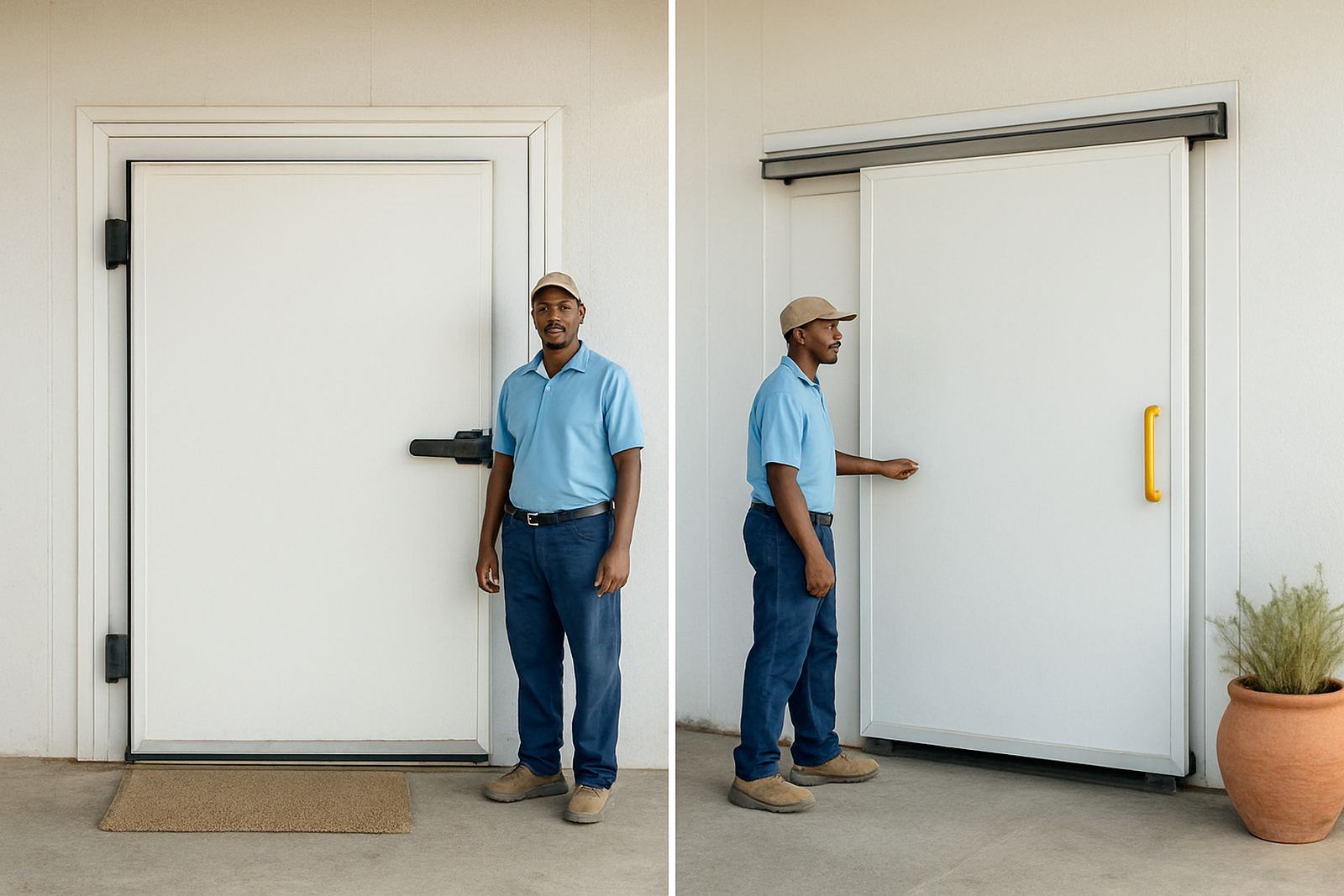
A hinged cold room door is often the simpler option. It opens fast, closes quickly and usually costs less to install. For many small kitchens, butcheries, bakeries and bottle stores around Durban North, Umhlanga and Pinetown, that makes practical sense. If the room is not opened constantly and there is enough clear space in front of the opening, a hinged door can do the job without much fuss.
Hinged doors suit rooms where staff need quick access and where the doorway is not blocked by crates, bins or prep tables. They are also easier to inspect because the seals, latch and closing action are all in one place. The important point is to keep the seal clean and make sure the door closes fully every time. A door that sits slightly open can cause icing, temperature drift and spoiled stock before anyone notices.
- Check for enough swing space inside or outside the room
- Make sure the floor area stays clear for full closing
- Inspect seals for cuts, hardening or dirt build-up
- Confirm hinges and latch can handle the weight of the door leaf
When A Sliding Door Is The Better Choice
Sliding doors are usually the better fit where there is heavy traffic or limited floor space. They do not swing into the room, so they are useful in tight packing areas, narrow plant rooms and loading zones where every metre counts. If staff move goods on trolleys or small pallet trucks, a sliding door can reduce damage to the frame and make the opening feel less cramped.
For freezer rooms especially, a sliding door can help reduce temperature loss if it is properly fitted and kept in good repair. The track, rollers and seal must be maintained though. In coastal air, dust and salt can build up on moving parts and make the door hard to close, which then affects the seal. If the door is heavy, noisy or needs a push to latch, it is already telling you that maintenance is due.
- Best for busy rooms with repeated openings
- Useful where swing space is limited
- Can handle wider openings for crates and trolleys
- Needs regular lubrication, alignment checks and track cleaning
Compare Space, Traffic And Product Sensitivity
A good door choice starts with a simple site check. Measure the opening, the free space around it and the way people move through the area. Then match that to the stock inside the room. Ice cream, meat, dairy, seafood and fresh produce all react badly to temperature swings. So do many medicines and meal prep ingredients. The faster the room is opened and shut, the less chance there is for the refrigeration system to chase the temperature back down.
On KZN coastal sites, load-shedding and voltage dips can also affect how well the room recovers after each opening. If your business already works hard to protect stock during outages, a door that reduces air exchange makes a real difference. That includes the small things, like staff not standing with the door open while looking for product, or leaving it unlatched between deliveries.
- Measure clear swing space or track space before choosing the door
- Match the door to the busiest part of the day, not the quietest
- Consider stock sensitivity to warm air and moisture
- Check how often the room is opened during delivery times and peak trading
A Practical Door Selection Checklist
Use this checklist before ordering or replacing a cold room door. It helps avoid costly changes later, especially if the room sits in a tight corner or serves more than one department. We often see sites in Durban, Ballito and the South Coast where the room itself is fine but the door choice causes daily frustration.
If the answer is yes to most of the points below, you are likely leaning towards one door type over the other. If you are unsure, it is worth getting a site assessment and looking at the movement pattern, floor finish and refrigeration load together. A small adjustment now can save a lot of call-outs later.
- Do staff move goods through the opening more than 20 times a day?
- Is there enough space for a door to swing without blocking walkways?
- Will trolleys, crates or pallet jacks pass through the opening?
- Does the room sit in a humid, coastal area with corrosion risk?
- Has the room had icing, seal failure or temperature fluctuation before?
- Will the door be used during peak load-shedding periods or after power cuts?
Keep The Door Sealing Properly
No matter which door you choose, maintenance decides how well it performs. A well fitted door with a damaged seal can waste more energy than a cheaper door that is looked after properly. That means checking the latch, seal, floor sweep and frame alignment on a regular basis. In a freezer room, even a small gap can pull in moist air and create ice around the threshold, which then makes the door harder to close the next time.
Businesses on the coast should also watch for rust on hinges, runners, brackets and fasteners. Salt air works quickly on exposed metal. If a door starts sticking, letting air escape or making unusual noises, it is time to inspect it before the issue turns into product loss. Planned maintenance is cheaper than an emergency call-out, especially when the room holds stock that cannot wait.
- Clean seals and door edges regularly
- Check for rust, loose fixings and worn rollers
- Test closing action after cleaning or delivery activity
- Log any temperature drift and icing around the doorway
When To Call For A Site Assessment
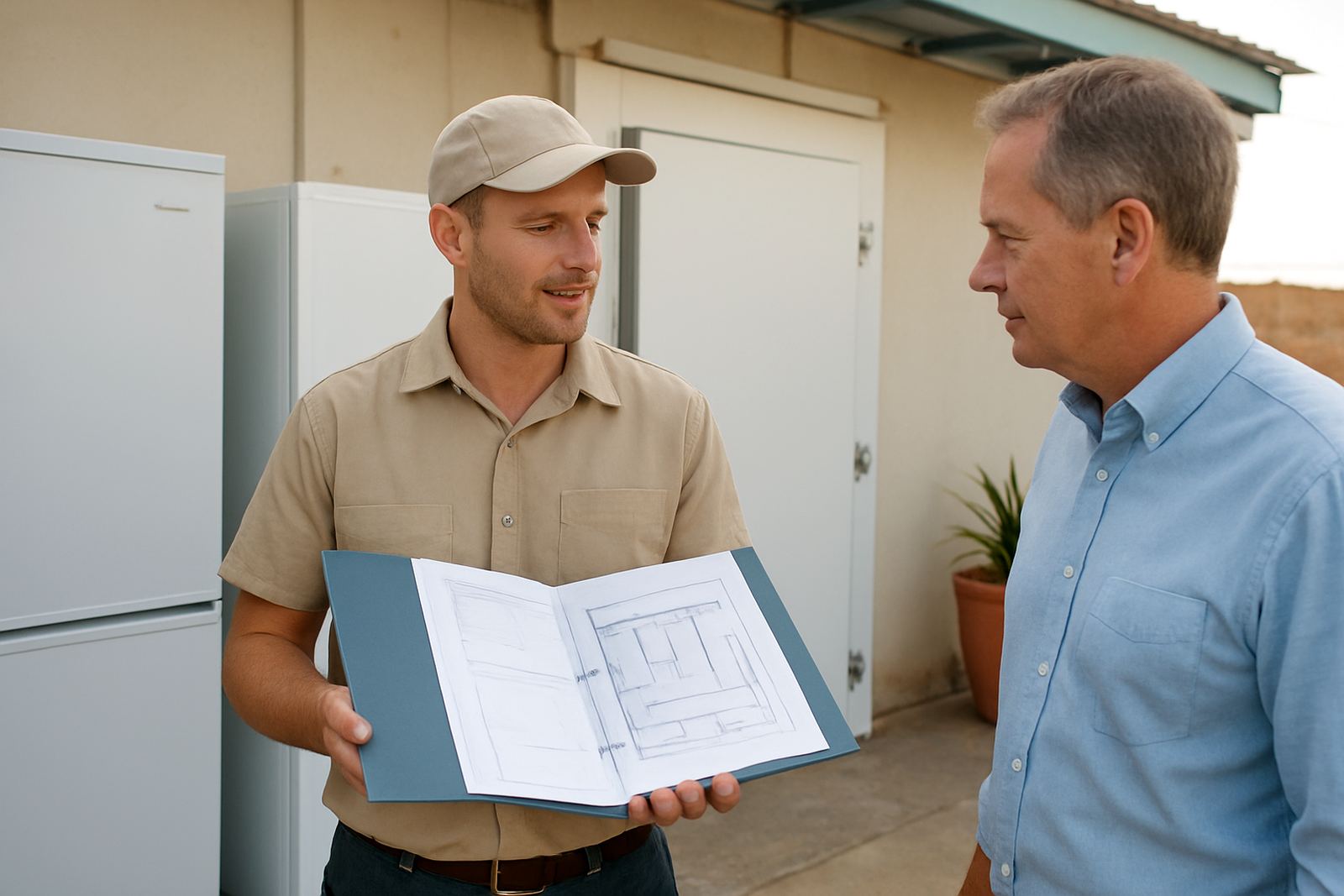
If your room is too warm, the door is hard to close, or staff are propping it open to keep up with work, the problem is already affecting the system. A site assessment can confirm whether the issue is the door type, the seal, the alignment or the way the room is being used. It can also show if a hinged door should be changed to sliding, or if the current sliding door needs better runners, a new seal or electrical fault finding around the door heater or controls.
At Coastal Cooling Systems in Glen Anil, Durban, we support cold rooms, freezer rooms and display chillers across Durban North, Umhlanga, Pinetown, Ballito and the South Coast. Our team handles planned maintenance, breakdown call-outs, compliance checks and temperature logging, so the door choice can be looked at in the context of the whole system. If the door is slowing your team down or costing you stock, it is worth sorting properly the first time.