Start With the Product, Not the Price
Before you ask for a quote, write down what the room will hold and how it will be used. A butcher, a café, a fruit distributor and a pharmaceutical store all need different temperatures, door sizes and finish levels. If the room is too small, staff start stacking product too close to the evaporator and the air cannot move properly. If it is too large, you pay for space and power you do not use.
For Durban and the coast, think about heat load too. Product arriving warm from delivery, doors opening often, and humid summer air all add strain. A room that looks fine on paper can struggle in a busy store if the daily traffic is higher than expected.
- What product will be stored, and at what temperature?
- How many pallets, crates or cartons need to fit at once?
- Will staff move stock by hand, trolley or pallet jack?
- Is the room for chilled storage, frozen storage, or both?
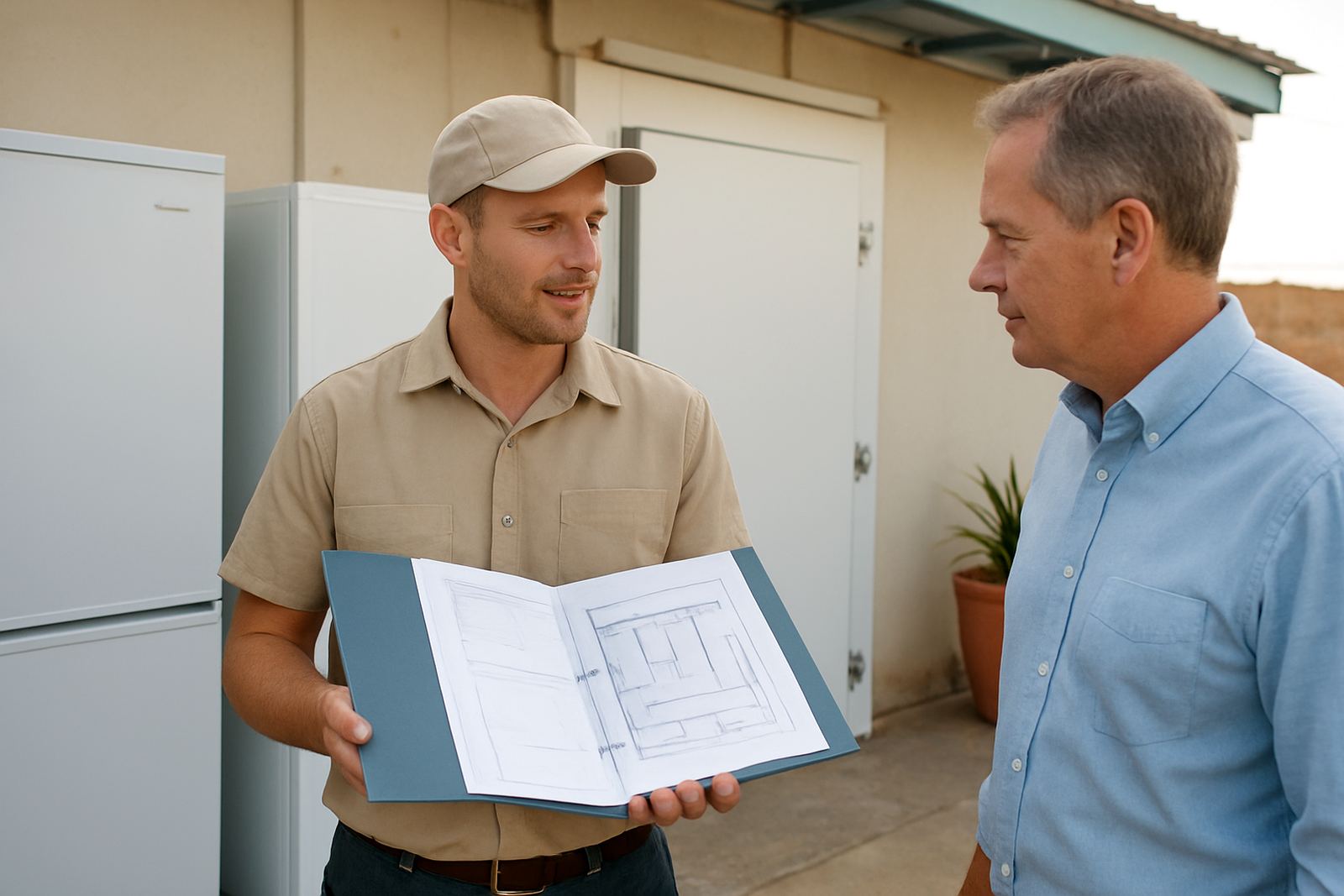
Measure the Site Properly Before Any Drawing Is Final
Measure the available floor space, ceiling height, doorway widths and the path from the delivery truck to the installation point. In older Durban buildings, access can be tight at roller doors, shared passages and service yards. One awkward turn or low beam can change the whole layout. It is worth checking whether the unit can be brought in in sections, and whether there is enough space to work around the room during install.
Also look at floor finish and drainage. A cold room needs a level base and a surface that can handle cleaning, moisture and traffic. If the site floods in heavy rain or sits in a low area, that must be addressed early. Coastal humidity and salty air can also affect door hardware and external equipment, so the site should be assessed properly, not guessed at.
- Door width and height at every point in the route
- Available ceiling height for panels and services
- Clear space for maintenance access around the plant
- Floor condition, drainage and any slope
Choose the Right Insulation and Door Arrangement
Insulation thickness should match the room temperature and the local conditions. A freezer room needs more insulation than a standard chiller, and a coastal site with high ambient temperatures may need extra care with panel joints and vapour control. Poor insulation shows up later as frosting, sweating panels and higher power bills.
Door choice matters just as much. If the room is opened many times a day, a well-fitted hinged or sliding door with proper sealing can save a lot of energy. For bigger operations, a strip curtain or airlock may help reduce warm air ingress. Ask how the door will be used, who will use it and how often it will stand open. A supplier who only asks for room size is missing half the job.
- Confirm the target temperature range
- Check panel thickness and vapour seal details
- Specify door swing, opening direction and traffic flow
- Ask about floor insulation for freezer rooms
Plan the Refrigeration Plant Location With Maintenance in Mind
The refrigeration plant should be placed where it can breathe, be serviced and not disturb operations. On many KZN sites, the best spot is not the most obvious one. Roof space may be available, but it must support the load and allow safe access. A rear yard can work if there is airflow and security. Plant rooms need ventilation, drainage and enough clearance for cleaning and fault finding.
If the site runs on generators or has frequent load-shedding, ask how the system will restart after power cuts and whether controls need protection. Electrical fault finding is far easier when the install has been planned with isolation points, labels and service access. It helps to set this up properly from day one, not after the first breakdown.
- Allow clear space around compressors and condensers
- Keep plant out of enclosed hot areas where possible
- Check noise, neighbour and municipal by-law concerns
- Ask how the system will behave after power interruptions
Think About Access, Stock Flow and Daily Use
A cold room that is difficult to use will become a problem fast. Staff should be able to move stock in and out without blocking aisles or holding the door open too long. If the room is part of a larger store, think about how deliveries come in, where product is checked, and how the team turns around during busy periods. In a busy Durban kitchen or wholesale yard, a small delay at the door can waste power all day.
Service teams also need access. If the evaporator is mounted too high, or the plant sits behind locked fencing with no proper walkway, routine maintenance takes longer and costs more. That is why service planning should be part of the buying decision. A room that is easy to maintain will stay in better condition and usually costs less to run over time.
Build Service Planning Into the Purchase
Once the room is installed, it should not be left to run without checks. Planned maintenance helps catch small issues before they turn into product loss. This includes temperature logging, leak detection, cleaning, door seal checks and confirming that the system is reaching the right set point. For freezer rooms, frost build-up and defrost issues need regular attention. For display chillers, airflow and product loading are just as important.
If you are buying for a restaurant, warehouse, butchery or retail site, ask what the service schedule will look like. A monthly or quarterly visit may suit some sites, while busier operations need closer monitoring. Coastal Cooling Systems supports cold room servicing, freezer servicing, display chiller servicing and breakdown call-outs across Glen Anil, Durban North, Umhlanga, Pinetown, Ballito and the South Coast. That local support matters when stock is on the line and a repair cannot wait till Monday.
- Agree on a planned maintenance schedule from the start
- Keep records of temperatures and call-outs
- Check gas leaks, door seals and drain blockages
- Review the room after the first few weeks of use
A Simple Buyer Checklist Before You Sign
Before you sign off on a cold room order, go back through the basics. The right supplier should ask the right questions and explain what is included, what is excluded and what the site needs to support the room. If the quote does not mention access, insulation, plant placement or serviceability, ask for that detail. It is cheaper to fix the plan now than to cut into a finished install later.
Use this short check before approval: the room size suits the stock, the site allows delivery and maintenance access, the insulation suits the temperature, the plant has a sensible location and the service plan is already in place. That way the room works for the business from day one, not just on the drawing. A proper install saves power, time and plenty headaches later.
- Room size confirmed against real stock volumes
- Access measured from delivery point to final position
- Insulation and door setup matched to the application
- Plant location approved for airflow, noise and maintenance
- Service plan and emergency contact agreed