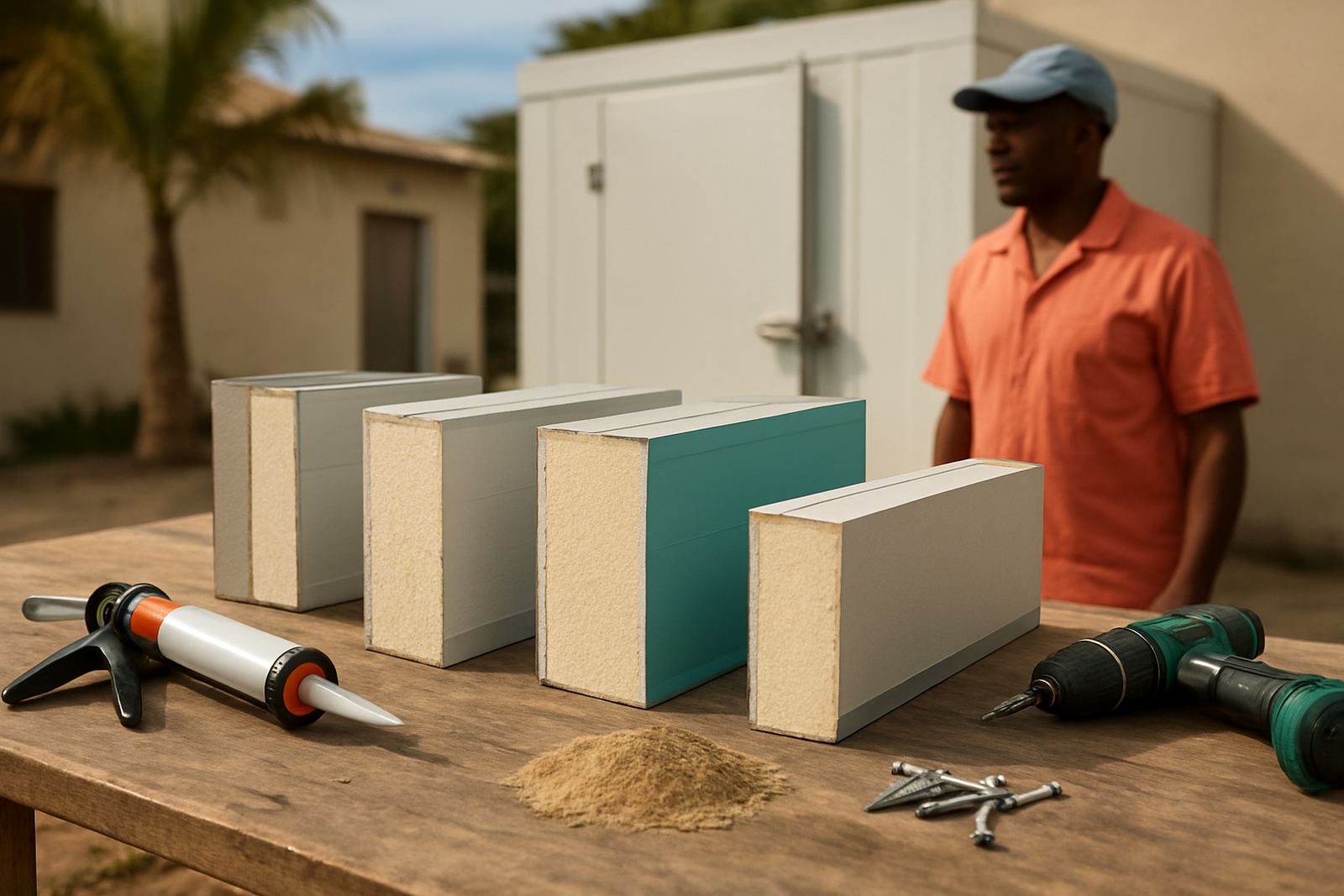
Choosing Panel Thickness for the Right Temperature
Panel thickness should match the room temperature, product load and how often the door opens. For a chilled store or display chiller, thinner panels may be suitable, but a freezer room usually needs thicker panels to hold temperature and cut compressor run time. On the KZN coast, warm air and humidity make poor insulation show up quickly in higher electricity use and ice build-up.
A cold room that looks fine on day one can still underperform if the thickness is too light for the duty. The room may reach setpoint, but it will cycle too often, especially when staff are moving stock in and out. That puts pressure on seals, hinges and fans, and it can shorten the life of the refrigeration equipment.
- Check the required room temperature first, then size the panel.
- Allow for door openings, stock rotation and loading times.
- Use thicker panels for freezers, blast-type duties and high traffic rooms.
- In coastal areas, factor in humidity and warm ambient air.
Panel Joints That Stop Air and Moisture Getting In
Good panels are only as good as the joints between them. If the cam locks, tongue and groove or joint seals are not fitted properly, warm moist air will find its way into the room. That leads to sweating, frost at the joints and sometimes black mould around the edges. Once moisture gets in, the room starts working harder for no good reason.
During an installation or refurbishment, each joint should pull tight and sit level. Uneven floors, damaged panel edges and poor sealing compound can all create weak points. A neat joint line is not just about appearance, it helps the room stay stable under daily use.
- Look for straight joints with no visible gaps.
- Check that floor, wall and ceiling junctions are sealed.
- Inspect around door frames, corners and service penetrations.
- Ask for a moisture check if there is repeated condensation.
Inside and Outside Finishes That Suit Durban Conditions
Panel finish matters in food areas, stores and plant rooms. Smooth, washable finishes are easier to clean and help with hygiene checks. In freezer and cold room spaces, the finish should also stand up to temperature changes without cracking or flaking. On the coast, corrosion resistance is important because salt in the air can affect fixings, trims and exposed edges.
For rooms used by staff every day, choose a finish that can take knocks from trolleys, crates and shelving. A damaged surface becomes harder to clean and can let moisture into the core. That is when small chips turn into bigger repair jobs.
- Ask what finish is used on the room side and the external side.
- Check that trims, fasteners and sealants suit coastal conditions.
- Use washable surfaces for food handling and storage areas.
- Replace any damaged panel edges before they spread.
How Panels Affect Temperature Hold and Energy Use
When a room loses cold through weak insulation, the refrigeration system has to make up the difference. That means longer running hours, more defrosting and higher bills. The effect is often small at first, then it grows. In busy sites, even a slight leak in insulation can cause product temperatures to drift during peak trading or during a power interruption.
Well selected panels help the room recover faster after the door opens or after stock is loaded. This is especially useful for businesses that run through the day with repeated access. If the room is stable, the compressor has an easier job and the temperature graph stays steadier.
- Watch for rooms that take too long to pull down after loading.
- Check energy use against previous months, if bills are climbing for no reason.
- Look for frost, sweating or hot spots on wall surfaces.
- Use temperature logging to confirm real room performance.
Practical Inspection Checklist Before You Buy
Before ordering panels for a new room or upgrade, it helps to measure the actual use of the space. A good supplier should ask about product type, door traffic, floor condition and whether the room is for chilled storage or frozen stock. The same panel spec will not suit every site. A small butcher room in Glen Anil will have different needs from a large distribution freezer in Pinetown.
Use this checklist before you sign off the job:
- Room temperature required and product type stored.
- Daily door opening frequency and loading method.
- Wall, ceiling and floor dimensions in metres.
- Condition of the floor slab and any drainage falls.
- Need for hygiene finishes, coved corners or washdown areas.
- Location of electrical points, lights and pipe penetrations.
When to Repair, Repanel or Start Again
If a room has repeated leaks, swollen joints, stained panels or a soft floor edge, the problem may be more than a simple seal replacement. In some cases a targeted repair is enough, but in older rooms the whole envelope may need attention. The best choice depends on the age of the room, the extent of moisture ingress and whether the refrigeration plant is still sized correctly.
We often see sites where a service technician keeps recharging gas or adjusting controls, but the real issue is the room itself. If insulation has failed, the plant will keep fighting a losing battle. It is better to fix the envelope properly than to keep spending on temporary work.
If you need a practical assessment, our Durban team can inspect the room, check the joints and advise on repairs, servicing or a full replacement plan. We work across Glen Anil, Durban North, Umhlanga, Pinetown, Ballito and the South Coast, and we understand what coastal humidity does to cold rooms and freezer rooms over time.