Start With a Safe Clear-Out Before You Sweep
Before any cleaning starts, switch off or isolate the equipment only if the task allows it and the site procedure says it is safe. In a busy Durban store or warehouse that may mean planning the clean around trading hours, a delivery window, or a planned maintenance stop. Move loose cartons, wrap, pallets, empty crates and rubbish away from the unit so you can see the floor, drains and wall line properly.
Keep a little space around access panels, electrical isolators and service valves. If you press mop buckets, ladders or stock cages up against equipment, it becomes harder to open doors for checks and easier to damage pipework. On coastal sites, salty moisture builds up fast, so a tidy plant space helps you spot early rust and staining before it becomes a repair job.
- Remove loose waste first, then sweep, then mop if needed.
- Keep cleaning chemicals away from control boxes and wiring.
- Do not store stock against condensing units or evaporator access points.
- Check that access paths are clear for service staff and emergency call-outs.
Clean Condenser Areas Without Blocking Airflow
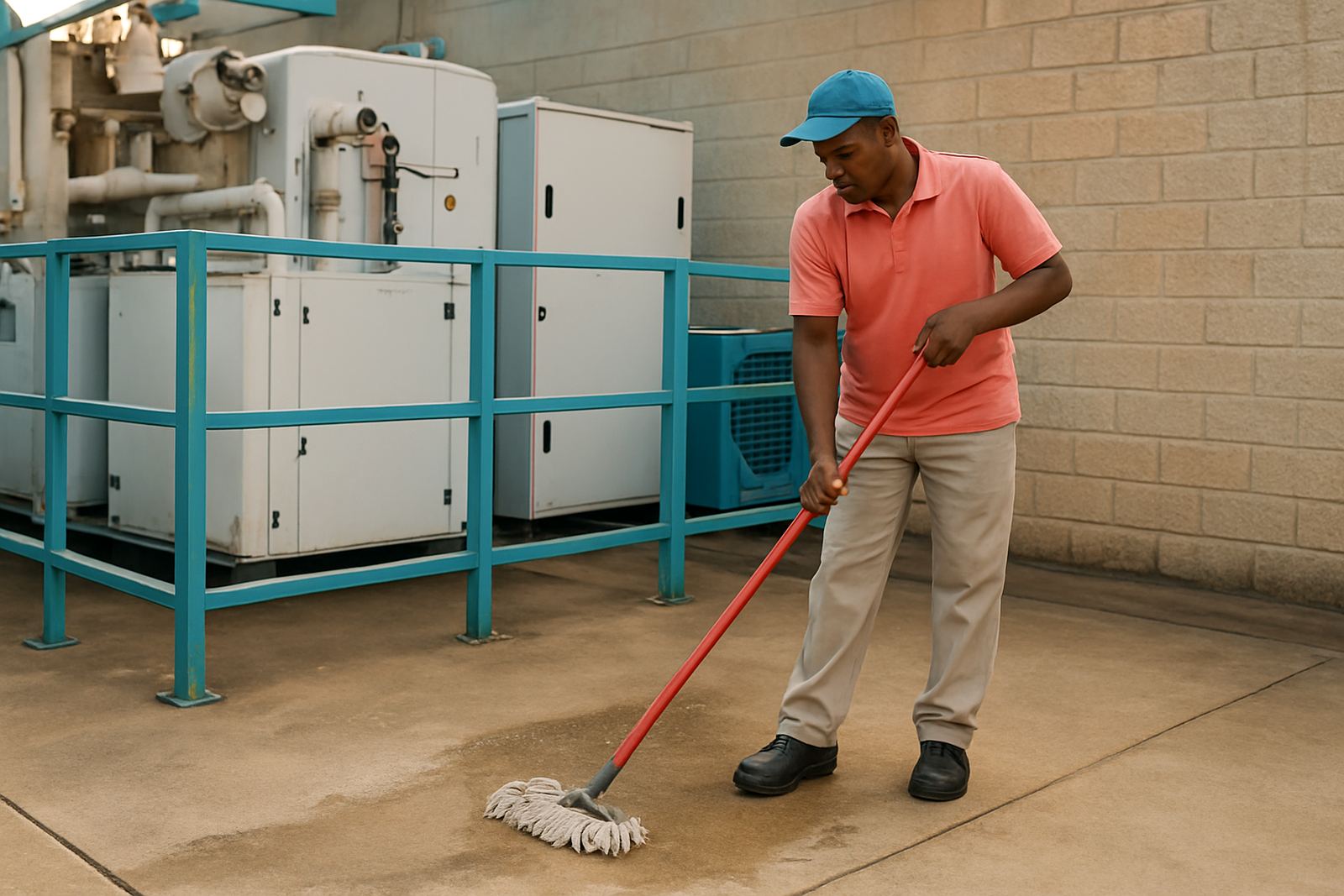
Condensers need free airflow to reject heat. If the area around them is full of dust, plastic wrap, weeds or cardboard, the unit works harder and temperatures can drift. When cleaning around outdoor or plant room condensers, use a soft broom, vacuum with a suitable nozzle, or low-pressure air only where appropriate and safe. Never blast fins with a high-pressure washer. That can flatten the coil and force dirt deeper into it.
Watch for lint from packaging, flour dust in food sites, or grass cuttings near ground-mounted units. In humid KZN conditions these stick to the coil and hold moisture, which speeds up corrosion. If you see oily marks, unusual vibration or one section that keeps collecting dirt, report it. That may point to a refrigerant leak, loose fan mount or airflow problem rather than just a dirty area.
- Keep at least the site-recommended clearance around the unit.
- Trim back plants, creepers and stored items that crowd the airflow path.
- Do not bend coil fins with brushes or screwdrivers.
- Look for rust stains, oil spots and damaged fan guards while cleaning.
Drain Channels Need Gentle Cleaning and Proper Fall
Blocked drains are one of the most common causes of puddles, slippery floors and nuisance call-outs. Around cold rooms and freezer rooms, clear the floor drain grates, drip trays and nearby channels so water can move away freely. Use warm water, a soft brush and a mild cleaner that will not attack seals or corrode metal parts. If you are using a hose, keep the flow controlled and avoid flooding the area.
Check that the drain cover is seated properly and that the floor still falls toward the outlet. In older plant rooms or back-of-house areas, a damaged floor can hold water against the door frame or under the base of a unit. That leads to odours, algae and sometimes electrical faults. If drain cleaning reveals repeated standing water, have the slope, trap or outlet checked rather than just mopping it up every day.
- Clear food scraps, labels and bits of plastic from grates and sumps.
- Inspect for smells, slow draining water or sludge build-up.
- Do not pour harsh acids or caustic products into drains unless the site allows it.
- Dry surrounding surfaces after cleaning to reduce slip risk.
Keep Door Sets, Curtains and Seals Free From Grime
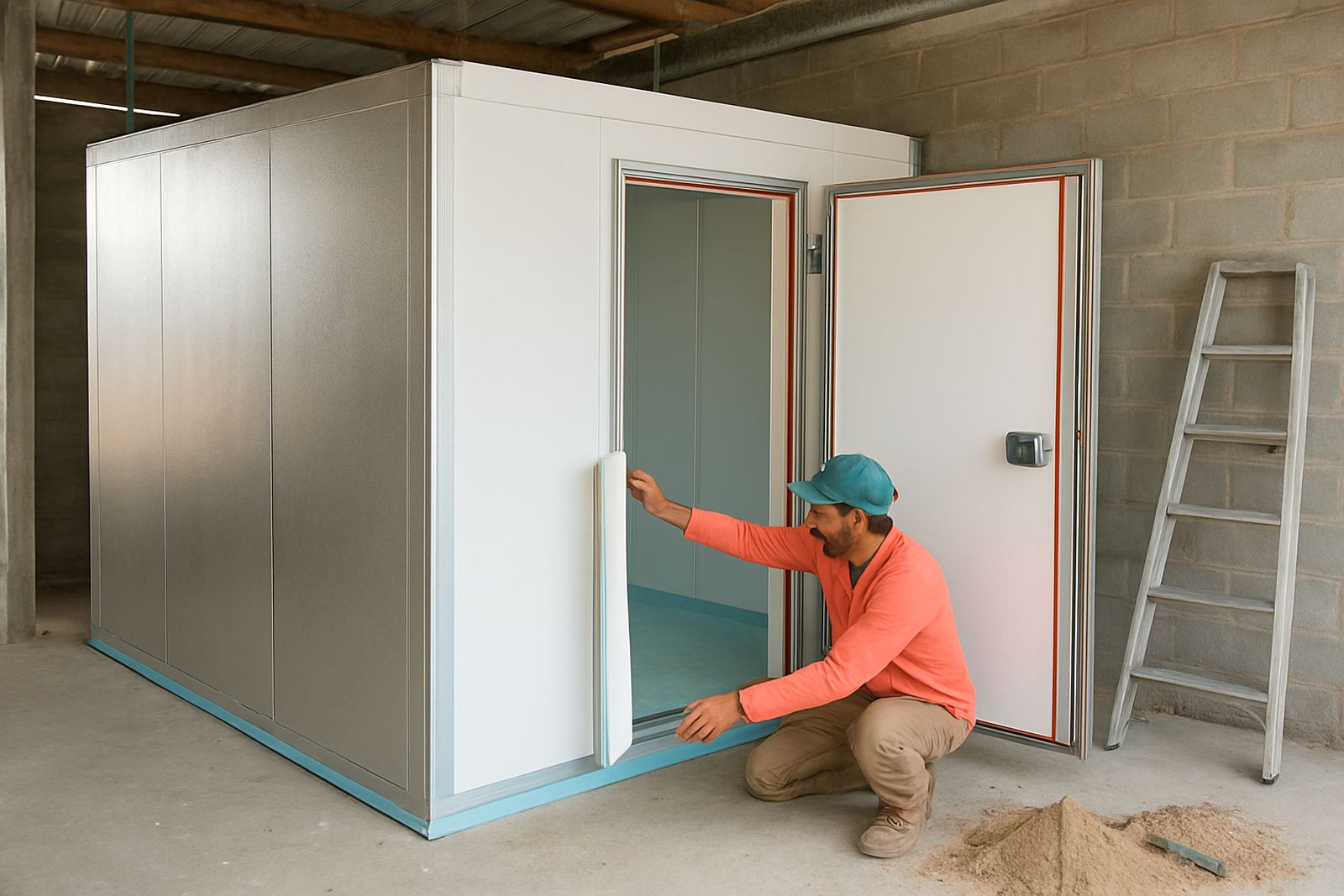
Cold room and freezer room doors work best when seals are clean, dry and undamaged. Wipe the gasket and the door frame with a damp cloth and mild cleaner, then dry them properly. Sticky residue or food spillages on the seal stops the door closing evenly, which causes frost build-up and higher running costs. If the door is hard to close, the closer, hinges or frame may need attention.
For strip curtains and traffic doors, remove dust from the top rail, guides and lower edges. Do not yank at torn strips or force warped hinges back into place. That can make the gap worse. In coastal areas where humidity is high, keep an eye on condensation at the threshold and around metal hardware. Small spots of rust should be cleaned early and reported before they spread.
- Wipe seals weekly in food handling areas and more often where spillages are common.
- Check for torn curtain strips, loose handles and broken latches.
- Make sure doors close fully without needing a hard push.
- Keep the floor at the threshold free from grit that can cut the seal.
Protect Electrical Parts, Sensors and Controls
Cleaning around equipment should never put water into control panels, sensors or switches. Use a lightly damp cloth rather than a dripping mop near wall-mounted controls, isolators and temperature probes. If a sensor is loose or hanging into the wrong part of the room, note it and arrange a proper check. A sensor moved by accident during cleaning can make a room cycle badly and cause unnecessary alarm trips.
In plant rooms, keep an eye out for loose conduit, cracked insulation, damaged plugs and signs of overheating around terminals. Dust and oil on electrical covers can hide faults, so a quick wipe helps. If you smell burning, hear buzzing or see repeated tripping, stop and call for a technician. Do not open panels unless you are authorised and trained to do so.
- Use dry cleaning methods near exposed electrics whenever possible.
- Keep spray bottles and hoses away from switches and control faces.
- Report broken probe clips, damaged cable runs and frequent breaker trips.
- Leave all live work and internal electrical testing to a qualified technician.
Use a Simple Cleaning Checklist for Daily and Weekly Rounds
A short checklist keeps housekeeping consistent and helps the maintenance team see patterns. Daily cleaning can focus on spills, blocked access and visible dirt. Weekly cleaning can include coil surrounds, drain points, door hardware and the general plant area. On sites with service contracts, this records whether the problem is cleaning related or a deeper mechanical issue.
It also helps during compliance checks. A tidy plant room with clear labels, dry floors and open access is easier to inspect and safer for staff. If your site handles food, medicines or other temperature sensitive stock, good housekeeping supports temperature logging and reduces the chance of product loss during load-shedding or busy delivery periods.
- Daily: remove waste, wipe spills, check access is clear.
- Weekly: inspect drains, seals, fan surrounds and obvious corrosion.
- Monthly: review the cleaning method and note repeat problem areas.
- After any spill or flood: dry the area and check equipment for damage.