Start With the Basics Before You Call
When a cold room, freezer room or air-conditioning unit stops behaving as it should, the first job is to note exactly what is happening. A short, clear description helps us decide whether the issue is likely to be electrical, refrigerant related, airflow related, or a control problem. It also helps us bring the right parts and tools on the first visit, which matters when stock is at risk or staff are working through a busy shift.
Use the same process every time. Check what equipment is affected, what time the problem started, and whether it is constant or coming and going. If the fault began after a power cut, a storm, or load-shedding, mention that too. Durban humidity, salty coastal air and repeated power interruptions can all affect refrigeration and air-conditioning in different ways, so those details matter.
Write Down Temperatures and How Fast They Changed
Temperatures tell a lot. A freezer room that is slowly creeping up from -18 °C to -12 °C is a different case from one that has jumped up to 5 °C overnight. The same applies to display chillers and cold rooms. If you have a thermometer, record the reading from the unit display and the reading from a separate probe if available. If the room has more than one zone, note each one separately.
- Room temperature or cabinet temperature
- Set temperature on the controller
- Temperature at the start of the problem
- Temperature after 30 minutes, 1 hour, or through the day
- Any product that is softening, sweating or freezing where it should not
If the temperature is bouncing around, mention when it happens. For example, after doors open for deliveries, during afternoon heat, or when the plant restarts after a power outage. That pattern can point to airflow issues, defrost faults, sensor problems or a weak compressor.
Look for What Changed Recently
Many faults begin after a simple change on site. A blocked condenser, a new display layout, extra stock packed too tightly, or a door that is not closing fully can all upset temperatures. If the problem started after cleaning, maintenance, or a move of stock, say so. Even a small change can affect a cold room in a busy kitchen, butcher shop, pharmacy or warehouse.
Make a quick note of anything unusual you saw before the fault. That may include a breaker tripping, a strange noise, a heavy frost build-up, water on the floor, or a unit that is short cycling. If staff adjusted the thermostat, isolator or timer, say exactly what was changed. Don’t reset settings repeatedly before reporting the issue, as that can make the fault harder to trace.
- Power cuts or load-shedding periods
- Doors left open, damaged seals or hinge issues
- Recent stock changes or blocked air movement
- Cleaning, rewiring or building work nearby
- Any alarm, beep or fault code shown on the controller
Check the Visible Signs Safely
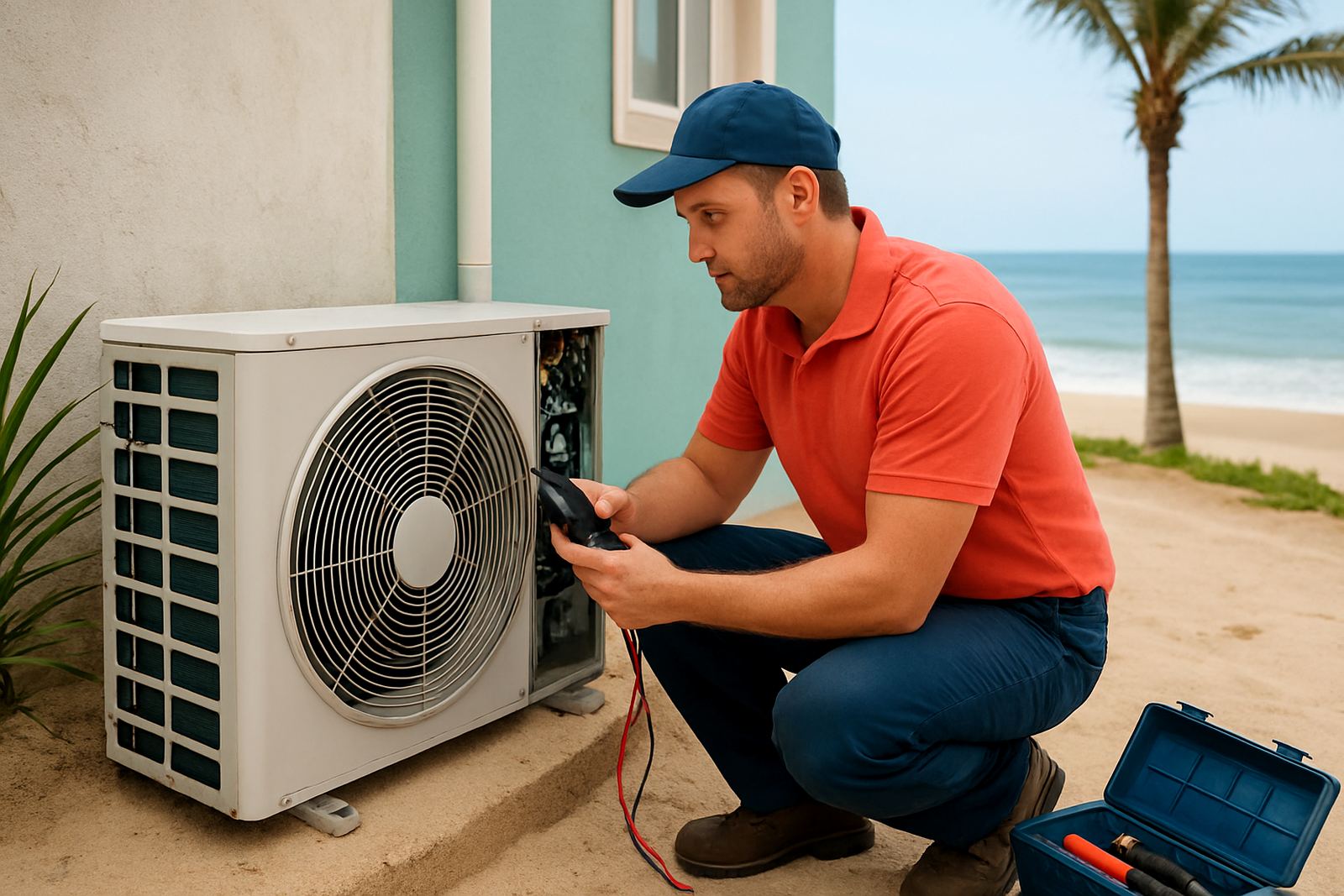
You do not need to open panels or handle live parts. A visual check from a safe position is enough. Look for icing on pipes, frost on evaporators, water dripping from a ceiling unit, burnt smells, loose wiring you can see without touching, or fans that are not running. If an air conditioner is serving an office or server room, check whether the indoor unit is blowing warm air, no air at all, or air that smells damp.
For coastal sites in Umhlanga, Ballito and South Coast areas, salt air can speed up corrosion on coils, fixings and casings. In industrial sites around Pinetown or Durban North, dust and grease can also build up quickly. Note whether the outdoor unit is exposed to sea air, direct sun, or blocked by debris. Those details help us plan the repair properly and reduce repeat call-outs.
Use This Quick Fault Notes List
If you are standing at the unit with a phone in your hand, copy these notes before you call. It only takes a few minutes and gives us a clearer picture of the problem on the first conversation.
- Site name and area, such as Glen Anil, Durban North, Umhlanga or Pinetown
- Equipment type, for example cold room, freezer room, display chiller or air-conditioning
- Exact symptoms, such as warm product, icing, noise, tripping or no power
- Temperatures and times noted during the fault
- Any recent power cuts, maintenance work or product loading changes
- Whether the issue is affecting one unit or several units
If there is a food safety risk, move vulnerable stock according to your site procedure while waiting for assistance. For a freezer room or chiller, keep doors closed where possible to slow heat gain. If the unit is making a burning smell, tripping repeatedly or showing signs of electrical damage, isolate it safely and report that immediately.
What Our Team Needs When You Phone In
When you call Coastal Cooling Systems, we will ask a few direct questions so we can respond properly. Our Glen Anil office supports Durban and the KZN coast, and the more accurate your fault notes are, the faster we can match the call to the right technician. That is especially useful during busy trading periods, after storms, or when sites are dealing with load-shedding and backup equipment at the same time.
Have your site details, contact number, access instructions and fault notes ready. If the issue is under a service contract, mention that at the start. If your site needs scheduled maintenance, breakdown support, leak detection, electrical fault finding, temperature logging or compliance checks, we can align the call with your records and current service history. It saves time and helps keep your plant running where it should be, not just patched for the day.