Office cooling that works for people and equipment
Most office calls start with the same complaints: the reception is sticky by 10 am, the meeting room never cools properly, or the server room runs too warm when the sun hits the western wall. In Durban, Umhlanga, Glen Anil and Ballito, those issues are often made worse by coastal humidity and inconsistent power supply, so the answer is rarely just adding another unit.
We look at how the office is used through the day. A call centre, small law office, medical rooms or a mixed tenant space all have different loads. Staff comfort matters, but so does protecting computers, routers and server racks from heat and moisture. The aim is steady temperatures, not cold spots over one person and warm corners everywhere else.
- Open-plan offices with shared return air paths
- Meeting rooms that fill up at certain times of day
- Reception areas with frequent door opening
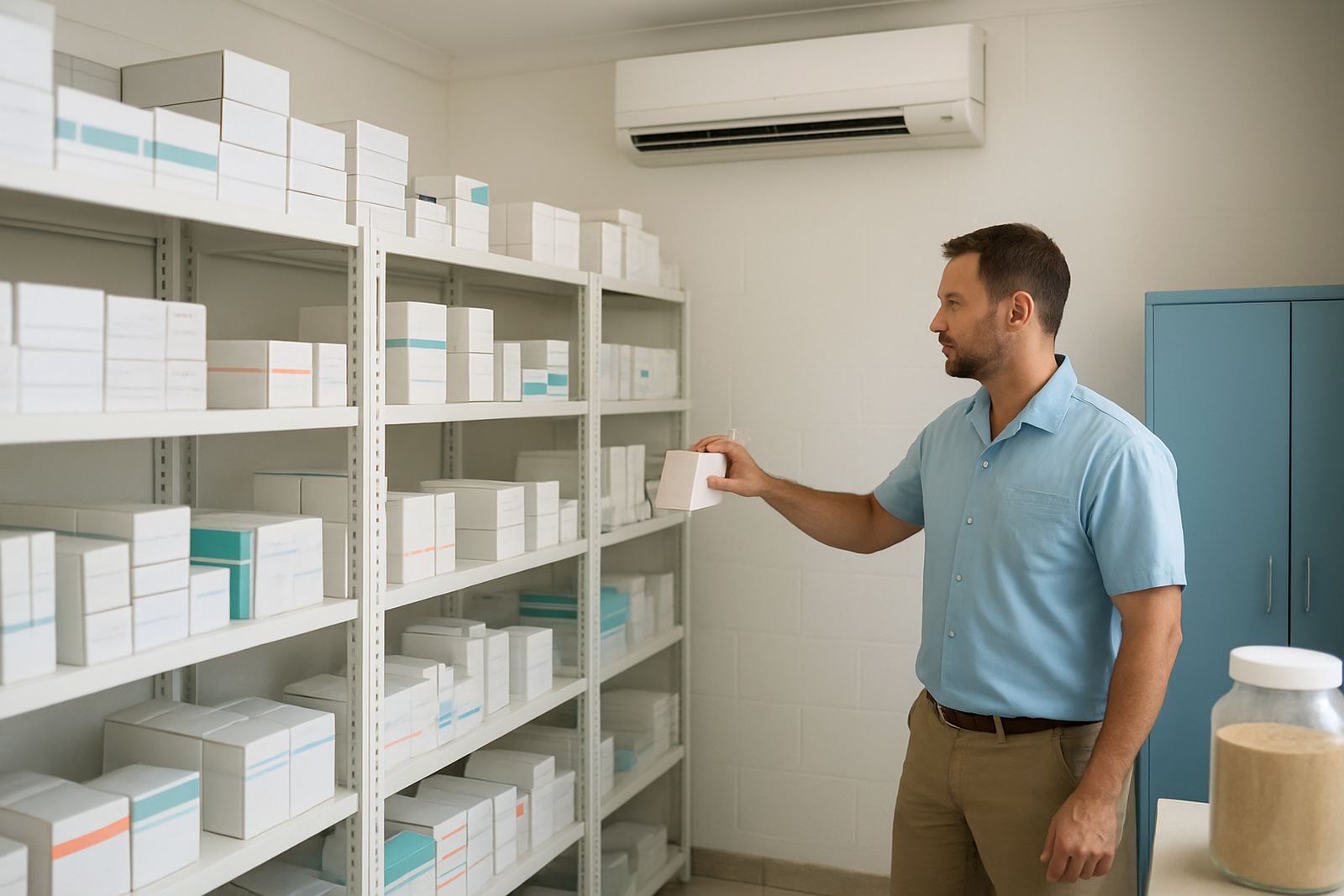
- Server or comms rooms that need separate control
Typical equipment set for a commercial office
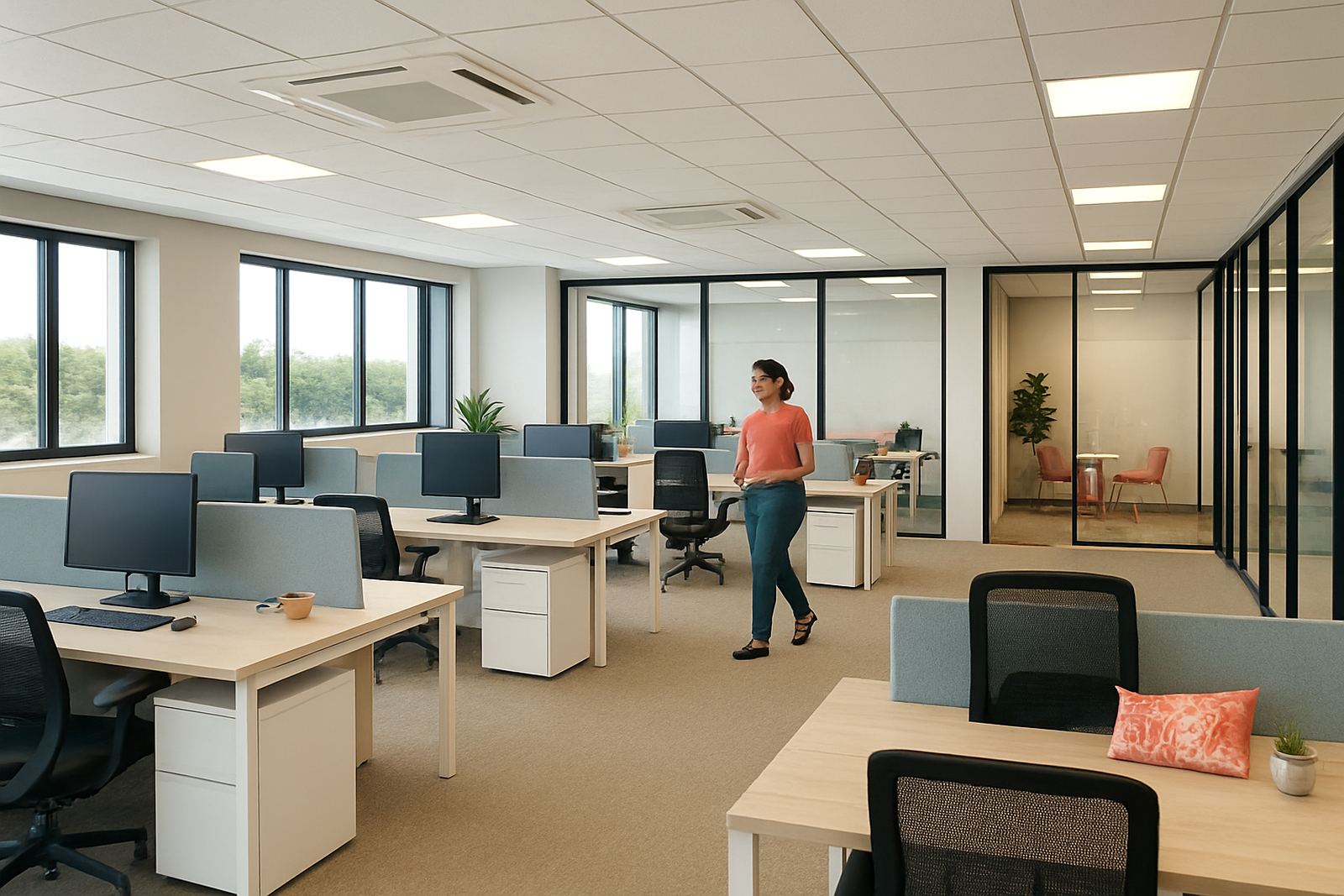
A typical office installation may use wall-mounted split units for small rooms, cassette units for boardrooms, ducted systems for larger open-plan areas, or packaged solutions where the building layout allows it. For server spaces, we usually recommend a dedicated unit with proper standby planning, because those rooms can overheat quickly even when the rest of the office feels fine.
We also check for fresh air requirements, condensate drainage, safe electrical supply and access for servicing. If the office is in a block or shared building, the landlord rules and strata arrangements must be checked before any pipe routes or outdoor units are fixed in place. It saves arguments later and keeps the job moving.
- Wall-mounted units for small offices and private rooms
- Cassette units for meeting rooms and open-plan sections
- Ducted systems for neat ceiling finishes
- Dedicated cooling for server and comms rooms
Planning the layout before you choose the units
Good office cooling starts with layout. A long reception counter facing glass, a west-facing conference room, or a row of workstations under a low ceiling all change the way air moves. If the planner ignores that, you get draughts on one side and dead air on the other. In coastal areas, glass and humidity can make this worse, so the position of each indoor unit matters.
We often advise clients to think in zones. Reception should be treated differently from staff counters and differently again from the server room. That allows better control, lower running costs and easier maintenance. It also helps during load-shedding, because smaller zones can be prioritised when power comes back and the system starts up again.
- Separate public areas from staff-only areas
- Keep server spaces on their own circuit where possible
- Allow access panels for filters and coils
- Check drainage falls before ceilings are closed
Common mistakes we see in Durban offices
One common mistake is undersizing the system for the real heat load. Another is placing the unit where it looks neat but does not move air properly. We also see offices that have been extended over the years, with one corner added to the original plan and no one revisiting the cooling. Then people complain that the new area is hot while the old area is freezing cold.
Another issue is skipping maintenance until something fails. Dirty filters, blocked drains and low gas levels can all lead to poor cooling and higher electricity use. On the coast, salt air and damp conditions can shorten equipment life if the coils and outdoor units are not serviced regularly. It is cheaper to catch those problems early than pay for a major breakdown in January.
- Ignoring after-hours heat build-up in closed offices
- Mixing server cooling with general staff comfort
- Poor condensate drainage causing leaks into ceilings
- Waiting for a failure instead of setting a maintenance schedule
Budget ranges for office air-conditioning projects
Costs depend on the size of the space, ceiling height, number of zones and whether the building needs new electrical work or long pipe runs. As a rough guide, a small private office or consultation room may start from around R12 000 to R25 000 for a basic split system supplied and installed. Medium meeting rooms and small open-plan areas can fall between R25 000 and R65 000, while larger offices with several zones or ducted work can run from R80 000 upwards.
Server room cooling often needs dedicated equipment and standby thinking, so it should be budgeted separately. For planned maintenance, many offices prefer a service contract rather than ad hoc call-outs. That keeps filters, drains and coils in check, and helps with compliance records too.
- Basic single-room cooling: from about R12 000
- Medium office zones: around R25 000 to R65 000
- Multi-zone or ducted offices: from R80 000 upward
- Service contracts: priced to suit visits, units and site access
Maintenance that keeps an office open for business
An office cannot afford repeated downtime, especially when staff, clients and IT equipment rely on the same cooling system. Our service work covers planned maintenance, breakdown call-outs, leak detection, electrical fault finding and temperature logging where needed. That matters in Durban where a room can go from comfortable to unpleasant very quickly once a unit stops on a hot afternoon.
For offices on the KZN coast, we also pay attention to coastal corrosion, blocked drains, loose isolators and power-related faults after load-shedding. If a site has meeting rooms, reception and server spaces all under one roof, we can set up a sensible service schedule so the whole building is looked after properly, not just the noisiest unit.
Coastal Cooling Systems has been working from Glen Anil since 1998, and our team handles office cooling across Durban North, Umhlanga, Pinetown, Ballito and the South Coast. If your office needs better comfort, cleaner air and fewer breakdowns, start with a site visit and a proper assessment.