Why pharmacy cooling needs tighter control
In a pharmacy, temperature is not just about comfort. Medicine storage areas, vaccine fridges, back rooms and dispensary counters all need to stay within a narrow range, even when Durban is hot, the power goes off for an hour, or the front door keeps opening during busy periods. A small fault can push stock out of spec very quickly, and that can mean product loss, extra admin, and questions from inspectors.
We work with pharmacies that need clear separation between customer-facing spaces and storage areas. The air-conditioning in the front of house must not dump hot air into the dispensary, and the cold room or medical fridge area must not be fighting against poor airflow, bad doors or undersized equipment. On the coast humidity also matters. Moisture build-up can affect labels, packaging, electrical parts and temperature recovery after a door opening or load-shedding event.
Typical equipment in a pharmacy fit-out
The right setup depends on the size of the shop, how much stock is held on site, and whether the pharmacy also has a consultation room, dispensary, back office and secure medicine store. In many cases we combine air-conditioning for the retail and consultation areas with dedicated refrigeration for storage. For some sites, a small cold room is better than a row of domestic-style fridges because it gives better organisation and steadier temperatures.
- Split or ducted air-conditioning for the shop floor and waiting area
- Dedicated medical fridges for temperature-sensitive stock
- Small cold rooms for bulk storage or backup stock
- Display chillers where over-the-counter chilled products are sold
- Temperature logging equipment for record keeping
- Backup power planning for load-shedding and outages
Where the layout is tight, we plan around door swings, counter positions, airflow and heat sources such as printers, fridges, UPS units and direct sun on shopfront glass. It sounds basic, but if the cabinet is in the wrong place it can short-cycle all day and cost more to run.
Layout advice for shop floors and medicine stores
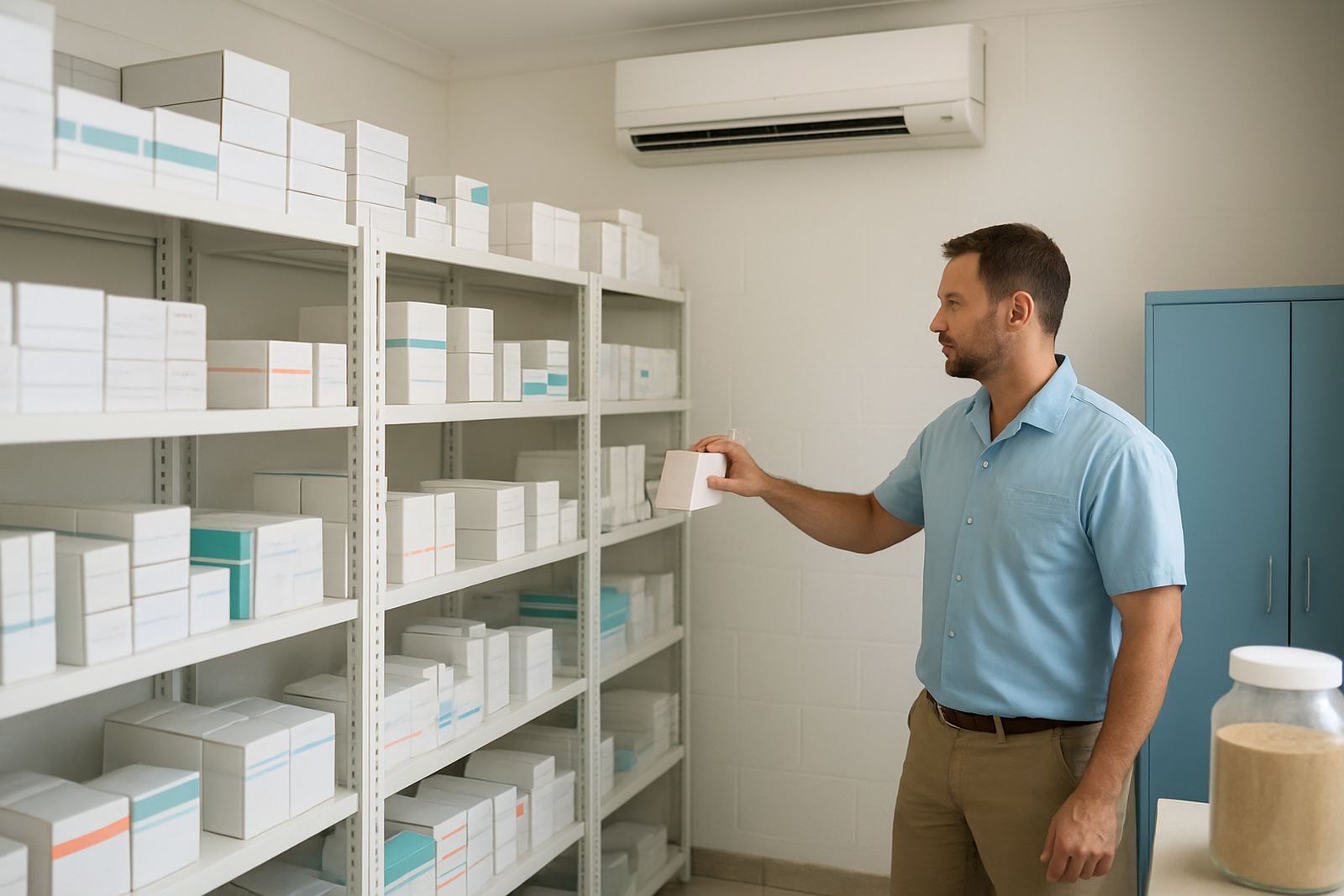
A pharmacy layout should keep the coldest, most controlled space away from the highest traffic points. The medicine store should have a solid door that closes properly, and the aircon supply must not blow directly onto monitored stock or through open shelving. In customer areas, aim for even cooling rather than a blast from one unit near the entrance. If the system is overworked, people feel it before the staff do, and the back room usually suffers first.
For Durban North, Umhlanga, Glen Anil and Ballito sites, salty air and coastal humidity can corrode outdoor units faster than inland installations. That means the outdoor position matters. We look for shade, clear airflow and a place that is easy to service without blocking walkways or creating a security problem. For pharmacies in older centres or mixed-use buildings, it is also worth checking whether building management has rules on drainage, noise or where condensate can discharge.
- Keep medicine storage away from direct sunlight and external doors
- Leave enough service space around all refrigeration and air-con units
- Separate customer comfort cooling from stock protection where possible
- Plan for maintenance access before the ceiling is closed up
- Use temperature logging from day one, not after a problem comes up
Common mistakes we see in pharmacies
One common mistake is treating the whole pharmacy as one temperature zone. The retail area can be comfortable while the back store is drifting warmer than it should. Another issue is putting too much load onto one small unit because the owner wants to save on upfront cost. That usually leads to noisy operation, poor recovery after load-shedding and more call-outs over time.
We also see systems installed without enough thought for cleaning and servicing. Dust, lint, blocked filters and poor condenser access all shorten service life. In some cases the refrigeration cabinet is placed beside a hot wall or under a skylight, which forces the compressor to run harder than it should. It is cheaper to get the position right now than to keep paying for repairs later. And on the KZN coast, skipping corrosion protection is a false economy, especially where units are mounted outside or near sea air.
Maintenance, call-outs and compliance support
Pharmacies need planned maintenance that fits trading hours and stock handling. Our service contracts can include filter cleaning, gas leak checks, electrical fault finding, temperature logging and regular checks on door seals, fans and controls. If a fridge or aircon trips after hours, breakdown call-outs help reduce stock loss and keep the shop open the next morning.
For pharmacies in Durban, Pinetown, the South Coast and the wider KZN coast, the useful maintenance plan is the one that matches actual use. A small clinic pharmacy does not need the same schedule as a busy retail site with multiple fridges and high foot traffic. We look at how often doors open, how much heat comes from the front shop, and whether the site relies on generators or inverters during load-shedding. That lets us set a maintenance plan that is practical instead of overdone.
Compliance checks matter too. Records should show that temperatures are being monitored and that faults are being addressed quickly. If there is a storage issue, we can help find the cause whether it is a refrigerant leak, a failing fan motor, a dirty coil or a control fault.
Budget ranges for pharmacy cooling projects
Budget depends on the size of the pharmacy, the number of temperature zones, and whether you need new equipment or simply better control of what is already there. A single air-conditioning replacement for a consultation or retail area can start from about R12,000 to R28,000, depending on capacity and site conditions. Dedicated medical fridge servicing or fault repairs are usually lower, while a proper cold room or freezer room is a bigger project.
As a rough guide, a small pharmacy upgrade with one or two air-conditioning units, maintenance work and temperature monitoring might sit between R25,000 and R60,000. A more involved fit-out with a cold room, backup planning and multiple zones can range from R80,000 to R250,000 or more. The final cost depends on access, electrical supply, ceiling work, drainage and whether the building needs extra support for outdoor units. If you are in a centre with strict rules, allow a bit more time and budget for approvals and installation windows.
We are based in Glen Anil, Durban and work across Durban North, Umhlanga, Pinetown, Ballito and the South Coast. If you need a practical plan for a pharmacy, we can look at the site, the stock risk and the real day-to-day use before suggesting equipment.