What the Richards Bay Client Needed
The client was a seafood handling business in Richards Bay that needed one room to do three jobs properly: receive product, hold it at safe temperature, and let stock move out again without warming up on the floor. The old process was costing time at loading and unloading, and the team wanted a room that could cope with wet conditions, frequent door openings and the sort of daily pressure that comes with fish and shellfish handling.
The brief was straightforward but very specific. They needed a chilled room with enough clear floor space for crates and pallets, a layout that allowed easy cleaning, and a refrigeration system that could recover quickly after repeated door cycles. Temperature control had to stay stable during afternoons when the sea air pushes humidity up, and the client also wanted proper logging for checks and internal records. In short, the room had to work like a proper production space, not just a cold box.
Site Constraints And Coastal Conditions
Richards Bay brings its own conditions. Salt in the air, high humidity and warm weather can all punish refrigeration equipment, electrical components and door seals. The site also had busy receiving times, so the build could not block normal operations for too long. We had to plan around limited downtime and make sure the room would not be a headache during peak product movement.
There was also the issue of power stability. Like much of the KZN coast, the site needed a system that could handle load-shedding interruptions and restart cleanly once power returned. That meant careful selection of controls, wiring protection and alarm settings. We also allowed for compliance needs around food handling, drainage, washable finishes and practical access for cleaning crews. One bad detail in a seafood room can become a recurring problem very quickly, so the small things mattered.
- Coastal corrosion resistance for external components and fixings
- High humidity performance for seals, panels and evaporator operation
- Fast pull-down after loading warm product
- Easy washdown access around corners, drains and thresholds
- Temperature logging for receiving and dispatch checks
What We Supplied And Installed
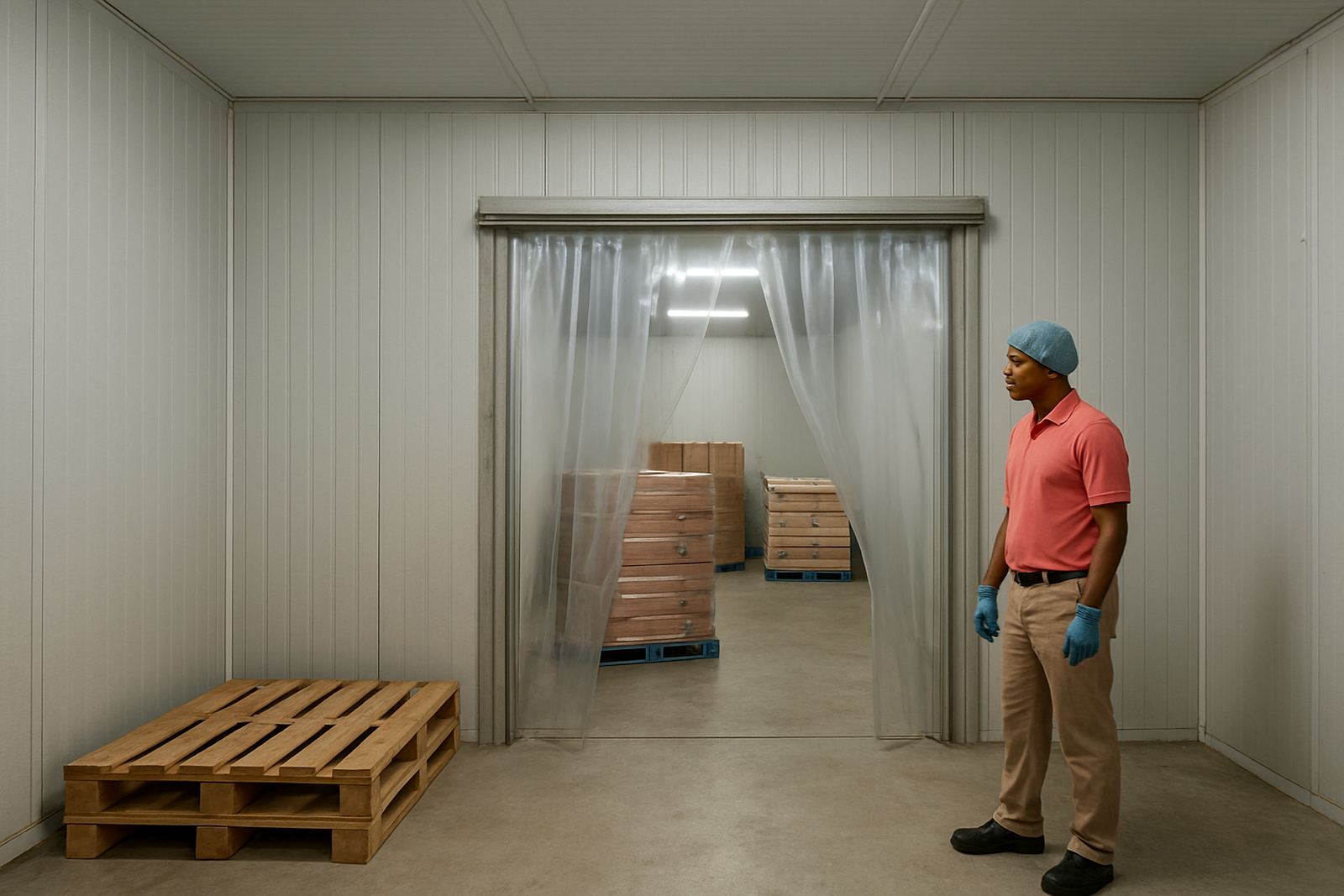
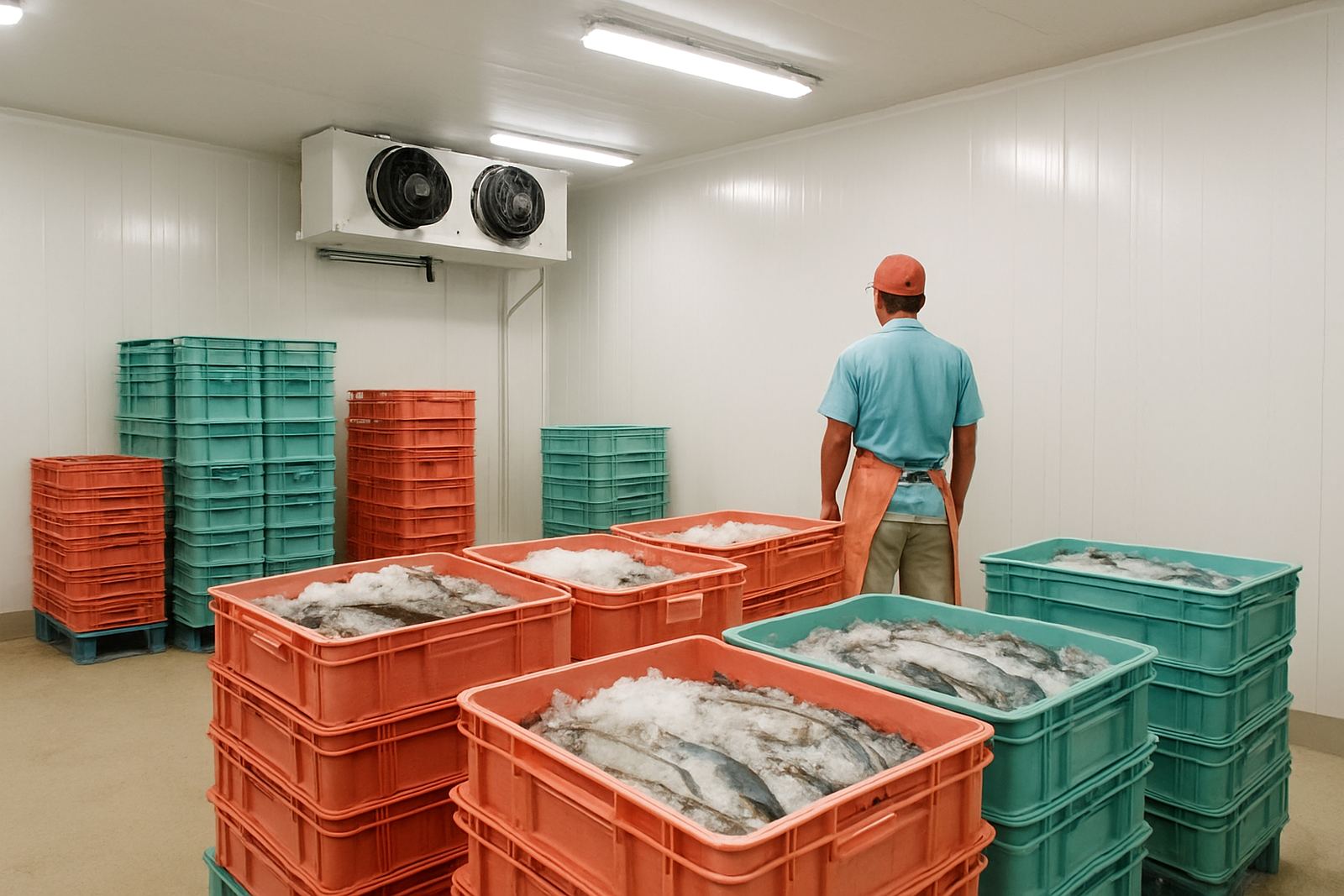
We supplied and installed a chilled handling room configured for seafood receiving, storage and dispatch. The room was built to hold product at 0 to 4 degrees Celsius under normal operating conditions, with enough airflow to maintain even temperatures across the full space. We used insulated wall and ceiling panels, a suitably rated insulated floor treatment, and a fast-closing insulated door arrangement to reduce temperature loss when staff were moving stock in and out.
The refrigeration side was set up with a commercial condensing unit, matched evaporator equipment and controls sized for the room volume and door usage. Drainage was arranged to suit regular washdown and condensed moisture. We also handled the electrical connection points, isolators, control wiring and basic fault protection so the client had a neat, serviceable install. The system was commissioned with temperature set-points, defrost settings and alarm checks, and we completed a handover with the operating team on daily use and cleaning routines.
- Chilled seafood room for receiving, short-term holding and dispatch
- Target operating range of 0 to 4 degrees Celsius
- Insulated panel construction with sealed joints
- Commercial refrigeration package sized for frequent door openings
- Washdown-friendly drainage and easy-clean finishes
- Temperature control and logging for internal checks
Timeline, Coordination And Working Around The Operation
The full project ran over 5 weeks from final site measure to practical completion. Week one was final planning and equipment selection. Week two covered material ordering and coordination with the client’s receiving schedule. Week three and four were the installation period, including room construction, refrigeration mounting, pipework, wiring and controls. The last week was used for commissioning, temperature verification and operator training. That schedule worked because everyone stayed on the same page and the site team gave us clear access windows.
We also worked around the fact that seafood handling cannot stop for long. Deliveries had to continue, so we split the work into manageable stages and kept the site tidy each day. That avoided the usual problems of debris, blocked access and wasted time. The client wanted the room brought into service without drama and that is exactly how it went. There were a few early changes to door swing and crate movement paths, but nothing that affected the programme.
Performance After Handover
Once the room was in operation, the main difference was consistency. Stock moved from receiving to storage without sitting at ambient temperature, and the dispatch team had a cooler, better controlled space to work from. The refrigeration cycle held temperature well during busy periods, even when the door was opening and closing often. That matters in seafood because the product quality can change quickly if the room is slow to recover.
The client also had better visibility on daily checks. Temperature logging and clear operating routines made it easier for supervisors to confirm that the room was within range before stock moved onward. Cleaning was simpler too, because the room was laid out with access and hygiene in mind rather than squeezed in after the fact. In practical terms, the site got less spoilage risk, better handling flow and fewer complaints from staff about the room being hard to use.
- More stable holding temperatures during peak receiving periods
- Cleaner product flow between receiving, storage and dispatch
- Less time lost waiting for the room to recover after door openings
- Improved hygiene control and easier cleaning
- Clearer temperature records for internal checks
What We Would Repeat On A Similar Seafood Project
If we were doing this type of room again for another coastal seafood operator, we would keep the same approach: simple layout, strong insulation, good door control and refrigeration sized for real daily use rather than ideal conditions. On a site like Richards Bay, it is worth spending the time up front on drainage, corrosion protection and control settings because those details save repeated call-outs later.
We would also keep the maintenance plan in place from the start. Seafood rooms need planned service more than most chilled spaces because of moisture, odours and the pace of use. A proper service contract, regular leak checks and temperature monitoring help stop small faults becoming stock losses. The biggest lesson from this project was not complicated at all: when the room is built for the work it has to do, the staff settle into it quickly and the whole operation runs smoother.
Key facts
| Project location | Richards Bay, KZN |
|---|---|
| Client type | Seafood handling and dispatch operation |
| Room function | Receiving, short-term storage and dispatch |
| Operating temperature | 0 to 4 degrees Celsius |
| Programme | 5 weeks from measure to handover |
| Scope | Room build, refrigeration, controls, drainage, commissioning and training |