The Brief From A Busy Coastal Bar
The client was a high-traffic lodge bar on the KZN coast, serving guests from breakfast through to late evening. They needed back-bar refrigeration for bottled drinks, mixers and fresh garnish storage, plus cooling for the guest area so the bar stayed comfortable even when the doors were open and the room was full. The old setup was struggling on warm afternoons and during weekend rushes, with uneven cooling and too much strain on the staff.
The venue also had a few practical limits. The bar area had limited floor space behind the counter, the ceiling void was tight, and there was salt in the air from the coastal side of the property. Load shedding meant the client needed equipment that would restart properly after outages and not lose temperature too quickly. They also wanted a solution that would not make a lot of noise near seated guests, because the bar is part of the lodge experience rather than a back-of-house area.
Site Constraints And Design Choices
We started with a site walk-through to check heat load, service access and the path for pipe runs and drainage. The venue had a mix of enclosed and open sections, so we had to size the cooling carefully rather than just fitting larger units. In a coastal setting, oversizing can create short cycling, poor humidity control and unnecessary wear. We also checked where condensate could drain without causing damp patches, since the lodge had tiled finishes and guest traffic right next to the bar.
- Salt-air exposure on outdoor components
- Limited plant space behind the bar
- Low-noise requirement for guest comfort
- Power interruptions and recovery after load shedding
- Compliance with municipal noise and drainage expectations
Because the venue is in a hospitality setting, we worked around trading hours and split the installation into sections so the bar could remain partially operational. That helped the client keep service running and avoid a full shutdown over a busy weekend. We also planned for easier future maintenance, with service points positioned where technicians can reach them without pulling apart the whole counter.
What We Supplied And Installed
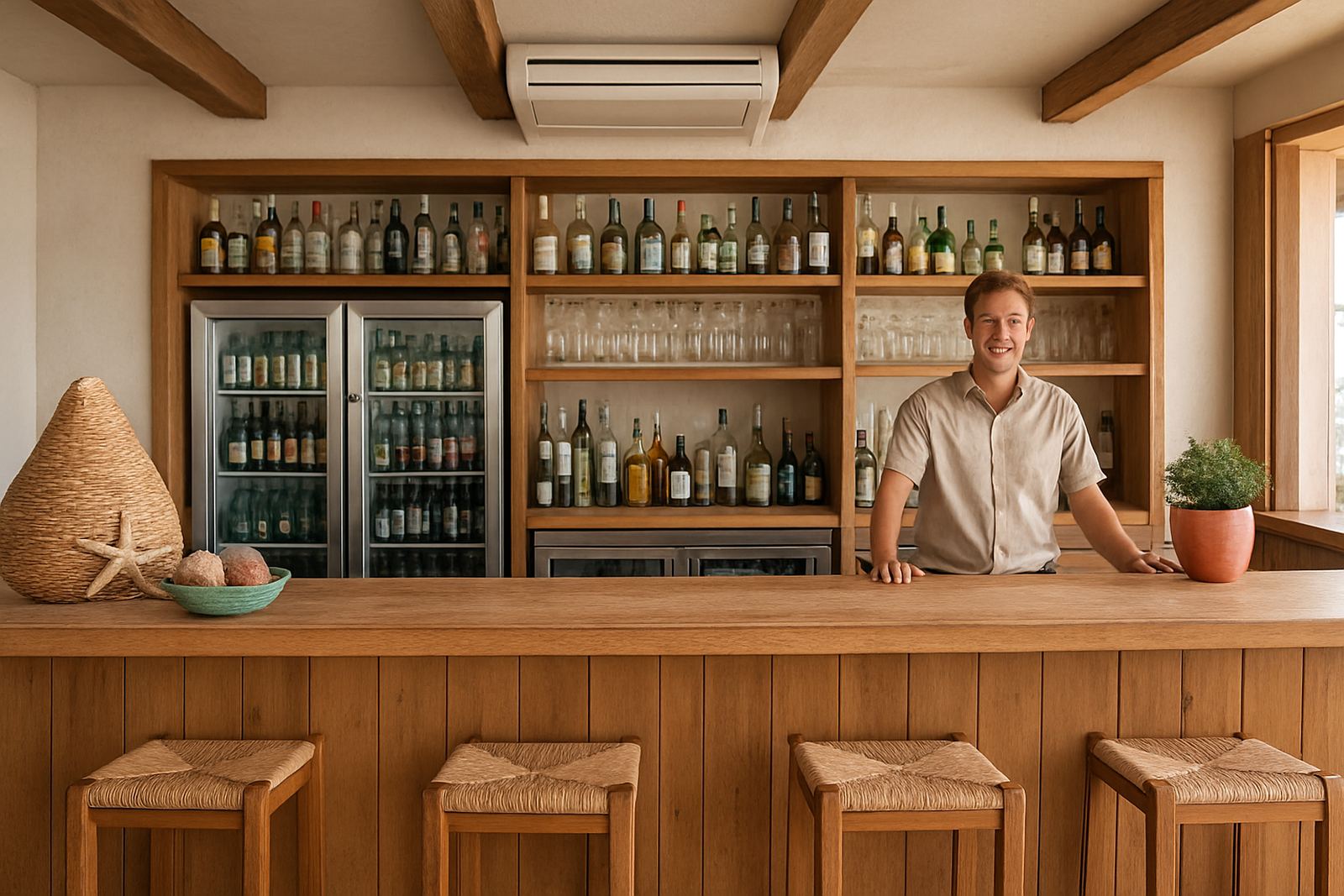
The project covered back-bar refrigeration and guest area cooling as one coordinated package. We supplied a back-bar fridge line-up with glass doors, forced-air cooling and temperature control suitable for beer, soft drinks and bottled stock. The bar counter section included undercounter storage and a separate chilled section for fast-moving items. For the guest area, we installed commercial split-type air-conditioning with outdoor condensing units selected for coastal conditions and indoor units sized to spread air evenly without blasting directly onto seats.
We used copper pipework sized for the run lengths on site, insulated all chilled lines, and fitted proper isolation valves for maintenance. The condensate drains were routed with fall and trapped where needed, so the system would not smell or back up. All electrical work was checked for safe start-up, and we tested the units after a simulated outage to confirm they came back online in the right sequence. A few small adjustments were needed on the fan settings, but once dialled in the air movement was comfortable and quiet.
- Back-bar refrigeration with glass-door storage
- Undercounter chilled storage for service stock
- Commercial split air-conditioning for guest seating
- Corrosion-conscious outdoor unit positioning
- Insulated pipework and proper drainage fall
Timeline And Working Method
The full project took three weeks from final measure-up to commissioning. Week one covered assessment, sizing and confirming the layout with the lodge management team. Week two focused on fabrication, equipment delivery and staged installation while the bar continued trading. Week three was for wiring, gas charging, testing, temperature mapping and handover.
During commissioning we checked pull-down times, door seal performance and thermostat response under load. We also reviewed how the bar staff would use the units during service, because the way a hospitality team loads stock affects performance as much as the equipment itself. The team wanted simple controls and clear temperature readouts, so we kept the interface straightforward and left a short operating guide for daily use. That made it easier for new staff to follow the same routine, especially when shifts change.
Results In Day-To-Day Service
The bar now holds drinks at the right temperature through peak periods, and the guest area stays comfortable without the loud cycling the client had before. Staff no longer need to move stock into alternate fridges when the weather turns hot. The refrigeration section recovers quickly after door openings, which matters in a bar where access is constant. The cooling load is more stable too, so the equipment is not working as hard during the warmest parts of the day.
The lodge management team reported better guest comfort and fewer complaints about heat around the bar counter. The cleaned-up pipe routes and service access also make routine checks easier. From our side, the big win was matching the system to the site conditions instead of forcing a standard package onto a tricky coastal bar. That approach helps avoid the sort of call-outs that come from poor sizing, bad airflow or drainage issues.
- More even temperatures across the bar area
- Quieter operation near guests
- Better stock holding during busy service
- Faster recovery after power cuts
- Easier access for maintenance checks
What We Would Repeat On The Next Coastal Venue
If we were doing a similar lodge or restaurant bar again, we would keep the same approach: measure the heat load properly, plan for salt-air exposure, and give the staff a system they can use without fuss. On the coast, the real difference comes from the details. Good drainage, correct insulation, sensible placement of outdoor units and planned maintenance all matter more than people expect.
We would also recommend an ongoing service contract from the start, especially for venues that trade seven days a week. Regular condenser cleaning, temperature logging and leak checks reduce the risk of surprise failures during holidays or long weekends. For hospitality clients in Durban, Umhlanga, Ballito and the South Coast, that kind of follow-up keeps the bar ready for service and helps the equipment last longer. It saves money over time too, because a small issue is usually cheaper to sort than a warm back-bar on a Friday night.
Key facts
| Project type | Back-bar refrigeration and guest area cooling |
|---|---|
| Location | Coastal hospitality venue, KwaZulu-Natal |
| Delivery time | 3 weeks |
| Refrigeration | Glass-door back-bar units with undercounter chilled storage |
| Air-conditioning | Commercial split-type system for guest seating |
| Key considerations | Coastal corrosion, low noise, load shedding recovery, drainage and service access |