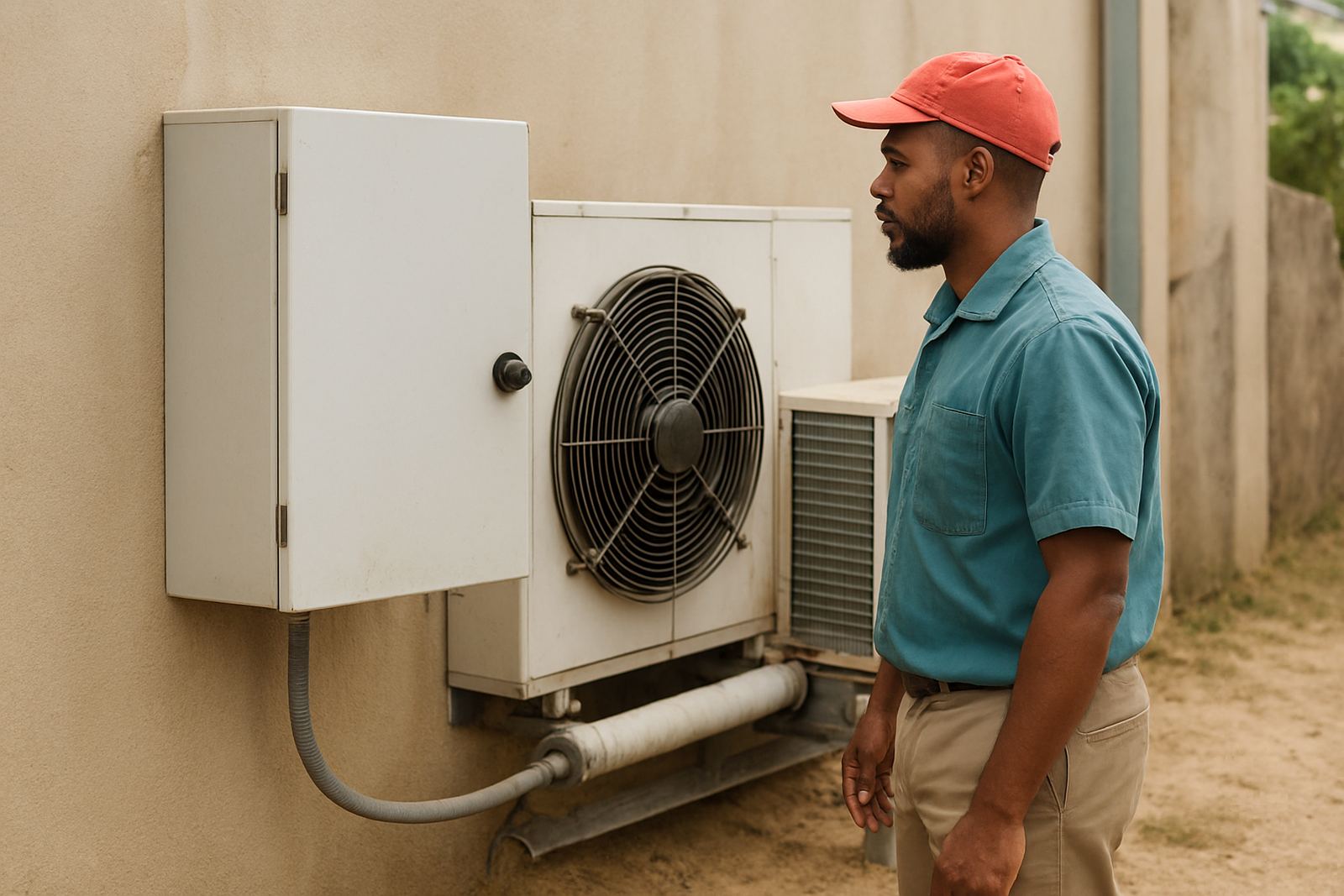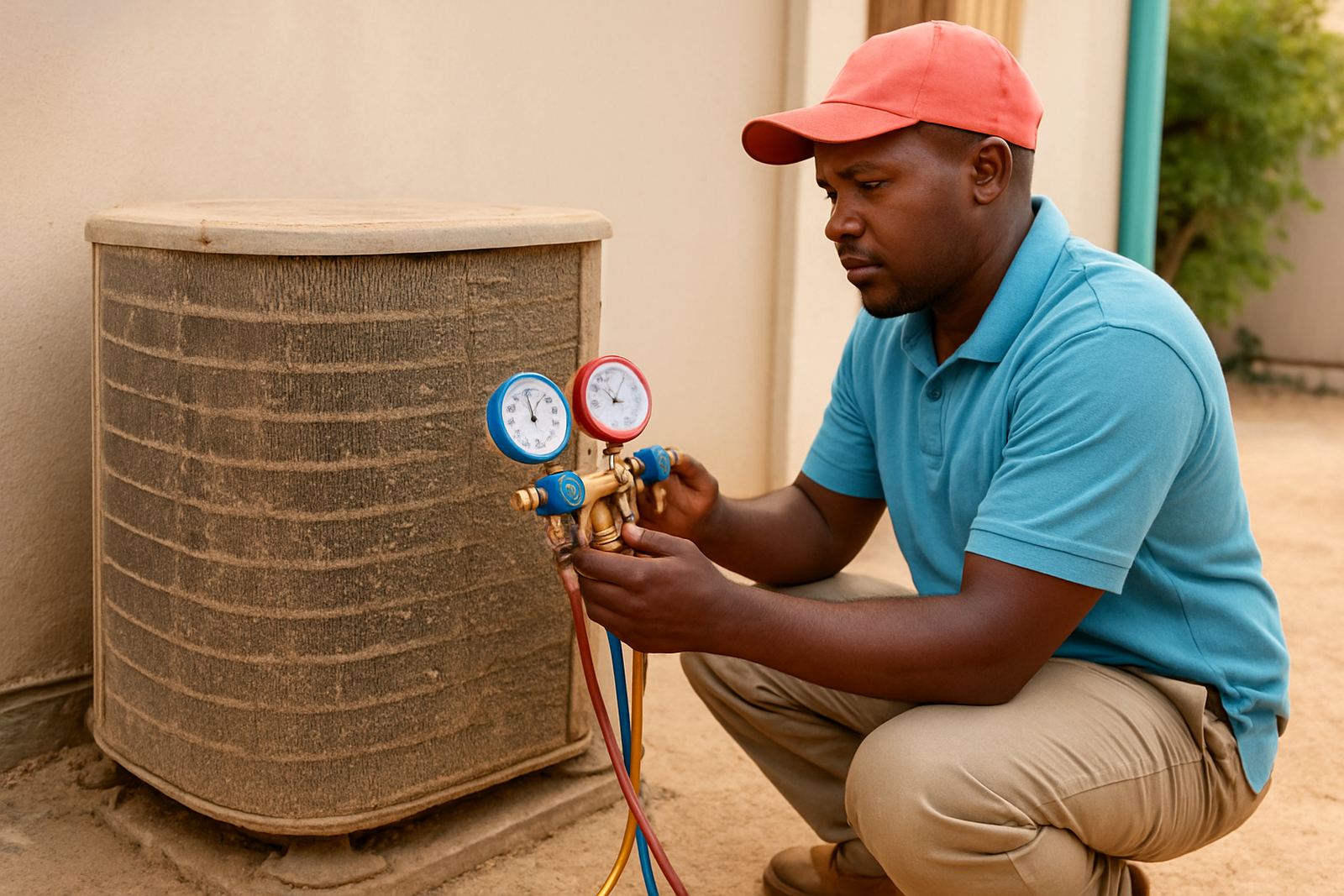
What a condenser is meant to do
The condenser is the part that gets rid of heat, so the refrigerant can keep moving through the system and pull temperature down where it counts. In a cold room, freezer room, display chiller or packaged air-conditioner, that heat rejection step is as important as the compressor itself. If the coil is clear, air moves freely across it and the refrigerant can condense at the right pressure.
When dust, grease, fluff and salt build up on the fins, the coil cannot dump heat properly. The fan then keeps trying to force air through a tighter and tighter blockage. On the KZN coast, especially near the highway and in areas with sea air, coils get dirty faster than many owners expect. A site in Glen Anil might see a different pattern to a bakery in Umhlanga or a small warehouse in Pinetown, but the result is the same: the system starts fighting itself.
How a dirty coil hits running costs
Once a condenser is clogged, the compressor has to run at a higher discharge pressure. That means more amps, longer run times and more wear on electrical parts. The machine can still look like it is working, yet the power meter tells another story. For businesses with cold storage or long trading hours, that extra draw shows up very quickly on the account.
We often see owners focus on gas leaks or thermostat settings first, but a dirty condenser is often the cheaper problem to fix and the one that gets ignored longest. In summer, when ambient temperatures climb and humidity stays high, the pressure rise can be enough to push a unit outside its comfortable range. Then the system cycles more often and still does not reach set point.
- Higher current draw on compressors and fan motors
- Longer running time to reach the same temperature
- More start-stop cycling on overloaded equipment
- Higher electricity use during peak trading periods
Pressure, temperature and why faults start stacking up
Dirty condensers do not only cost money, they change the whole operating picture of the plant. Head pressure climbs, discharge temperatures rise and the compressor runs hotter than it should. Oil breaks down faster at higher temperatures and that affects lubrication inside the system. Once that starts, small faults can stack up: a stressed contactor, a tripping overload, a fan motor that works too hard, or a high-pressure cut-out that keeps stopping the unit.
On refrigeration systems, poor heat rejection can also affect product temperature. A freezer room that should sit stable may start drifting, especially during load shedding when the recovery time is already tight. In a display chiller, the case temperature can rise just enough to affect shelf life and product quality. That is where a dirty condenser becomes a business risk, not just a maintenance issue.
- High head pressure trips
- Compressor overheating
- Reduced cooling capacity
- Short cycling and unstable temperatures
Durban conditions make clogging worse
Durban sites deal with more than ordinary dust. Coastal humidity carries fine salt that sticks to fins, and when that mixes with airborne grease from kitchens or food prep areas, it forms a film that is hard to shift. Warehouses near busy roads pick up soot and loose dust, while retail sites can collect fluff from packaging, cardboard and cleaning activity. If the condenser sits in a tight plant room or against a wall with poor airflow, the problem gets worse.
A service team working between Ballito and the South Coast sees a lot of the same pattern. Systems that are fine in winter can start struggling by late spring once the first hot spells arrive. Add municipal power interruptions, and equipment that already runs hot has a much smaller margin for error. One missed service can turn into a breakdown call-out at the worst possible time.
Sites near the coast should also watch for corrosion on coil fins and brackets. Once the fins start closing up from corrosion and dirt, cleaning gets less effective and pressure issues return faster.
Signs the condenser needs attention now
There are warning signs before a complete breakdown. Staff often notice that the unit sounds different, runs longer or struggles to pull down after a door opening. On air-conditioning, the indoor area may still feel cool but not cold enough. On refrigeration, product temperatures may drift, and the compressor may seem to stay on nearly all the time.
These are the signs we tell site managers to watch for, especially where equipment is under load every day:
- Higher than normal power bills with no change in usage
- Warm air blowing from the condenser section
- Frequent high-pressure trips or warning lights
- Ice formation elsewhere in the system while the condenser is dirty
- Fans running flat out but little cooling improvement
- Oil staining or visible dirt packed between fins
If the system has to be restarted after every trip, do not keep pushing it. That only adds strain. A quick inspection can tell whether the issue is cleaning, airflow, fan performance or a deeper refrigeration fault.
Practical cleaning and maintenance that works
Cleaning a condenser properly is not just a quick rinse. It starts with isolating the equipment, checking the coil condition and choosing the right cleaning method for the dirt load and coil type. Some coils need a careful wash from the airflow side out, while others need debris removed first so the fins are not bent further. Electrical parts must be protected, and the drain path checked while the unit is open.
For commercial and industrial sites, planned maintenance should include condenser checks on a set schedule, not only when something fails. That matters for cold rooms, freezer rooms, display chillers and air-conditioning systems that run through long trading hours. Good maintenance also means checking fan condition, motor amperage, contactors, pressure controls and the overall airflow around the unit.
- Keep at least the minimum clear space around the condenser
- Remove packaging, weeds and stored stock from air intake areas
- Wash coils before peak summer demand
- Log head pressures and temperatures so drift is easy to spot
- Follow up after load shedding, since restart stress can hide new faults
A Durban example from the coast
We recently attended a site in Durban North where a small distribution store was dealing with repeated high-pressure trips on a cold room plant. The owner thought the compressor was nearing the end, but the real issue was a condenser packed with fine dust, salt and a layer of grease from nearby prep activity. The coil looked only mildly dirty from the outside, yet the fin spacing was almost blocked.
After cleaning, checking fan current and confirming the controls were sound, the head pressure dropped back into range and the unit pulled down properly again. Power use also settled. The lesson was simple: when a condenser cannot reject heat, the whole system pays for it. Many breakdowns on the coast start with this one overlooked part, then spread into bigger costs if left too long.
For businesses in Glen Anil, Umhlanga, Pinetown, Ballito and along the South Coast, regular condenser care is one of the easiest ways to protect refrigeration and air-conditioning equipment. It helps keep temperatures steady, limits call-outs and gives compressors a better chance of lasting their full service life.