Why roof-mounted units struggle on Durban summer days
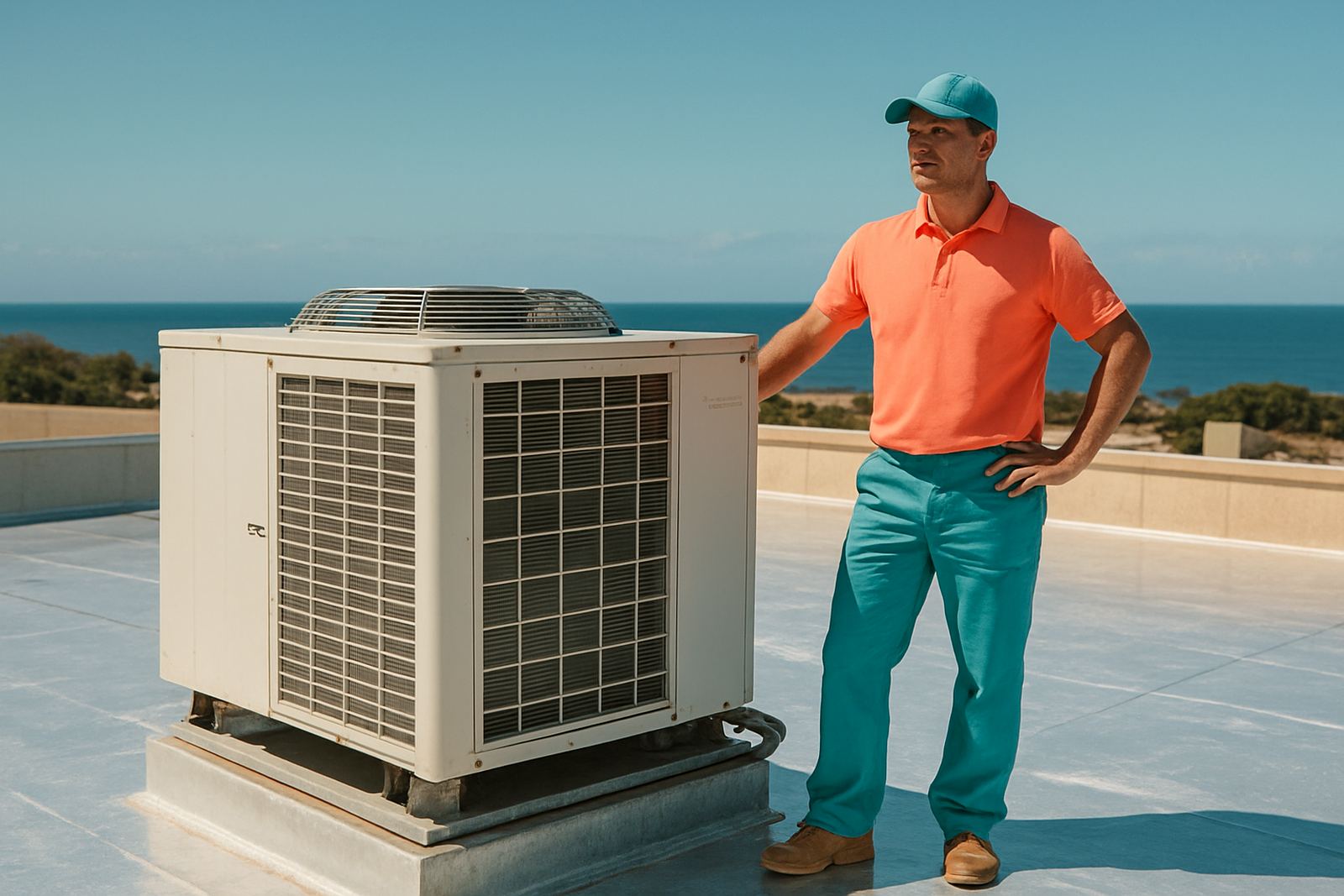
A roof unit sits in the worst part of the building for summer performance. It takes full sun, absorbs heat from the roof slab, and then tries to reject more heat into already hot air. In Durban and along the coast that air is often humid as well, so the condenser has less help getting rid of heat.
When the ambient temperature climbs, the unit does not cool the same amount for the same effort. The compressor runs longer, discharge temperatures rise and the whole system starts to work outside its comfort zone. On a Glen Anil warehouse roof we often see units running flat out by 10am on a December day, then tripping later in the afternoon when the heat builds up under the plant.
- Higher ambient air reduces condenser efficiency
- Direct sun heats the casing and pipework
- Hot roof surfaces add extra load from below
- Salt air near the coast can speed up coil fouling
What the condenser is fighting up there
The condenser needs cool moving air to dump heat from the refrigerant. If the coil is clogged with dust, fluff or salt film, the unit cannot reject heat properly. The pressure rises, the compressor draws more current and the system may still struggle to hold temperature in the store room or sales area.
On the KZN coast, fine salt mist gets pulled into the coil fins and starts building a sticky layer. Add paper dust from packaging, leaves from nearby trees, and a bit of roof dirt after windy weather, and the air path closes up faster than many owners expect. A unit that looked fine in May can be in trouble by late January if no one has cleaned it properly.
We also see airflow issues from badly placed services around the unit. If there are boxes, building materials or parapet walls too close by, the hot discharge air gets pulled back into the coil. That recirculation means the unit keeps breathing its own hot air, which is expensive and hard on components.
Warning signs your roof unit is heat stressed
Heat stress usually shows itself before a full breakdown. The warning signs are small at first, then they get harder to ignore. Staff may only notice that a cold room takes longer to pull down after deliveries, or that a display chiller is no longer holding product temperature by afternoon.
- Longer running times than usual
- Higher electricity bills with no change in usage
- Warm discharge air around the unit for long periods
- Frequent trips on overload or high-pressure protection
- Ice forming in odd places or on suction lines
- Noise changes from compressors, fans or contactors
If a unit is short cycling during peak heat, or if the condenser fan sounds strained, that is not something to leave for later. In summer, small faults turn into call-outs quickly because the equipment has no spare capacity to hide behind. One missed service can mean spoiled stock, unhappy tenants or a site that has to close a cold chain area for repairs.
What a proper pre-summer service should cover
A quick visual check is not enough for roof equipment that has to survive a Durban summer. A proper service should deal with heat transfer, electrical load and control stability before the hottest weeks arrive. For commercial and industrial sites, this is the difference between a unit that copes and one that limps through the season.
Good maintenance work should include cleaning the condenser coil, checking fan motors and blades, inspecting contactors and terminals for heat damage, and confirming that the refrigerant circuit is operating within spec. It also helps to look at the installation layout, because sometimes the problem is not inside the unit at all but in the way the roof area is set up.
- Wash condenser coils and straighten damaged fins
- Check refrigerant pressures and operating temperatures
- Test electrical connections, overloads and controls
- Inspect fan operation and airflow direction
- Check drain paths and water damage around the unit
- Verify temperature logging and alarm response on critical sites
Load shedding and restart problems after a hot shutdown
Summer roof units do not only suffer while they are running. When power cuts happen and the building heats up, the restart can be just as hard on the system. After a long outage, the unit may come back into a roof space that is far hotter than normal, with stored heat in the slab and no help from night cooling.
That restart period puts extra strain on compressors and contactors. If the system has weak capacitors, dirty coils or low gas charge, it can fail at the worst moment. Sites with cold rooms or freezer rooms need a clear restart plan, especially where product quality depends on temperature staying within range after an outage.
For this reason, many Durban operators now ask for planned maintenance and breakdown cover together. It gives them someone to call when the unit will not pull down after load shedding, and it means the plant has been checked before summer starts. That is a practical way to manage risk rather than waiting for a warm room full of stock.
A Durban example from a roof unit that was running too hot
At a retail site in Durban North, a roof-mounted package unit started taking longer to cool the sales area every afternoon. The manager noticed warmer air near the counters and the unit was cutting out later than normal on hot days. The first thought was a refrigerant fault, but the real issue was a blocked coil, poor airflow around the unit and heat reflected off a nearby roof surface.
After the coil was cleaned, the fan operation checked and the roof area cleared, the unit started rejecting heat properly again. Temperatures settled, the compressor stopped running so long, and the site reduced the nuisance trips that had been happening during peak afternoon heat. The lesson was simple: on a summer roof, the installation conditions matter almost as much as the machine itself.
That is why we always look at the full picture. Equipment, roof exposure, maintenance history, electrical condition and operating pattern all affect how a unit behaves in January and February. A good diagnosis saves time and stops people replacing parts that were never the main problem.
How Coastal Cooling Systems helps before summer peaks
Coastal Cooling Systems works across Glen Anil, Durban North, Umhlanga, Pinetown, Ballito and the South Coast on commercial refrigeration and air-conditioning. For roof units, the priority is simple: keep condenser efficiency up, reduce downtime and catch faults before they interrupt trading or spoil product.
We handle planned maintenance, breakdown call-outs, leak detection, electrical fault finding, temperature logging and compliance checks for busy sites. If you run a cold room, freezer room, display chiller or commercial air-conditioning plant, summer is the time to get the roof equipment checked while there is still room to fix problems properly.
Roof units in summer are not forgiving. If the heat is already building, the best time to deal with the plant is before the first heatwave, not after the first failed start-up.