Why cold room lighting needs its own plan
Cold rooms are not the same as a normal storeroom. Temperatures stay low, doors open and close all day, and condensation builds up around fittings, seals and cable entries. If the light is too weak or poorly placed, staff struggle to read labels, spot damaged stock or clean properly. That creates waste and slows down the whole operation.
Good lighting also matters for compliance and food handling. In butcheries, restaurants, bakeries and distribution stores around Durban North, Umhlanga and Pinetown, staff often need to check dates, count cartons and inspect product conditions quickly. A dark corner or flickering tube can lead to mistakes. In a cold room, every extra service call costs time and money, so the fitting choice should favour long life and simple access.
Choose fittings that suit moisture and temperature
The first rule is simple: use fittings made for cold, damp spaces. Standard fittings can fail early when exposed to low temperatures, repeated door openings and moisture on the ceiling. Look for enclosed fittings with proper sealing, solid fixings and lamps or modules suited to refrigeration conditions. If the room gets washed down, the light should tolerate frequent cleaning too.
In coastal areas such as Ballito and the South Coast, salt in the air can shorten the life of metal parts and poor quality connectors. That is why the mounting hardware, brackets and screws matter just as much as the light source itself. A cheap fitting might save money at first, but if it rusts or trips the supply after a few months, it becomes expensive very quickly.
- Use sealed fittings with suitable ingress protection for damp areas.
- Keep wiring joints outside the cold room where possible.
- Choose corrosion resistant hardware for coastal conditions.
- Allow enough clearance for cleaning and future replacement.
Brightness and placement should make the room easier to work in
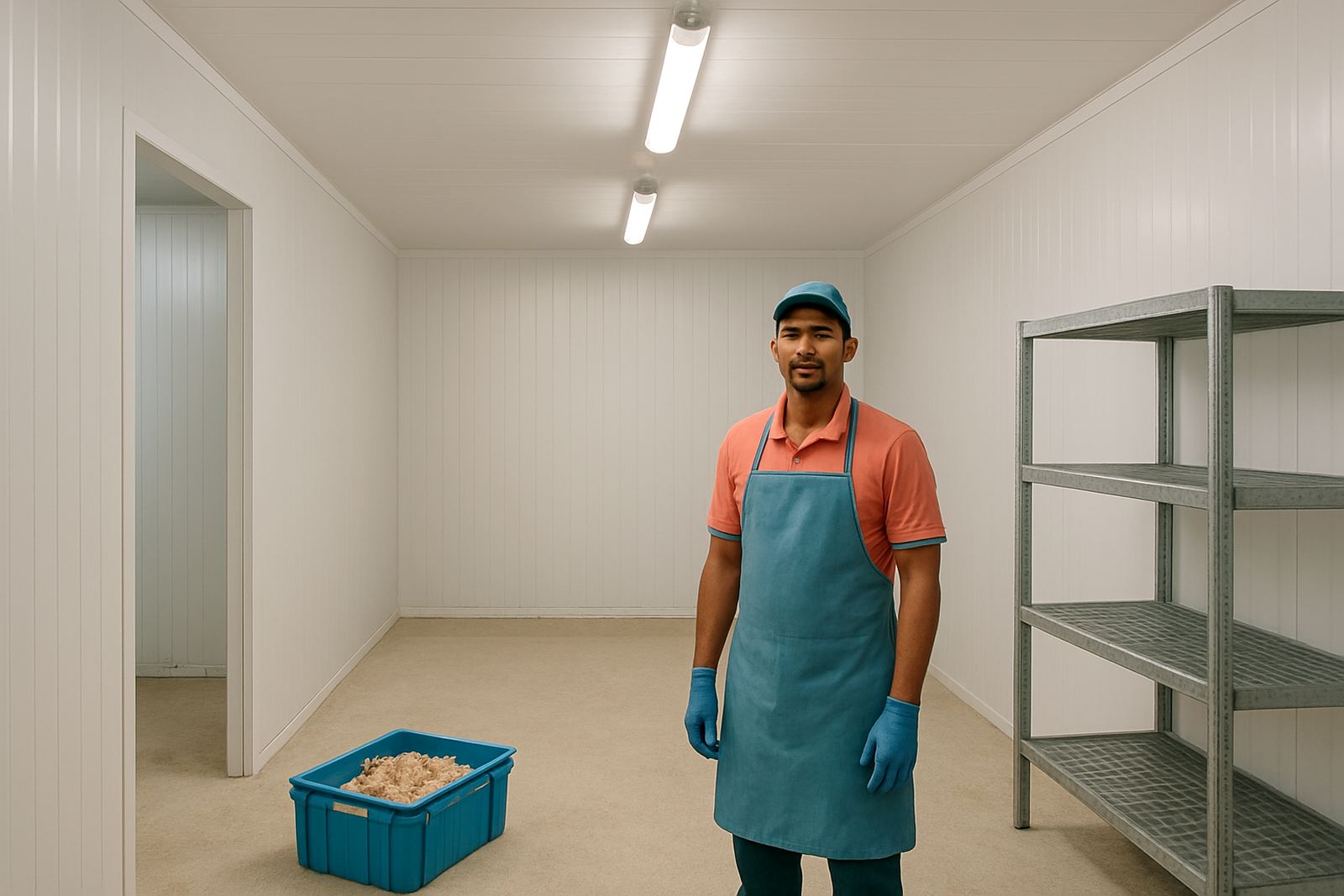
Cold room lighting should give even cover without harsh shadows. One bright point in the middle is not enough if staff still cannot see shelves, evaporator coils or floor edges. Light needs to reach the door area, aisle ends and loading points, especially where boxes are stacked high. The aim is practical visibility, not glare.
Placement also affects safety. A fitting that sits too close to the ceiling can cast heavy shadows from piping or the evaporator unit. If it is too low, it can be damaged by trolleys, crates or moving stock. In larger freezer rooms, it helps to plan lighting with the layout of racks and walkways in mind. That way the team can see what they are doing without wasting energy lighting unused space.
- Check for dark corners behind shelving and near the door curtain.
- Keep lights clear of stacking lines and moving equipment.
- Use multiple smaller fittings instead of one bright source in a large room.
- Test visibility from the working height, not just from the doorway.
LED lighting can lower maintenance, but the details matter
LED fittings are often a better choice for cold rooms because they use less power and can last longer than older lamp types. That is useful when a business is running refrigeration and backup power at the same time. During load-shedding, every watt counts. A lower draw on the electrical system can also reduce strain on generators and battery backup arrangements.
Even so, not every LED fitting is suitable for refrigeration. The driver, lens, seals and cable entry all need to handle cold conditions. Poor quality components may work well for a while and then fail when moisture or temperature changes start to affect them. For a site in Glen Anil or Durban North, where service access may be tight and operations run late, fewer lamp changes mean less disruption to stock handling.
Maintenance becomes easier when the lighting is service friendly
When lighting is designed properly, maintenance teams can work faster and with less downtime. That starts with fittings that are easy to reach, clean and replace. If a lamp needs special tools or requires the room to be emptied, even a small fault becomes a major problem. In cold rooms that carry fresh produce, meat or dairy, there is often no room for delay.
A practical maintenance plan should include checking seals, brackets, lenses and electrical connections during routine refrigeration inspections. Dust, frost and condensation can all affect performance over time. If the light flickers or takes time to start, that may point to an electrical fault, water ingress or a failing component. It is better to catch that early than wait for a complete outage.
- Inspect fittings during planned maintenance visits.
- Clean lenses and covers before buildup reduces output.
- Test emergency lighting where the room forms part of an escape route.
- Record faults and repeat failures so patterns can be traced.
A Durban example: getting it right in a busy cold store
One practical case comes from a food business on the Durban north coast that needed better visibility in a multi use cold room used for stock holding and picking. Staff were spending too long checking labels and reporting damaged cartons, especially during evening shifts. The room was also taking moisture and had a few fittings that rusted early because of the coastal air.
The solution was not just brighter lights. The fittings were repositioned to cover the aisle ends and the door area, the wiring entries were improved, and corrosion prone parts were replaced with better suited hardware. After that, staff could see the shelving clearly, cleaning became easier and maintenance calls dropped. That is the point of cold room lighting done properly. It supports the refrigeration system instead of becoming another fault to chase.
For businesses in Ballito, Umhlanga, Pinetown and the South Coast, the same approach applies. Match the lighting to the room conditions, the stock layout and the maintenance access. If those three things work together, the room is safer and cheaper to run.