Why the coast punishes outdoor equipment
Along the Durban, Umhlanga, Ballito and South Coast belt, salt sits in the air and settles on metal, fins, brackets, electrical terminals and casing panels. Add humidity, summer heat and the odd heavy rain, and you get a mix that speeds up rust, surface pitting and electrical trouble.
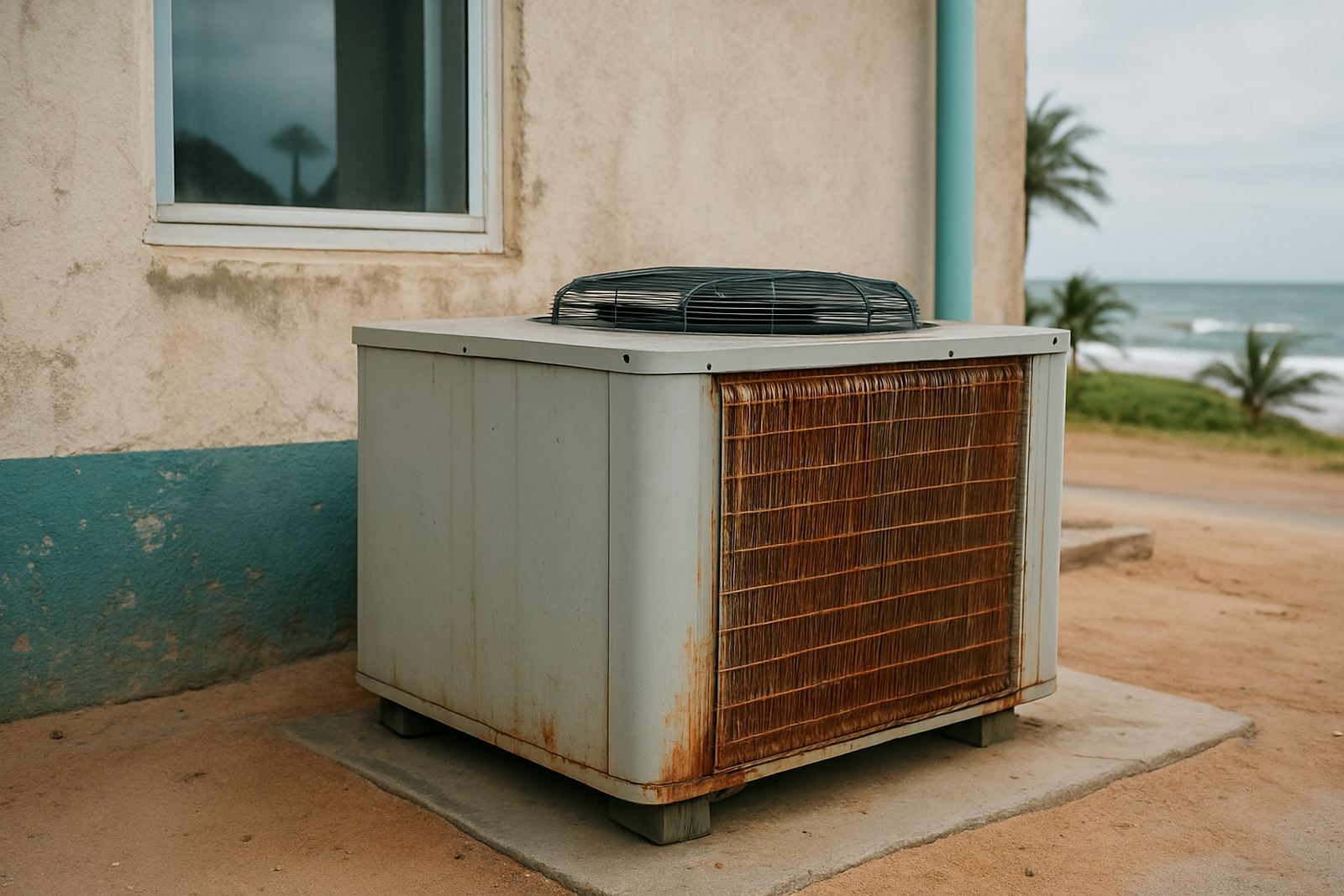
We see it most on condenser coils, fan blades, fasteners, support frames and isolators. Once the protective coating is damaged, corrosion starts at the weak point and spreads. A unit can still run for a while, but the decline is usually quiet at first: higher running costs, noisier fans, poor heat rejection and, later, full component failure.
On the KZN coast, even equipment that is not right on the beach can be affected. A plant room in Glen Anil or Durban North may be inland a bit, but sea air still travels. Rooftop units on hotels, retail centres and factories are often the first to show it because they take the full weather.
What salt damage looks like on site
Corrosion does not always arrive as obvious red rust. On refrigeration and air-conditioning systems, the early signs are often small. A technician may notice powdery deposits on coil edges, paint lifting on panels, green or white staining around terminals, or a drain tray starting to pit. If left too long, the damage can affect controls, contactors and sensor readings too.
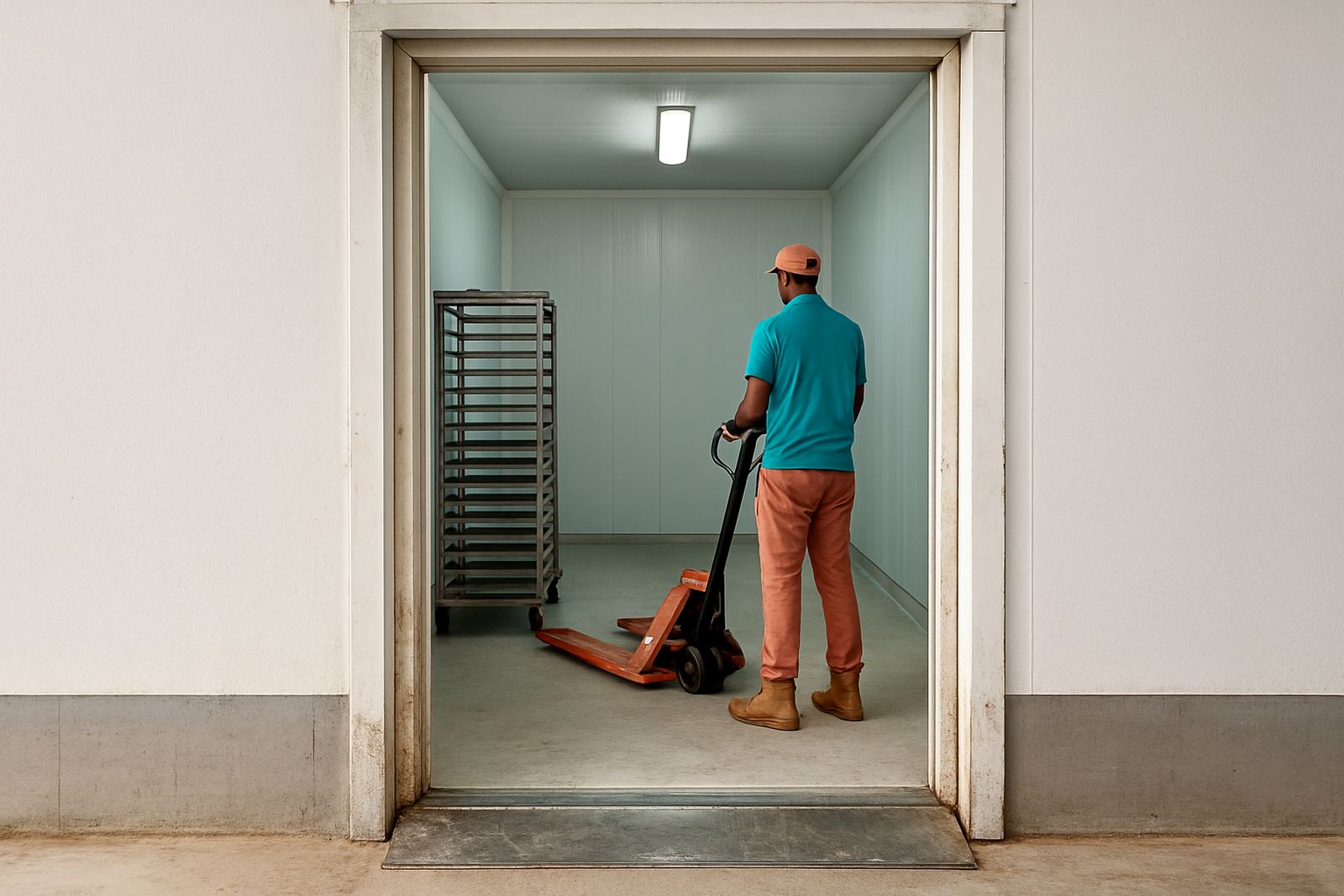
In cold rooms and freezer rooms, corrosion can also create hygiene and maintenance problems. Damaged panels hold dirt, fasteners seize up and access becomes harder when something needs urgent attention. For display chillers, poor airflow caused by dirty or corroded coils can push temperatures out of range and affect product quality.
- Rust on brackets, bolts and outdoor casings
- White salt residue on coils and electrical boxes
- Fan motors running hotter than normal
- Breaker trips after rain or heavy mist
- Poor cooling, longer run times and rising power use
A Durban example from the coast
A retail site in Durban North had three rooftop air-conditioning units and a small display chiller bank near the loading area. The plant was running, but the manager kept seeing repeated faults after wet weather. On inspection, the outdoor coils were clogged with salt build-up and road grime, and several terminal connections had started to oxidise. One condenser fan blade had surface damage from constant corrosion.
After cleaning, electrical tightening, corrosion treatment and a change to the service schedule, the same site stopped having those nuisance call-outs. The key was not a miracle fix. It was more regular attention, faster response after storms and a realistic view of what the coastal environment does to equipment.
That is the point for any business from Pinetown to Ballito. If the equipment lives outside, or near an open loading area, the weather is part of the maintenance plan whether you like it or not.
Maintenance that actually helps
Good coastal maintenance is practical and regular. You are trying to remove salt before it settles, spot wear early and keep electrical parts dry and secure. For commercial refrigeration and air-conditioning, that means scheduled visits, not just waiting for a failure on a hot afternoon or during load-shedding when the site is already under pressure.
We recommend a maintenance plan that matches the exposure of the site. A building a few streets from the beachfront needs more frequent attention than a sheltered inland site. Units on rooftops, near spray from wash bays, or close to industrial fumes need even more care because corrosion moves faster there.
- Wash outdoor coils with the correct pressure and cleaning method
- Check electrical terminals for heat damage and oxidation
- Inspect brackets, bolts and supports for early rust
- Test drain lines, trays and insulation for moisture damage
- Record temperatures, pressures and running current
- Replace worn seals and damaged anti-vibration mounts
What to do before a breakdown happens
Once corrosion reaches electrical connections or structural parts, repair costs climb quickly. It is usually cheaper to catch the problem during planned maintenance than to wait for a shutdown, product loss or emergency call-out. That matters for cold storage, freezer rooms and display chillers where temperature control is non-negotiable.
Planned checks should also include leak detection and compliance checks. Coastal sites often run harder because the equipment fights the environment every day, so a small refrigerant leak or a weak connection can become a bigger problem much faster than it would inland. If you are logging temperatures for food safety or audit purposes, keep the records tidy and consistent. When there is a dispute about product condition, the data helps.
For businesses in Umhlanga, Glen Anil and the South Coast, it also helps to review access around the plant. Salt and wind are worse when equipment is boxed in, blocked by stored material or difficult to reach for servicing.
How to protect equipment in the KZN climate
There is no single fix for coastal corrosion, but sensible choices make a difference. It starts with correct installation, enough airflow around the unit and proper support off the ground. From there, it is about keeping the system clean, checking for early wear and acting before the issue spreads.
Sites that take maintenance seriously generally get more years out of their equipment and fewer emergency visits. That means less disruption for staff, lower risk to stock and fewer last-minute repairs when the weather is bad or the power has been unstable.
- Keep the outdoor area free of weeds, packaging and standing water
- Use scheduled inspections after heavy rain and coastal storms
- Touch up damaged protective coating early
- Make sure drain routes stay clear and dry
- Review service intervals during summer and the wet season
Local support for coastal refrigeration and air-conditioning
Coastal Cooling Systems works from Glen Anil in Durban and supports sites across Durban North, Umhlanga, Pinetown, Ballito and the South Coast. We handle cold rooms, freezer rooms, display chillers and commercial and industrial air-conditioning, with planned maintenance, breakdown call-outs, leak detection, electrical fault finding and temperature logging.
For coastal sites, the aim is simple: keep equipment running, keep corrosion under control and avoid the kind of failure that starts with one rusted fitting and ends with a ruined shift. If your plant is on the coast, it needs more than a once-off service. It needs a schedule that suits the salt air and the way your business actually operates.