What each system is meant to do
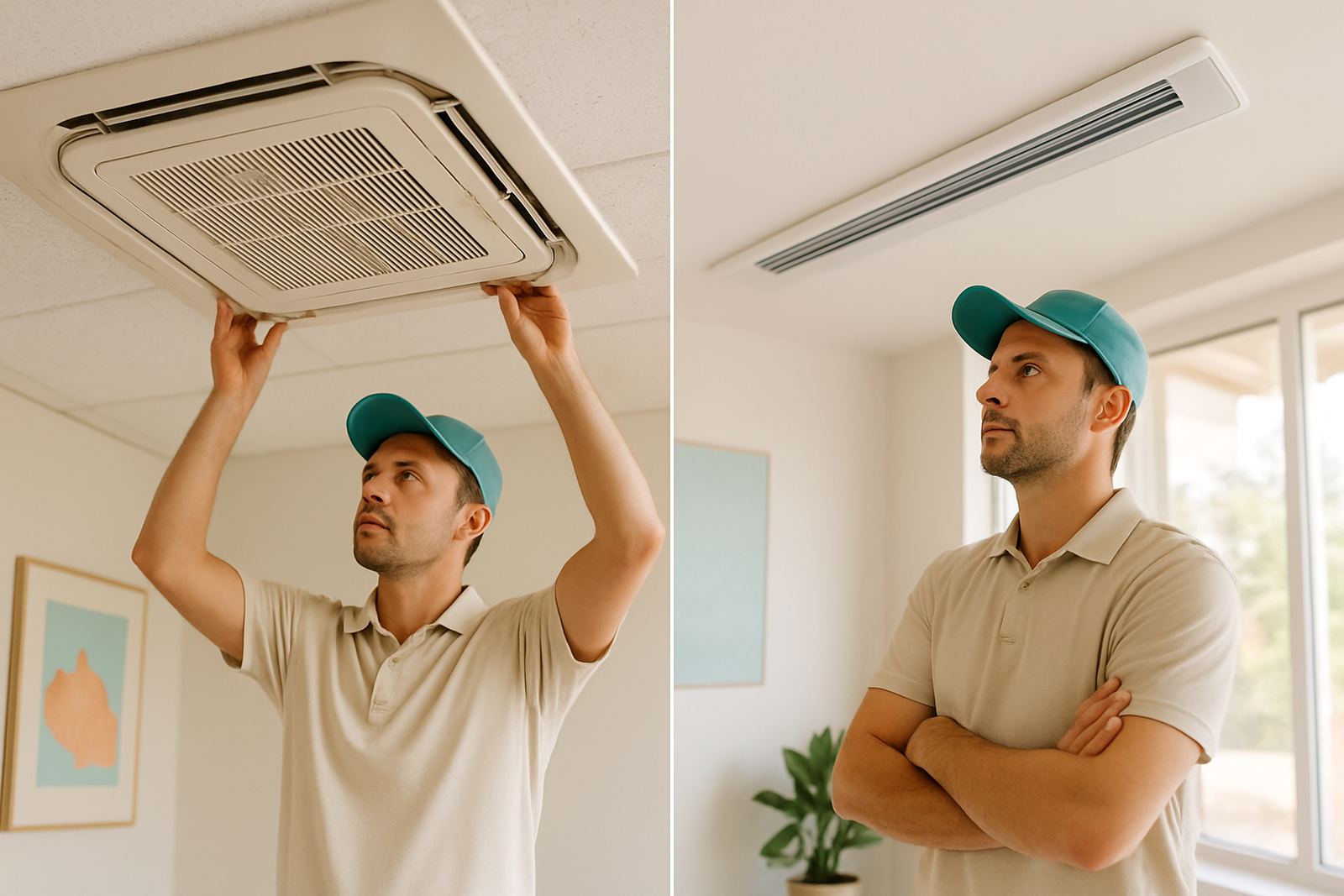
Cassette units and ducted systems both cool commercial spaces, yet they do it in different ways. A cassette unit sits in the ceiling and blows air in several directions from one visible grille, which makes it popular in offices, small shops and meeting rooms where you want even cooling without lots of wall units. A ducted system hides the indoor unit above the ceiling and sends air through ducts to one or more supply points, so the room can look cleaner and the air can be directed more carefully.
In Durban, humidity is a big factor. A system that cools the room but leaves it clammy will not keep staff or customers comfortable for long. That is why the space, ceiling height, insulation and the number of people inside all matter just as much as the equipment type. A 60 m² showroom in Umhlanga with glass frontage will need a very different setup to a back office in Glen Anil with solid walls and less sun on the building.
- Cassette units suit open rooms with a suspended ceiling and regular foot traffic.
- Ducted systems suit spaces that need a cleaner finish or several air delivery points.
- Both need proper drainage, electrical supply and access for maintenance.
Where cassette units make the most sense
Cassette systems are often the practical choice when you want quick installation and good distribution in one area. They work well in retail floors, salons, reception areas and medium sized offices where the ceiling void is limited. Because the air comes from the centre and spreads in several directions, they can feel balanced if the room is mostly open plan.
They also tend to be easier to service because the indoor unit is visible from below once the panel is open. That can help when you are running planned maintenance on a busy site in Durban North or Ballito and need faster access between trading hours. If your ceiling height is standard and the layout is simple, a cassette can do the job without much fuss.
- Good for open plan layouts and regular shaped rooms.
- Useful where fast access for servicing is important.
- Best where a visible ceiling grille is acceptable.
Where ducted systems earn their keep
Ducted air-conditioning becomes more attractive when appearance matters, or when the room needs air delivered in a few specific places. This is common in boardrooms, restaurants, private offices and upper level spaces where you do not want a visible indoor unit in the main room. The system can be arranged so that supply grilles sit discreetly in the ceiling, while the main equipment stays above the ceiling line.
For larger commercial premises, ducted systems can also help with zoning. That means different parts of the building can be cooled to suit how they are used. A front-facing office with afternoon sun may need more cooling than an internal passage or storeroom, and ducting can be planned around that. It does take more careful design though, because poor duct sizing or bad balancing can leave some rooms too warm and others too cold.
If the ceiling void is tight, or there is little access for filters and duct work, a ducted system can become frustrating to maintain. That is where many owners make a choice based only on appearance and then run into trouble later. As a rule, the hidden system is only a good idea if the ceiling space can actually support it.
How Durban conditions change the decision
Along the KZN coast, equipment has to deal with salt in the air, heat in the afternoons and plenty of moisture. That affects both cassette and ducted systems. Corrosion on outdoor units, blocked drains and dirty filters are all common where the air is damp and the building is close to the sea. Load-shedding adds another layer, because systems that restart badly or lose settings can create complaints from staff and tenants.
In practice, the best choice is often the one that gives you simpler maintenance and fewer access issues. If technicians can reach the filters, drainage and indoor unit without removing half the ceiling, the system is more likely to stay in shape. Temperature logging, electrical fault finding and leak detection also matter more on the coast, since a small fault can turn into a warm room fast when the building is full and the doors keep opening.
- Check corrosion protection on outdoor components near the coast.
- Make sure condensate drains run freely and do not drip into ceiling boards.
- Allow for proper isolators and electrical protection if your site sees frequent outages.
Cost, maintenance and running efficiency
People often compare cassette and ducted systems only on purchase price, but that does not tell the full story. A cassette may be cheaper to install in a simple room, while ducted air-conditioning can cost less than adding several smaller units if the building is planned properly. The real cost is in the full life of the system: servicing, electricity use, breakdown call-outs and whether the layout changes later.
For a small office, one cassette might be enough. For a restaurant or a clinic, a ducted solution may give better control and less visual clutter. The wrong choice can lead to hotspots, noise complaints and higher power bills. On commercial jobs, a poor layout is usually more expensive than a correct one, even if the first quote looked lower.
Maintenance also needs to be part of the decision. Ducted systems can hide problems until performance drops, while cassette units may be more straightforward to inspect but still need regular coil cleaning, drain checks and filter service. Either way, planned maintenance is what keeps the system cooling properly after the first summer rush.
A Durban example that shows the difference
Take a mixed use office and showroom in Durban North with a front-facing display area, a few enclosed offices and a boardroom at the back. If the owner wants the showroom to look clean and uncluttered, ducted air-conditioning might suit the offices and boardroom better. The front showroom, where air turnover is more frequent and the layout is open, could work well with one carefully placed cassette unit. That sort of split approach is common when the building has different cooling needs in different rooms.
Now compare that with a Pinetown warehouse office that has a suspended ceiling, steady staff numbers and no strong design requirement. A cassette system may be the quicker, more affordable answer. It avoids long duct runs and still gives solid coverage for the space. The key is not forcing one type into every job. The best solution is the one that matches how the room is used, not just how it looks on paper.
We often see problems where a customer wanted a neat ceiling finish and ended up with poor airflow because there was no proper ceiling void or no access for maintenance. One site in particular had recurring drainage issues because the original installer tucked everything away too tightly. A small design adjustment at the start would have saved repeated call-outs later on, no question.
The practical way to choose
If you are weighing up cassette vs ducted, start with the building, not the equipment brochure. Ask how the room is used, how much ceiling space is available, where the sun hits the building and how easy it will be to service the system over time. If the answer is not clear, a site inspection and load assessment should come before any final decision.
For business owners in Glen Anil, Umhlanga, Ballito, Pinetown and the South Coast, the best outcome is usually the one that keeps people comfortable without creating maintenance headaches. A good contractor will talk through airflow, access, drainage, compliance and future changes to the building before recommending one system over the other. That way the air-conditioning works for the space, instead of the space having to adjust around the system.
- Choose cassette when the room is open, the ceiling is simple and service access is easy.
- Choose ducted when appearance, zoning or discreet supply points matter most.
- Always check maintenance access before signing off the final layout.