Why the unit needs space to breathe
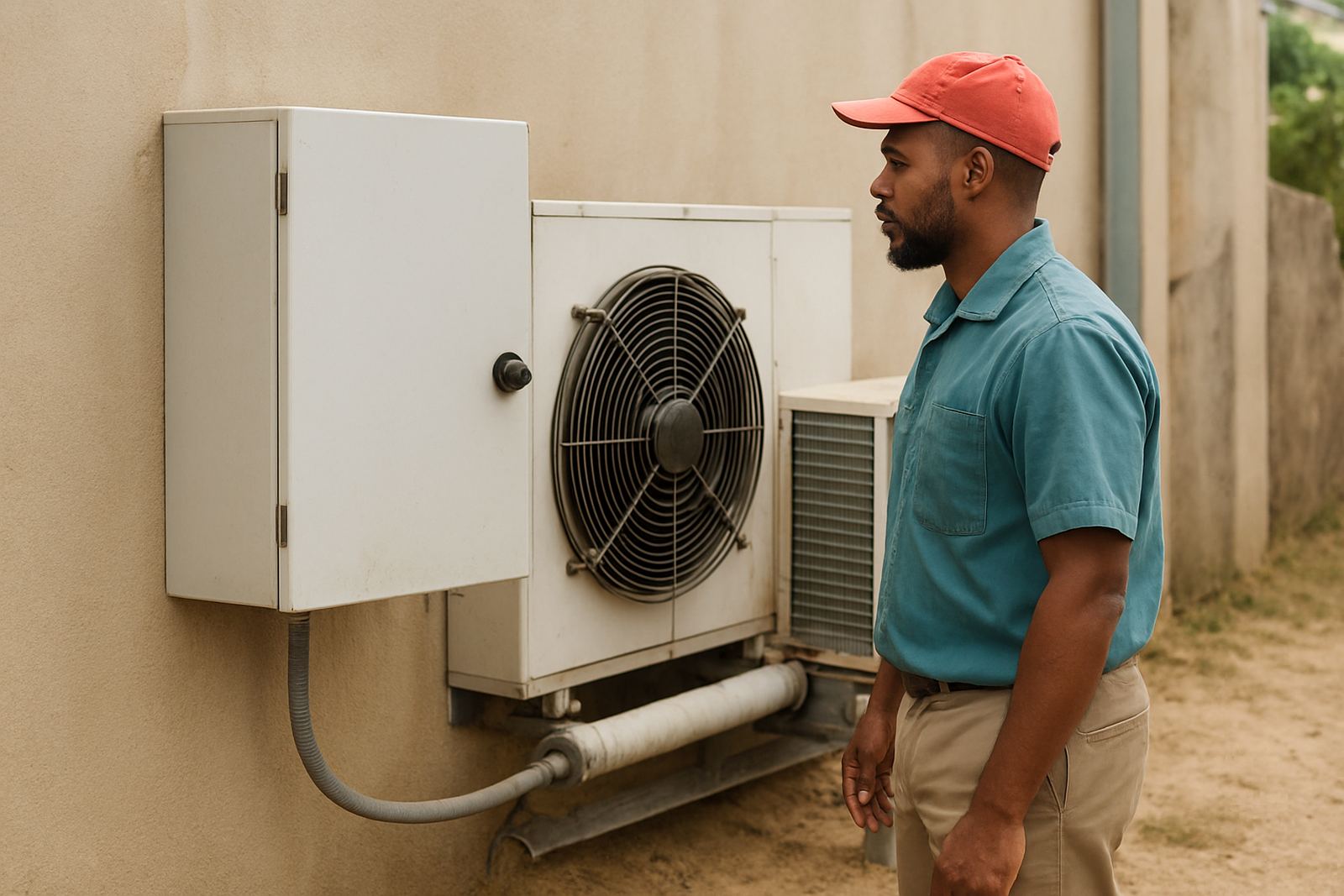
An outdoor unit is not just sitting there making noise. It is moving heat out of the building, and it needs enough free air to take in cooler air and throw out hot air without cycling it back again. If the unit is boxed in by walls, screens, rubbish bins or other equipment, the hot discharge air gets trapped and the condenser starts recirculating its own heat.
That means higher head pressure, longer run times and more strain on compressors, fans and electrical parts. On a warm Durban afternoon, especially inland or on a still day in Ballito or Pinetown, a small airflow problem can become a real performance issue very quickly.
- Hot air trapped behind the unit raises condensing temperature
- Fans pull against restricted airflow and use more power
- Cooling capacity drops even when gas charge is correct
- Compressor wear increases, which can lead to breakdowns
Clearances that matter in coastal and inland sites
There is no single spacing rule that fits every installation, because unit size, fan discharge direction and site layout all matter. Still, the basic principle is simple: leave enough room for air to move freely around the coil and for a technician to service the unit safely. At minimum, there should be clear space at the intake side, the discharge side and above the unit where hot air escapes.
On the KZN coast, salt air and humidity add another problem. If a unit is pushed into a tight corner, salt dust and moisture build up on the coil faster and cleaning becomes harder. In Glen Anil, Umhlanga and Durban North we often find units tucked against walls, under stairs, or beside security cages where the airflow looks fine from a distance but the unit is actually breathing badly.
- Keep the front and sides open for air intake
- Leave the top clear so hot air can escape freely
- Avoid placing the unit where two walls form a heat trap
- Allow enough access for coil cleaning and electrical checks
Signs that poor airflow is already causing trouble
When airflow is restricted, the system usually tells on itself before it fails completely. The indoor area may take longer to pull down to temperature, or a cold room may sit just a few degrees too warm when the weather is hot. You may also notice higher power bills, noisy fan operation and repeated trips on pressure or thermal protection.
Some faults are blamed on low refrigerant, but airflow should be checked first because the symptoms overlap. A condenser that cannot reject heat properly will often mimic a gas fault, and that leads to the wrong repair if the site is not inspected properly. We see this quite often on display chillers in shops and on freezer rooms with poor surrounding clearance.
- Longer pull down times after door openings
- Fans running continuously with little cooling gain
- Unusual compressor temperature or short cycling
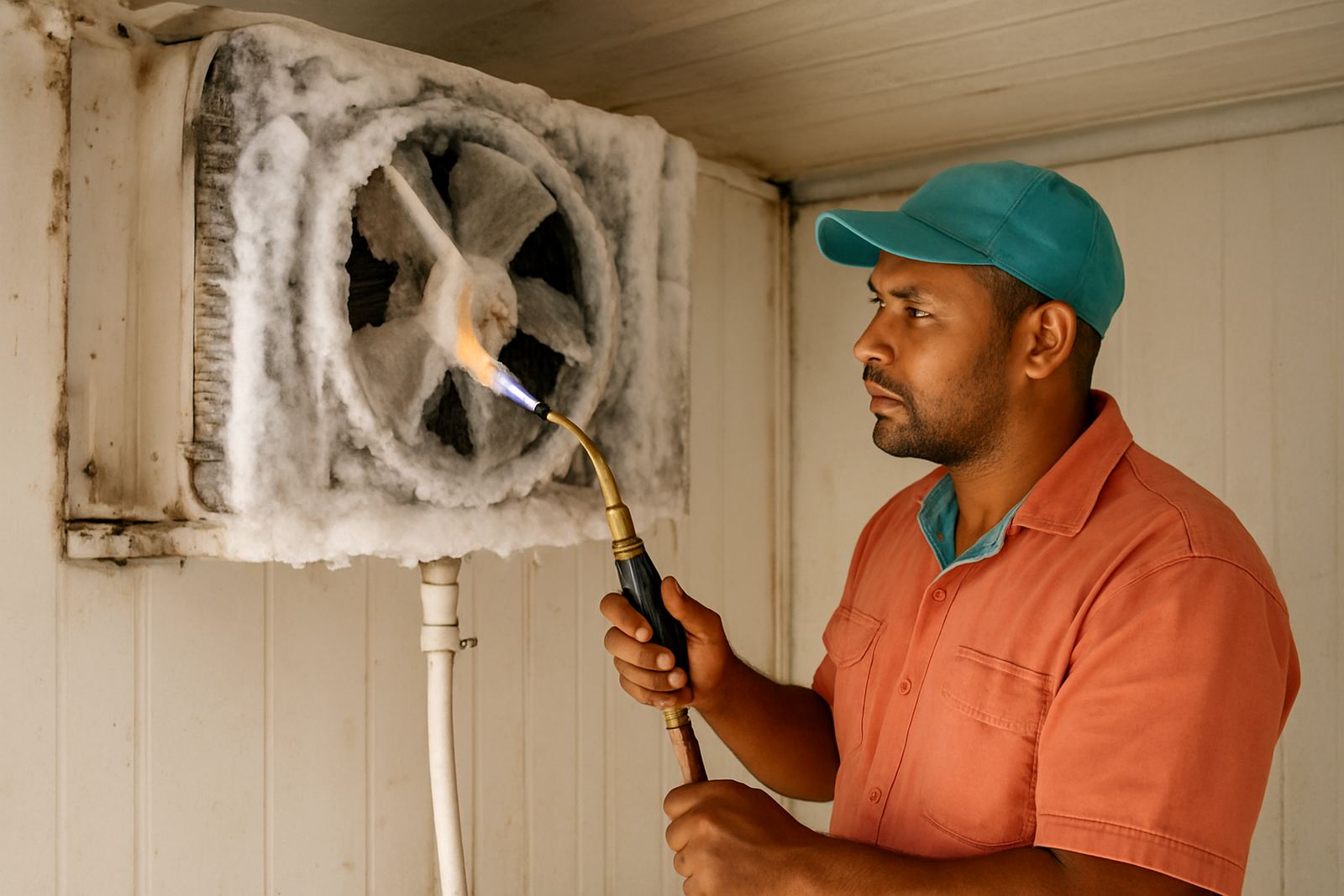
- Ice build-up or weak performance inside the room
What to avoid around the outdoor unit
Good airflow is not only about leaving empty space. It is also about what you put near the unit later on. People often store pallets, cardboard, cleaning chemicals, spare stock or refuse against the wall after the installation is complete. That turns a good setup into a poor one without anyone noticing. In commercial sites, even a new fence panel or a generator enclosure can change the airflow pattern more than expected.
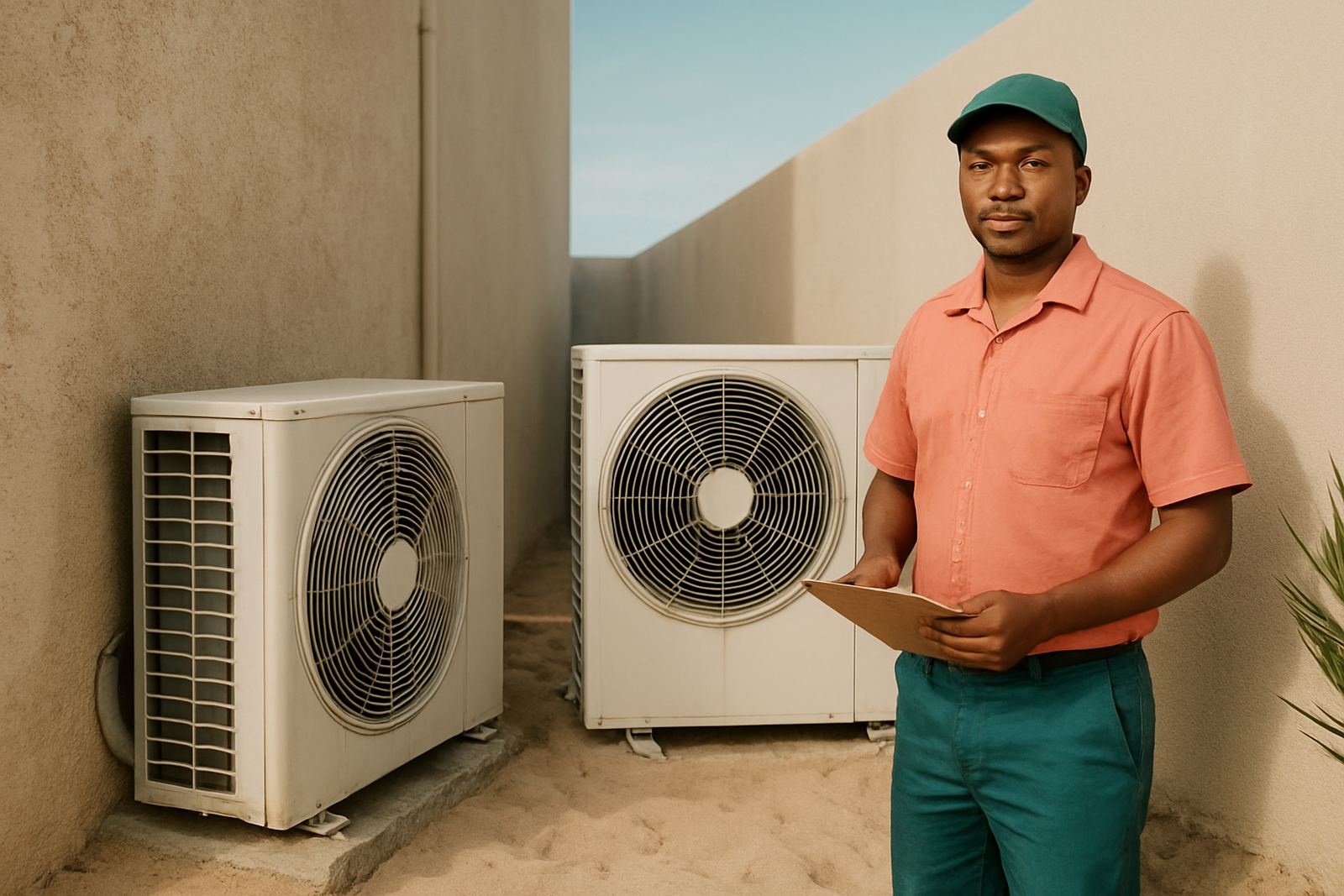
For industrial air-conditioning, the same rule applies around multiple units installed side by side. If they blow hot air at each other, they all run hotter. A neat row of condensers can still be a bad layout if there is no plan for intake and discharge direction. It is better to make room during the install than to fight a hot plant area later on.
- Do not store goods or waste against the unit
- Do not enclose the unit without proper ventilation openings
- Do not let vegetation grow into the coil area
- Do not place a roof or screen so low that it blocks discharge air
Why Durban heat and humidity make this worse
Durban weather is hard on refrigeration equipment. Warm, humid air already carries a heavy load, so the unit has to work harder to reject heat than it would in a cooler inland area. Add coastal corrosion, fine dust from nearby roads, and load-shedding starts and stops, and the system gets very little help from the environment.
During load-shedding, some sites restart with a surge of heat load because doors have been opened and products have warmed slightly. If the outdoor unit is also fighting poor airflow, the recovery time becomes longer and the product risk goes up. This is one reason planned maintenance matters, not only breakdown response. The plant has to be checked in real working conditions, not just when it is quiet.
A practical Glen Anil example from a busy site
At a mixed-use site in Glen Anil, a freezer room was holding temperature most days but struggling in the afternoons. The complaint sounded like a gas leak at first. On inspection, the condensing unit was fitted into a narrow service yard with a wall behind it and a storage cage only a short distance in front. The discharge air was bouncing back across the coil, so the unit was running hot and tripping more often than it should.
Once the clutter was cleared, the surrounding space opened up and the coil was cleaned properly, the system settled down. The result was not magic, just better airflow and less strain on the compressor. Small changes around the unit can make a proper difference, especially on cold rooms and freezer rooms that run for long hours.
For sites across Durban North, Pinetown, Ballito and the South Coast, a quick airflow check during maintenance can prevent a bigger repair later. If the unit is already boxed in, the fix may involve repositioning, adding proper ventilation or changing the way nearby structures direct heat.