Why the Server Room Needed Its Own Cooling
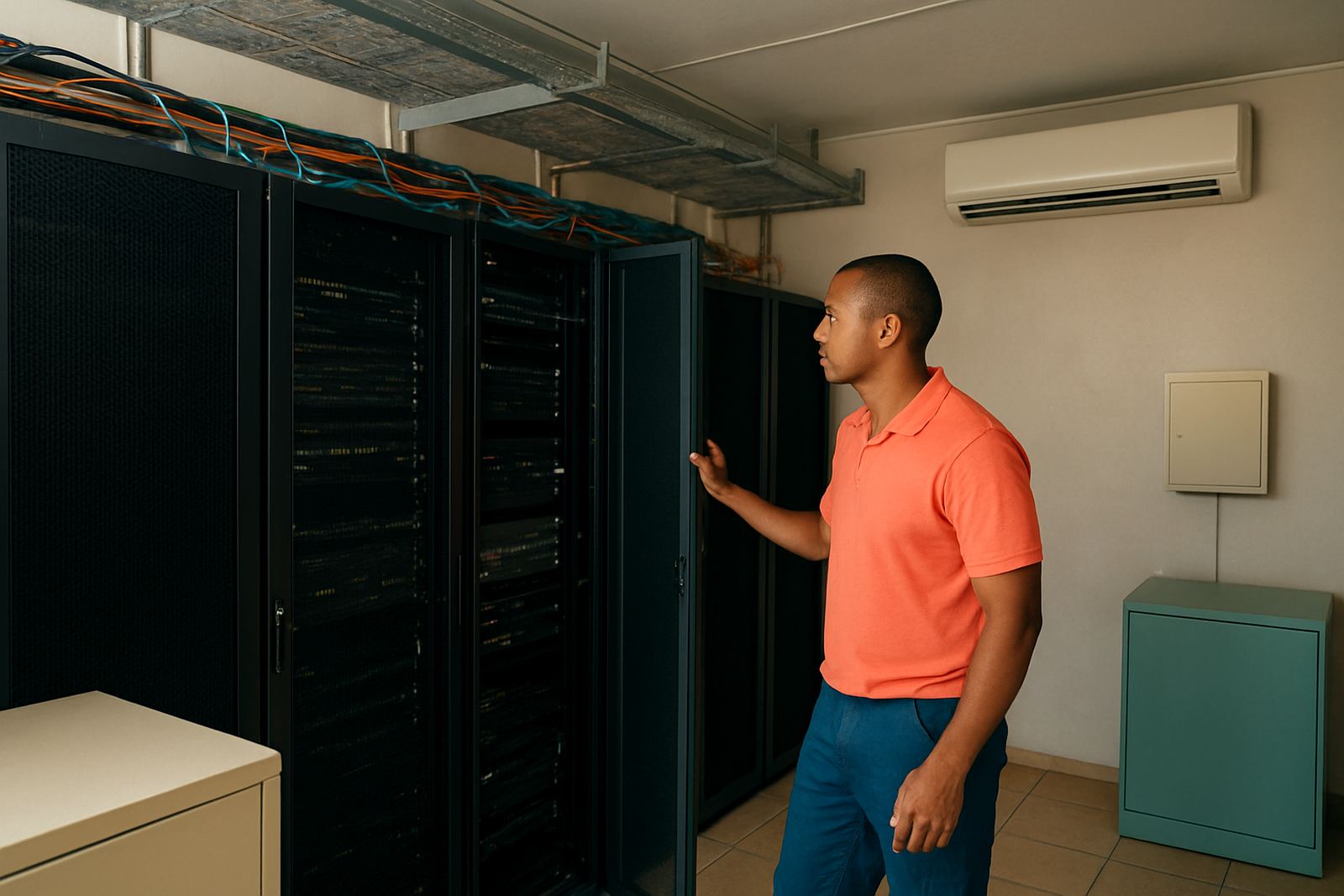
The client was a professional office in La Lucia with a compact server room carrying network gear, storage equipment and backup power units. Their existing air-conditioning was serving the main office area as well, so the room temperature climbed too quickly once the doors were shut and the equipment started running full time. In summer, the coastal humidity made matters worse and the room was moving out of spec by midday.
The brief was simple enough on paper, but very specific in practice. They needed a dedicated cooling setup that could hold a steady temperature, cope with long operating hours, and keep working during power interruptions without putting the equipment under stress. They also wanted a solution that would not disturb staff nearby or take up too much wall space.
Site Constraints in a Coastal Office Environment
La Lucia has its own set of conditions. Salt in the air, warm afternoons, and the kind of building layout where plant space is tight and service access has to be planned properly. The server room sat inside a larger office floor, so we had to work around occupied areas, after-hours access and a narrow route for equipment through the building. Noise control mattered too because the room shared a wall with working offices.
- Limited space for indoor and outdoor units
- High coastal humidity and salt exposure
- Need for quiet operation during business hours
- Load-shedding protection for critical equipment
- Access routes that had to stay clear for staff and visitors
We also checked the local electrical capacity before finalising the design. The board had to carry the extra load without nuisance trips, and the client wanted a setup that could be integrated with their standby supply. That meant the equipment choice and the start-up sequence both had to be kept practical, not just theory.
What We Supplied and Installed
We supplied a dedicated split air-conditioning system sized for server room duty, with temperature control set tighter than a standard office unit. The indoor unit was selected for steady airflow across the rack area, and the outdoor unit was positioned for good ventilation and easier servicing. We added condensate drainage, isolation valves and proper pipe support so the line set would stay secure over time.
On the controls side, we fitted a temperature monitoring point with alarm function and set the operating band to suit the equipment load. The room was commissioned to hold between 20 and 24 degrees celsius, with airflow arranged to avoid hot spots behind the racks. The installation was also prepared for cleaner shutdown and restart after load-shedding, which matters more than people think until a failure takes out a switch or server.
- Dedicated cooling circuit for the server room only
- High-wall indoor unit with filtered return air
- Outdoor condensing unit mounted for airflow and service access
- Refrigerant pipework pressure-tested and insulated
- Condensate drainage checked for fall and blockages
- Temperature monitoring with alarm set points
How We Planned the Work Over Two Weeks
The project ran over two weeks from site inspection to final handover. In week one, our team measured the room, checked the heat load, reviewed the existing electrical supply and confirmed where the new equipment could go without interfering with office movement. We also checked the route for pipework and drainage, then prepared the install plan around the client’s operating hours.
Week two covered installation, commissioning and testing. The work was done after hours to reduce disruption, and we kept the area tidy because the office remained active the next morning. Once the system was running, we monitored temperatures under load and verified that the room could recover quickly after door openings and a short power interruption. There was one small snag with the drain fall which we corrected on the spot, then retested before sign-off.
Results After Commissioning
Once the dedicated cooling was in place, the server room stopped swinging in temperature and the equipment operated in a much more stable range. The client reported fewer high-temperature alarms and less anxiety during warm afternoons when the office previously struggled to keep the room cool. Air movement around the racks improved too, so the room no longer had a hot corner near the back wall.
The real value showed up during load-shedding periods. Because the cooling was set up as a dedicated system with proper restart control, the room came back into temperature quickly after power was restored. That helped protect sensitive kit from repeated heat cycling, which can shorten component life and lead to avoidable downtime. For a business that depends on network uptime, that kind of steadiness is not a nice-to-have, it is part of staying operational.
What We Would Repeat on Similar Projects
If we were doing this again on another La Lucia or Umhlanga office, we would take the same approach: measure the real heat load first, keep the cooling dedicated to the room, and plan for power interruptions from the start. Too many server rooms are cooled by a general office system that was never meant to handle equipment heat, especially once summer arrives and humidity pushes up the load.
We would also repeat the commissioning checks and make sure the client had clear maintenance intervals. Dust, blocked filters and poor condensate drainage are common reasons server room cooling starts underperforming. A simple service plan with temperature logging and monthly checks helps keep the room within range and gives the client a record if anything ever needs reviewing. In Durban, that record can save a lot of time when a fault pops up after hours.
- Keep cooling dedicated to the server room where possible
- Allow space for maintenance access from day one
- Build in alarm points and temperature logging
- Plan for load-shedding and fast restart behaviour
- Set a service schedule before problems start
Key facts
| Location | La Lucia, Durban |
|---|---|
| Client type | Professional office with critical IT equipment |
| Project duration | 2 weeks |
| System type | Dedicated server room split air-conditioning |
| Temperature range | 20 to 24 degrees celsius |
| Service focus | Temperature logging, filter cleaning and fault response |