Why cabinet layout changes real temperature performance
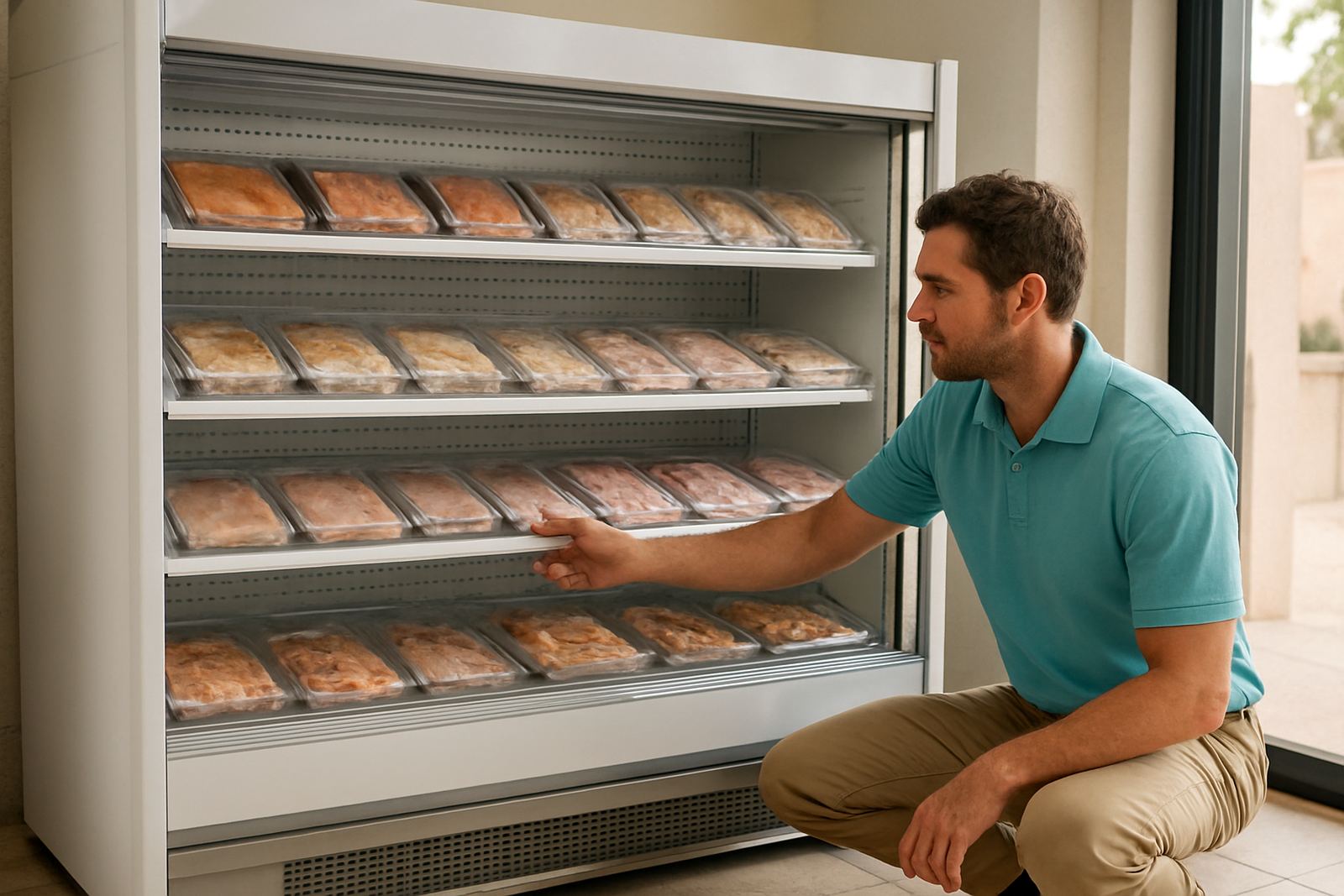
A display chiller is not just a cold box with glass doors. Air has to move in a controlled path over the evaporator, across the shelves and back again, and that path gets blocked fast when cartons, bottles or trays are pushed too close together. In Durban heat and high humidity, that matters even more because the cabinet is already working hard to hold product between about 2 °C and 5 °C.
When loading is uneven, one side of the cabinet can run colder while the front rows warm up each time a door opens. That creates patchy temperatures, more condensation on the glass and a higher risk of product sitting outside the safe zone. If the chiller is in a busy shop in Glen Anil or a forecourt in Umhlanga, the daily foot traffic makes poor layout show up quickly.
Airflow needs clear space from back to front
Most cabinet problems start with good intentions. Staff want the shelves full, so they push stock right against the rear panel or stack items too tightly on the front edge. That blocks the air discharge and return, and the chiller starts to work against itself. You may see colder spots on the top shelf and warmer stock lower down even though the thermostat setting has not changed.
- Leave clear space at the back of each shelf for air movement
- Do not pack products tight against the glass doors
- Keep taller packs away from rear air outlets
- Use the shelf depth properly instead of piling stock on the lip
On busy days, a quick front fill can be tempting, but it is better to leave a neat gap than to choke the airflow. That small gap helps the cabinet hold temperature steadier during door openings and peak trading times.
Shelf height should suit the product, not only the packaging
Shelf arrangement should follow product type, sales speed and how much cold air each item needs. Milk, yoghurt and deli packs do not behave the same way as bottled drinks or pre-packed sandwiches. Taller products need more vertical space, but not so much that you create a dead zone above the stock. Shorter products can be kept on tighter shelves, which improves visibility and helps staff face up the display quicker.
In a coastal store, we often find that the top shelf is used for light, fast-moving goods while heavier cartons go lower down. That is sensible, but it still needs balance. If the coldest air settles at the bottom and the warmest air rises, then shelf spacing must be checked against actual cabinet readings not only the owner’s eye.
- Place the fastest-moving items at eye level
- Keep heavier stock on lower shelves for safer handling
- Use taller gaps only where the product needs them
- Do not let one supplier’s pack size dictate the whole cabinet
Product facing helps sales and protects the cold chain
A neat front face does more than make the cabinet look tidy. It also reduces the time customers spend opening doors or standing with the cabinet ajar while deciding. Good facing keeps the first row visible, which means less handling and fewer warm hands reaching deep into the display. That matters in convenience stores, butcher counters and smaller supermarkets where one cabinet may carry a lot of daily turnover.
For the same reason, mixed product types should be grouped with care. Keep like items together, date stock clearly and avoid placing warm incoming stock directly beside the oldest stock. If the cabinet looks crowded, staff tend to overfill the front and ignore the back. That is where temperature unevenness starts, and where product presentation slips over a busy weekend.
Local conditions on the KZN coast make layout more important
Coastal humidity, frequent door opening and power interruptions all put extra strain on a display chiller. During load-shedding, cabinets that already have poor airflow recover more slowly when power returns because the compressor has to pull down from a wider temperature spread. If doors have been opened often, the cabinet may also carry more frost on the evaporator and more moisture on the frame.
That is why stores in Ballito, Durban North and the South Coast need a layout that is simple to maintain. Staff should be able to restock quickly, close doors properly and keep the product line even. In a hot spell, even a few centimetres of blocked air space can make the difference between stable display and a cabinet that keeps hunting for temperature.
Simple checks that keep loading under control
Good display chiller layout should be checked as part of routine maintenance, not only when something goes wrong. A cabinet can look fine from outside but still have a poor internal load pattern that causes chronic warm spots. A service technician can test temperatures, inspect door seals and see whether the shelf plan suits the actual product mix on site.
- Check temperature readings at top, middle and bottom shelves
- Review product loading after every stock change
- Look for blocked vents, frost build-up or repeated condensation
- Adjust shelf positions when pack sizes change
- Keep a record of problem periods during hot weather or power cuts
At Coastal Cooling Systems, we see this often during service calls in Pinetown and Glen Anil. A cabinet may be mechanically sound, but the load pattern is fighting the airflow. Once the layout is corrected, the same machine usually settles down and holds temperature with less stress on the compressor.
A Durban counter example that shows the difference
A small food counter in Durban North called for repeated complaints about warm drinks near the front of the cabinet. The compressor and fans were working, but the shelves had been packed solid from back to front, with taller bottles blocking the rear air return on the middle shelf. Staff were also loading warm stock straight onto the display after deliveries.
We re-spaced the shelves, left a proper air gap and changed the loading order so chilled stock went in first and warmer top-up stock was held back until it had dropped closer to temperature. The cabinet stabilised, condensation reduced and the staff found it easier to keep the front tidy during lunch rush. It was not a parts replacement job, just a layout correction that made the equipment do its actual job.
That is the point with display chillers. If the shelf plan works with the airflow, product stays cooler, looks better and sells better. If it fights the airflow, the cabinet never quite catches up.