Project brief for a busy Phoenix supermarket
The client was a supermarket operator in Phoenix that needed better temperature control in the back room and steadier cooling at multiple display points on the shop floor. The existing plant was aging, service calls were becoming more frequent, and the store needed equipment that could cope with Durban heat, humid weather and the strain of daily trading.
The brief was straightforward in wording but not in execution. We had to renew the refrigeration plant without shutting the store for long periods, maintain stock temperatures during the changeover, and make sure the new setup could handle both fresh food storage and retail display duty. The store also wanted a system that could be serviced locally with parts and support that would not leave them waiting weeks for a technician.
- Site: Phoenix, Durban
- Client type: Supermarket with back-room storage and retail displays
- Work scope: Refrigeration plant renewal and associated controls
- Operating pressure: Trading had to continue during most of the project
What we found on site
Our first inspection showed a plant room that had reached the point where patch repairs were no longer good value. Compressors were running harder than they should, parts of the pipework showed age-related wear, and the existing controls were not giving the store enough certainty on temperatures across all display areas. There were also signs of past quick fixes that had been done to keep things going through load-shedding and hot weather.
The biggest risk was product quality. In a supermarket environment even a short temperature rise can affect stock, especially in back-room storage where doors open often and warm air gets in. We also had to factor in the site layout, because the display points were spread through the retail area and the back-room access was tight for maintenance work. The store is in a coastal climate zone too, so corrosion and moisture had to be treated as part of the problem, not an afterthought.
- Old plant was working beyond its preferred duty cycle
- Temperature stability was uneven across storage and display areas
- Access for maintenance had to remain practical for future servicing
- Humidity and power interruptions were part of the operating reality
Equipment supplied and installed
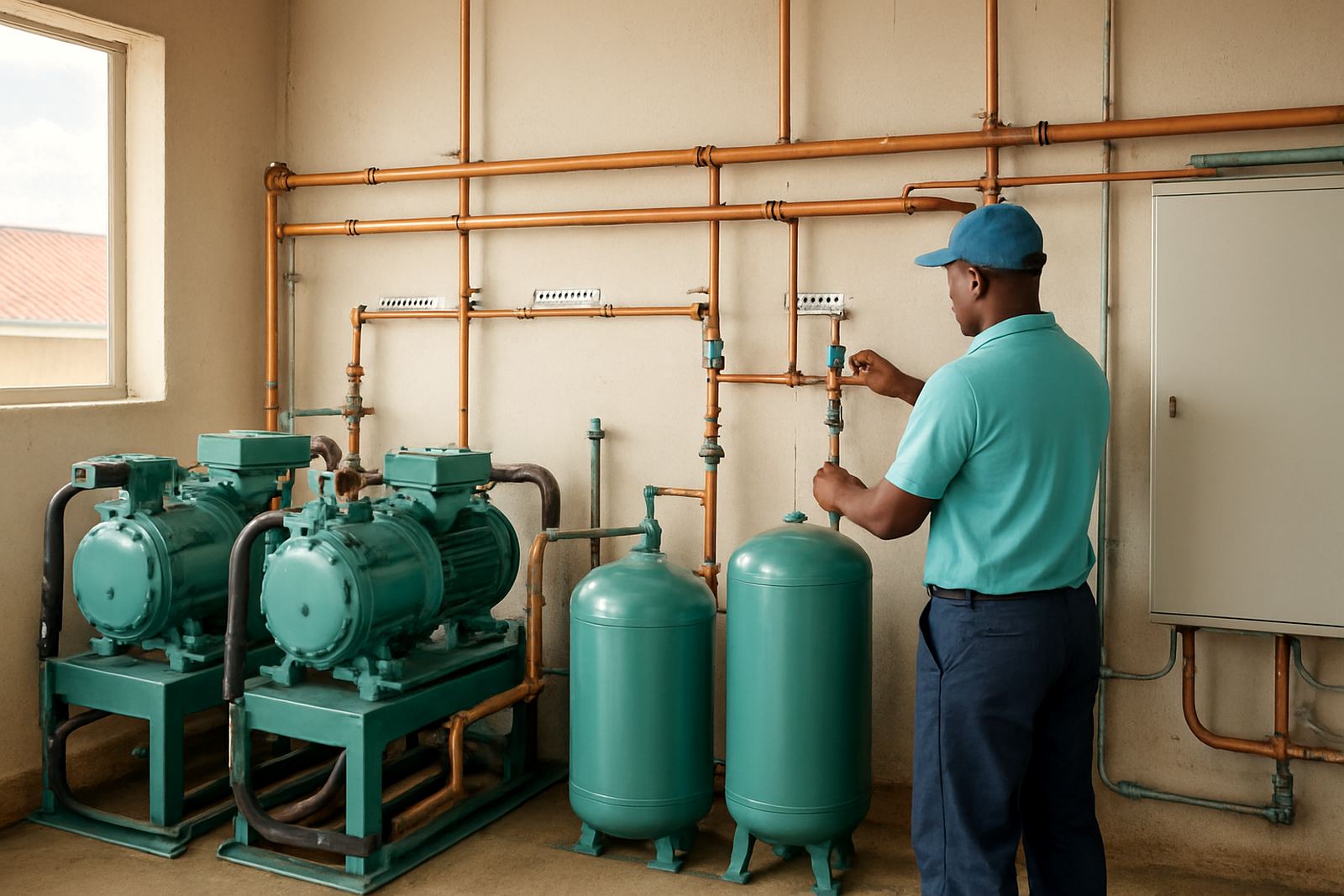
We supplied and installed a new refrigeration plant sized to suit the store’s load profile, with separate support for back-room storage and multiple retail display circuits. The renewal included new compressors, a matched condenser arrangement, refrigeration controls, liquid line components, and the pipework changes needed to tie everything together cleanly. We also replaced worn isolation points and made sure the final layout would be easier to service during planned maintenance visits.
For the display points, we set the system up to support stable product temperatures under normal trading conditions and during periods of high ambient heat. Where needed, we adjusted valve settings and control parameters so the plant would not hunt or cycle too aggressively. That matters in Durban, because a system can perform well at 18 degree mornings and then struggle hard by midday once doors open and the front of shop heats up.
The installation also included electrical fault finding on the existing supply side, because some of the nuisance trips were coming from outside the refrigeration package itself. We checked the control wiring, isolators and safety circuits, then brought the operation into a cleaner configuration so the store had less downtime and fewer surprise callouts.
- New compressors matched to the store load
- Condenser and control components replaced as a set
- Pipework modified for tidier service access
- Electrical checks and fault finding completed on site
Working around trading hours and load-shedding
The schedule ran over four weeks, with the most disruptive work done in planned windows so the supermarket could keep trading. We staged the project so the back-room changeover happened first, then moved through the retail display connections in sequence. That approach reduced the risk of product loss and kept the shop team informed about when each area would be affected.
Because load-shedding was still part of the operating picture, we planned for power interruptions and restart conditions from the beginning. Controls were checked to make sure the plant would recover properly after an outage, and the team was shown which temperatures to monitor if grid supply dropped during a changeover window. Small details mattered here, like keeping doors closed, recording stock temperatures and knowing when to bring additional support in if a section was warming too quickly.
There were also practical site constraints. Delivery access was not generous, stock movement continued all day, and we had to work around retail traffic without creating a hazard for customers or staff. That meant neat housekeeping, clear barriers and steady communication with the store manager and the operations team.
- Programme duration: 4 weeks
- Work staged to limit disruption to trading
- Load-shedding restart conditions tested
- On-site coordination with store staff throughout
Temperature control, logging and compliance
Once the plant was running, we carried out temperature checks at the back-room storage points and on the main display circuits. The goal was not just to get the system cold again, but to keep it predictable. We also set up temperature logging so the store could keep records for internal checks and any compliance queries that might come up later. For food retail, records are often as important as the cooling itself.
We completed compliance checks on the refrigeration side and confirmed that the plant was holding steady under normal operating conditions. Drainage, defrost performance and control response were all checked too, because those are the areas that often create nuisance problems after a fresh install if they are not sorted properly from day one. The store team was briefed on what to watch for and when to call for support, instead of waiting until a minor issue becomes a spoiled-stock problem.
- Temperature logging put in place
- Compliance checks completed after commissioning
- Defrost and drainage performance verified
- Store team briefed on daily monitoring
Results for the store team
The finished result was a supermarket refrigeration plant that gave the client better control over back-room storage and a steadier cooling performance at the display points. Product temperatures became easier to manage, nuisance breakdown risk dropped, and the store had a cleaner maintenance plan going forward. That means less firefighting, fewer emergency call-outs and a better chance of keeping stock safe through Durban heat and holiday trading periods.
From the client’s side, the main gain was confidence. Instead of wondering whether the next hot spell or outage would bring another breakdown, they now had a properly renewed system with local support behind it. The store also benefited from better visibility on service intervals and fault history, which helps with budgeting and planning. A refrigeration plant should not just run, it should be understandable and serviceable by the people who depend on it every day.
If we were to do this again, we would follow the same approach: survey first, stage the work carefully, plan for power interruptions, and keep the store informed at each step. That mix of preparation and practical on-site work is what keeps food retailers operating while a major plant change happens around them.
- More stable product temperatures
- Lower breakdown risk after renewal
- Better maintenance planning for the store
- Supportable system suited to Durban conditions
Key facts
| Project | Phoenix Supermarket Plant |
|---|---|
| Location | Phoenix, Durban |
| Client type | Supermarket with back-room storage and display refrigeration |
| Programme | 4 weeks |
| Scope | Refrigeration plant renewal, controls, pipework changes, electrical fault finding and commissioning |
| Key services | Temperature logging, compliance checks and post-installation support |